
Copywriting is the lifeblood of B2B SaaS marketing. The right words can transform your software into a compelling solution that feels indispensable to decision makers.
But writing great copy is tricky. Beyond creative phrasing and clever wordplay, you also have to understand human psychology.
What makes people stop scrolling? What sparks their curiosity? What drives them to sign up?
To help you craft high-converting copy for your business, we’ve gathered advice from seasoned B2B copywriters. Read on to learn their tips on how to connect with your audience and inspire action through the art of copywriting.
1. Understand Your Audience
Before you write a single word, it’s essential to know exactly who you’re writing for and what are they struggling with.
As Anna Metcalfe, B2B Content Writer & Copywriter at Cantaloupe, explains:
The crux is understanding your target audience in the first place, something too many businesses ‘assume’ they do, when in fact, they don't. Do you REALLY get their challenges and frustrations? And do you REALLY appreciate how they're feeling?
 Anna Metcalfe, B2B Content Writer & Copywriter, Cantaloupe
 Failing to understand your target audience means your copy will almost always miss the mark.
You might end up highlighting features no one cares about, or using messaging that doesn’t reflect the reality of your buyers’ day-to-day struggles.
Lucy Cook, a B2B Content Marketing Consultant, puts it bluntly:
All great marketing starts with the audience. If you don’t understand them, your copy will feel flat, generic, and about as engaging as a terms-and-conditions page.
 Lucy Cook, B2B Content Marketing Consultant, Lucy Cook Content Marketing
 Take the time to read customer reviews, conduct interviews, and immerse yourself in relevant Reddit threads where your audience vents their frustrations. The deeper your understanding, the sharper and more persuasive your copy will be.
Practical tips
- Interview existing customers: Ask them to explain what they value about your software, what makes it different from other similar alternatives, and what can be improved.
- Monitor online forums: Sometimes customers won’t reveal everything in interviews or surveys, but they’ll share their unfiltered opinions on Reddit, Quora, and other niche-specific forums. These raw conversations can uncover pain points you’d otherwise miss.
- Create a user persona: Based on your research, build your ideal customer profile, complete with their goals, frustrations, and motivations. Use this as a reference point when writing copy to make sure every message feels tailored and relevant.
Example
Balsamiq is a SaaS wireframing tool that was suffering from generic copy and outdated web design—the perfect combination for low conversions.
Looking to turn things around, they decided it was time for a total revamp. They started by talking to their actual customers to understand their struggles.
Turns out, people weren’t looking to design beautiful wireframes (which was Balsamiq’s core positioning). They just wanted to make better product decisions and speed up design cycles without drowning in endless Jira issues.
Armed with this insight, Balsamiq shifted its messaging to focus less on design aesthetics and more on clarity, speed, and collaboration.
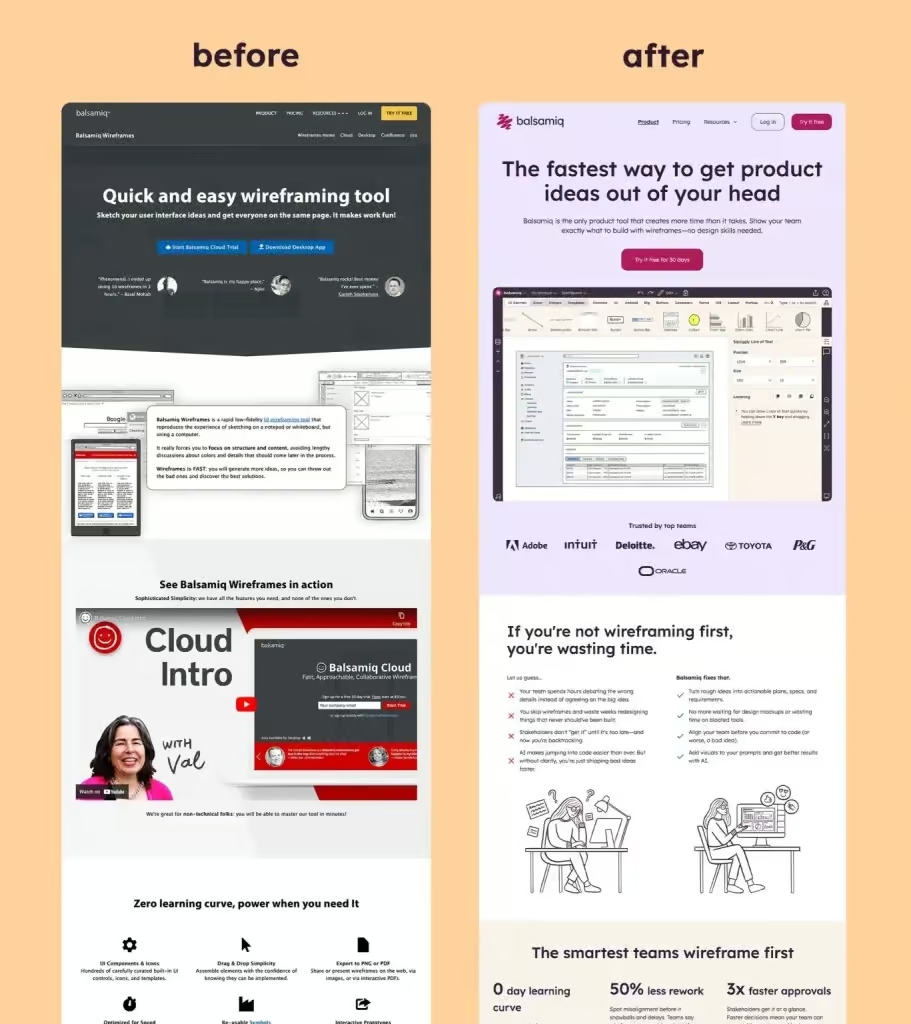
The result was astonishing. In just a few weeks, their qualified trial signups increased by 40%.
2. Write Clear Headlines
Your headlines are often the first—and sometimes the only—thing your audience reads. And in the crowded world of B2B SaaS, you have to make them count.
Sean McManus, a Freelance B2B Tech Copywriter, emphasizes the importance of easy-to-understand titles:
There’s a lot of competition for the reader’s time. So it’s important for writing to be concise, direct, and easily skimmable. Your section headings should communicate your messaging and help readers find the details they’re interested in.
 Sean McManus, Freelance B2B Tech Copywriter, www.sean.co.uk
 Alex Napier Holland, Founder and SaaS Sales Copywriter at GorillaFlow, shares similar advice:
Your visitors will only skim read your website, so your headlines should form a clear and complete narrative. Each headline should summarize the paragraph copy underneath, and communicate the unique value that your features offer.
 Alex Napier Holland, Founder and SaaS Sales Copywriter, GorillaFlow
 Clarity beats creativity. If your headline doesn’t instantly tell readers what your software does and how it solves their problem, they’ll immediately click away.
Practical tips
- Keep it short and simple: Aim for 6–12 words and use plain language so readers instantly get the value.
- Make it skimmable: If you remove the body copy and keep only the headlines, does your page still tell a clear, complete story?
- Test different variations: Use A/B testing to see which headlines resonate most with your audience and drive higher engagement.
Example
Vanta, a compliance automation software tool, does a brilliant job at keeping its headline short and clear:
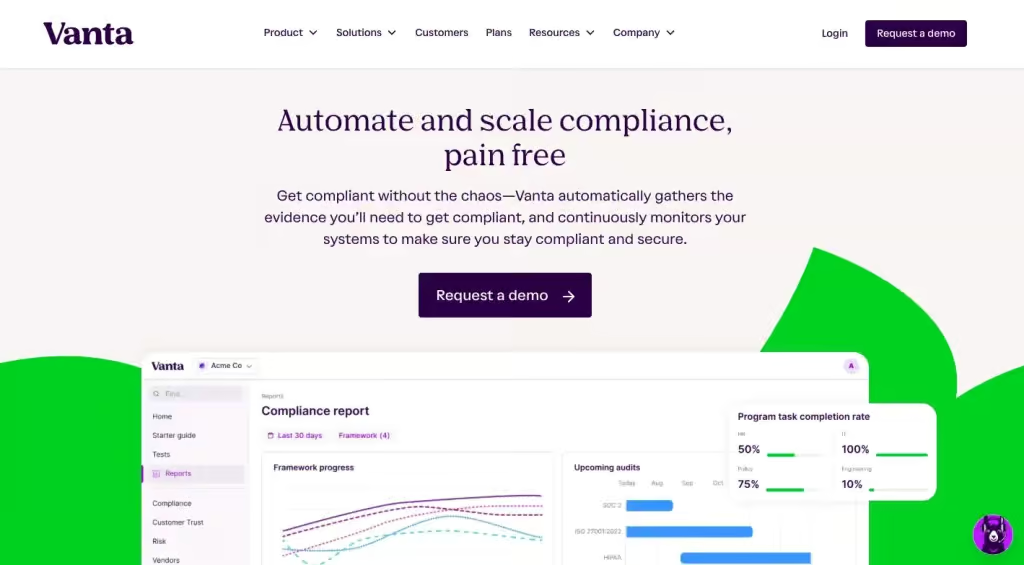
In just six words, the headline tells readers exactly what the software does (automate and scale compliance) and highlights the benefit that matters most to compliance teams (removing the pain from a complex, time-consuming process).
3. Optimize for Google and LLMs
Even the best design and copy won’t convert if there’s no one visiting your website. This is why optimizing your headlines and on-page copy for both Google and LLMs like ChatGPT is so important.
But SEO copywriting isn’t just about stuffing keywords all over your pages; it’s a balancing act between technical precision and creative expression.
Your copy should satisfy search engines, while also persuading and engaging human readers to click through to your pages.
Muskaan Saxena, Co-Founder of Scale Socials, shares her tips on how to balance the two:
Start by understanding the story you want to tell and the emotions you aim to evoke. Then, strategically incorporate SEO keywords into the copy without disrupting the flow or diluting the message. By prioritizing both SEO and storytelling, you can deliver content that ranks well and resonates with the audience.
 Muskaan Saxena, Co-Founder, Scale Socials
 Want to learn more about the topic? Check out our guide on how to write SEO headlines that attract clicks.
Practical tips
- Use keywords naturally: Place them in headlines and meta titles, but keep the phrasing natural and human.
- Match search intent: Make sure your headline answers the question your target audience is typing into Google or ChatGPT.
- Structure for clarity: LLMs pull context from structured, skimmable content. Use headings, subheadings, and bullet points to make your copy easy to parse.
Example
HubSpot mentions the phrase “free CRM” at least three times on their Free HubSpot CRM landing page.
And that’s just counting the hero section.
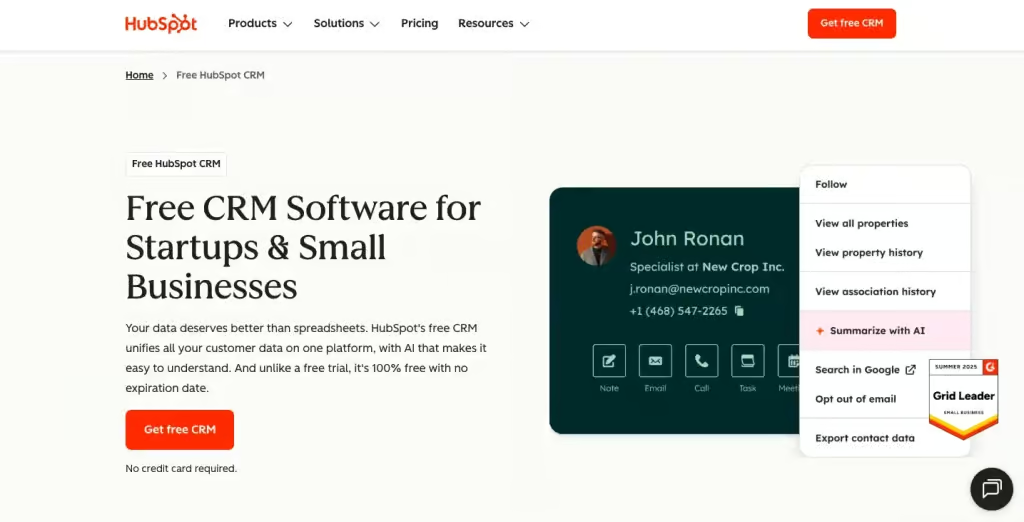
But they do it in a way that’s natural and helpful. Instead of stuffing the keyword into every sentence, HubSpot cleverly weaves it into the headline, subheading, supporting copy, and CTA button.
4. Cut the Buzzwords
One of the fastest ways to lose your reader’s attention is by burying your message under jargon and fancy words.
While it’s tempting to lean on industry terms to sound credible, in reality, they make your copy harder to read and less engaging.
Ryan McMurtry, a Freelance Copywriter & Editor, shares his perspective:
My top tip? Cut the jargon! There's a misconception that professional audiences expect big words, niche industry terms and acronyms. In reality, your readers are busy and their to-do list is more important than your content. Respect their time; use simple language and get to the point fast.
 Ryan McMurtry, Freelance Copywriter & Editor
 B2B buyers don’t want to decode your copy—they want to quickly understand how you can help them.
Replacing sophisticated phrases like “synergize workflows” with something simple like “work better together” instantly makes your message clearer and easier to digest.
Practical tips
- Swap jargon for plain English: Replace terms like “leverage” and “cutting-edge” with simpler alternatives like “use” and “modern.”
- Write like you speak: If you never use certain words in a real conversation, chances are no one probably ever does. Keep your copy natural, conversational, and easy to follow.
- Run a readability check: Tools like Hemingway or Grammarly can highlight overly complex words and help simplify your copy.
Example
This webinar title from The Hackett Group could leave almost anyone scratching their head:
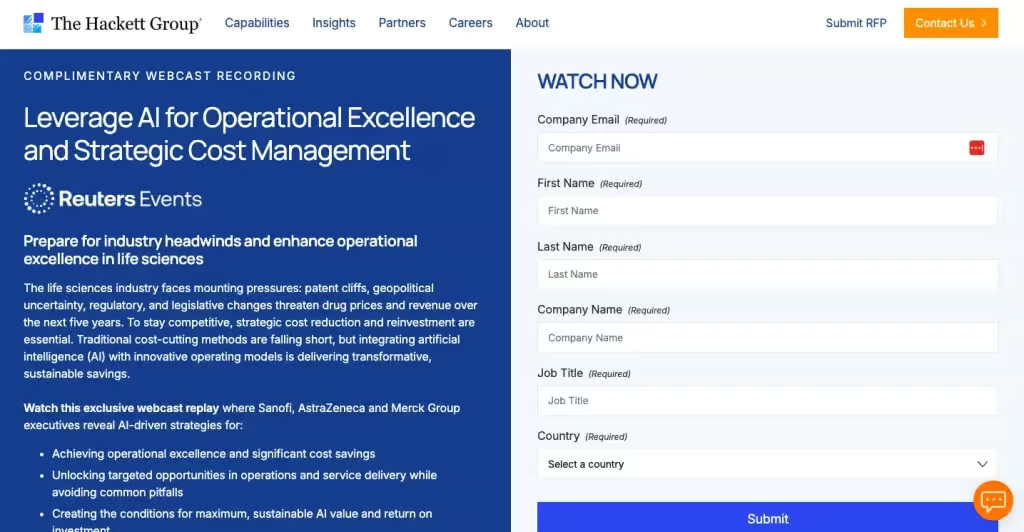
It’s loaded with corporate-sounding jargon that makes the message vague and distant.
Terms like “operational excellence” and “strategic cost management” might sound impressive, but they don’t explain what the audience will actually gain.
Compare it with something clearer, like:
“How to Use AI to Cut Costs and Run Operations More Efficiently”
The difference? The second version gets straight to the point. It spells out the benefit, tells the audience what they’ll learn, and highlights why it matters in plain language that anyone can easily understand.
5. Make Your Positioning Clear
SaaS is a competitive field. There might be hundreds of apps or tools that offer the exact same solutions as your software.
But that doesn’t mean your copy has to sound like theirs. Leaning on the same generic promises only makes you blend in with the crowd, not stand out from it.
As Alex Napier perfectly said:
Never write ‘Save time’, or ‘Save money’. Every B2B product that has ever existed can save time and money. Eyes will glaze over at these empty, generic claims.
Alex Napier Holland, Founder and SaaS Sales Copywriter, GorillaFlow Instead, make your unique positioning crystal clear. Find out very specific problems that your target audience is facing, and use them in your copy.
A great way to do it? Ask your customers directly. Alex shares a great example from his work with a PropTech startup:
I interviewed their users and heard several versions of, ‘I used to work all weekend and miss family events. But now I can finish work early on Friday, take the kids camping and check my app over the weekend’. So, we ran with, ‘Get your weekends back’. Good luck beating that level of emotional impact and value with another yawnful claim about ‘ROI’ and ‘conversions’.
Alex Napier Holland, Founder and SaaS Sales Copywriter, GorillaFlow Practical tips
-
Define your specific audience: Instead of a broad audience like “marketing teams”, target a more defined segment such as “content marketers at fast-growing SaaS startups.”
-
Find out their specific problems: Talk to your customers, review support tickets, and monitor forums to identify particular problems that your target audience is struggling with.
-
Highlight your unique positioning: Show how your product solves those problems in a way competitors don’t. Maybe it’s the only software that allows unlimited users? Or perhaps it’s the fact that you’ve got the best-in-class customer support?
Example
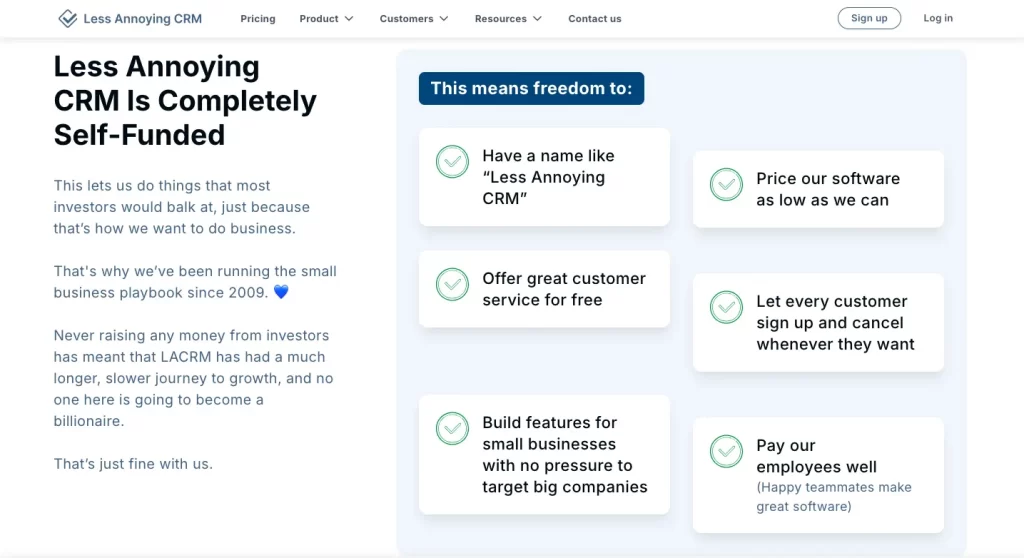
Less Annoying CRM is a great example of how to stand out in the competitive CRM field. Rather than trying to be everything to everyone, they double down on their unique positioning.
On its homepage, Less Annoying CRM boldly claims that it offers something that no other CRM can: a laser-focused commitment to small businesses, built around low pricing, ease of use, and exceptional customer service.
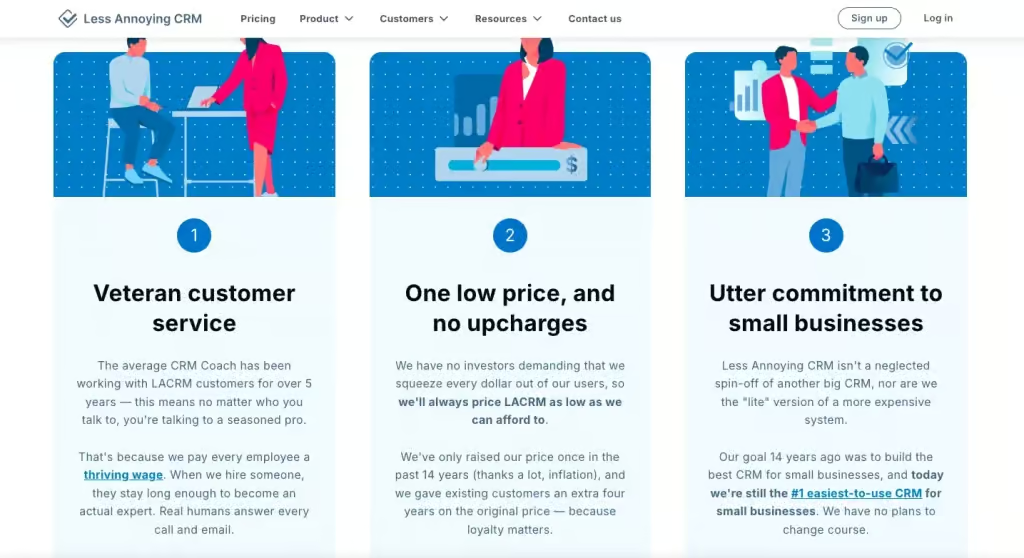
The rest of the homepage reinforces this core message with clear explanations, testimonials, and proof points—all designed to show why small businesses should choose them over complex, expensive enterprise-level alternatives.
6. Use Your Audience’s Language
An excellent way to form connections with your audience is to speak the way they do.
Christine Ochefu, Content Marketing Specialist at Back Market, explains how she adapts her tone of voice depending on the sector:
A technique I find important is always making sure the tone of voice is suitable for the audience you’re targeting. For example, I work with a lot of clients across the technology and finance sectors, so I often pull back on casual TOV and keep things a bit leaner, focusing on to-the-point technical language instead.
 Christine Ochefu, Content Marketing Specialist, Back Market
 Practical tips
- Analyze sales transcripts and support chat logs: Pay attention to the exact words prospects use when describing their challenges.
- Read forums and community threads: Notice how your ideal customers talk about their struggles, frustrations, and needs in their own words.
- Use those insights in your marketing copy: Mirror your audience’s vocabulary in headlines, product pages, and emails so they instantly feel understood.
Example
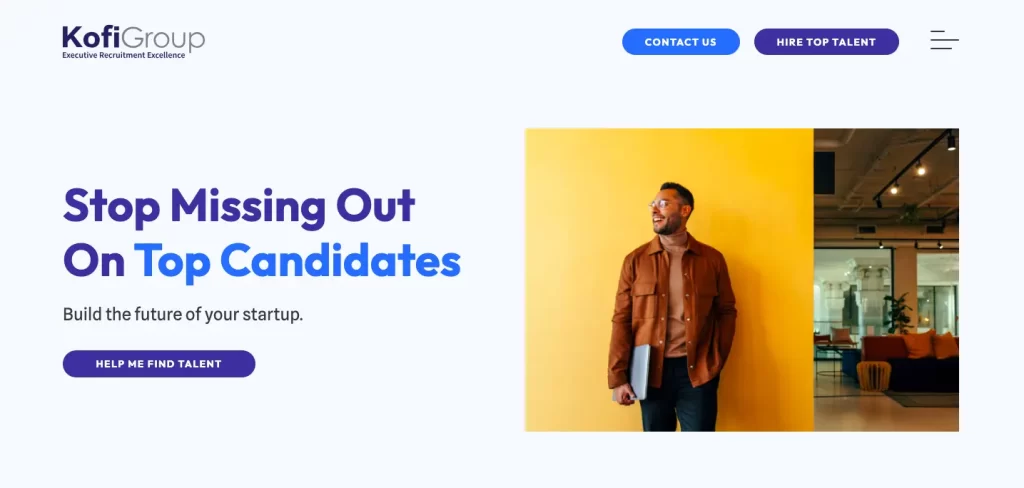
Kofi Group, a recruitment agency specializing in securing software engineering talent, wanted to relaunch their website. Before writing the headline, the copywriter took the time to read customer reviews and case studies.
One particular statement from a case study stood out:
“After missing out on a candidate to another offer…”
Instead of inventing a clever new line, the copywriter lifted this exact phrase and turned it into a strong headline for Kofi Group’s homepage:
7. Offer a Solution, Not a Sales Pitch
Nobody likes having a product shoved down their throat, especially B2B buyers. Instead, focus on showing prospects how your product solves their problems and makes their lives easier.
Becky Hewson-Haworth, B2B Recruitment Copywriter at Clarion Call Communications, puts it beautifully:
Help don’t sell is my mantra for B2B copywriting. I feel corporate audiences are tired of being sold to, whereas writing a genuinely helpful piece of content, web copy, or email is a better way to build a long-term relationship.
 Becky Hewson-Haworth, B2B Recruitment Copywriter, Clarion Call Communications
 She adds that the key to doing this well is (once again) understanding your audience deeply:
Being able to do this well comes down to having a deep understanding of your ideal customer’s goals, pain points and blockers. This empowers you to position your products and services in a way that’s helpful, removing the feeling they’re being pitched to.
Becky Hewson-Haworth, B2B Recruitment Copywriter, Clarion Call Communications But don’t just offer a solution. Make sure to show why you’re qualified to offer that solution.
Mae Josémaria Oparaocha, B2B Content Writer at saas.group, explains how she does it:
Sell 'believability'. Show the reader you deeply understand their challenges and are qualified to assist them.
 Mae Josémaria Oparaocha, B2B SaaS Content Writer, saas.group
 For service or sales pages, this could be done by highlighting customer testimonials, awards and certifications, or success stories.
For blog posts, it’s all about showing your E-E-A-T (Experience, Expertise, Authoritativeness, and Trustworthiness).
This can involve testing the product/tool you're writing about, sharing real-life examples and unique nuggets from subject matter experts.
Mae Josémaria Oparaocha, B2B SaaS Content Writer, saas.group Practical tips
-
Use the PAS framework: Structure your copy around Problem → Agitation → Solution. Identify the pain point, highlight its negative consequences, then position your software as the answer.
-
Create educational content: Publish SaaS blog posts, guides, or webinars that address real customer problems while naturally positioning your product as the solution.
-
Show social proof: Testimonials and case studies are often more persuasive than anything you could write yourself. Let the results your software brings speak for themselves.
Example
Wiza is a tool for finding verified email addresses and phone numbers for sales teams. On its homepage, there’s a problem section that addresses a pain point that every sales rep can relate to: finding accurate prospect data.
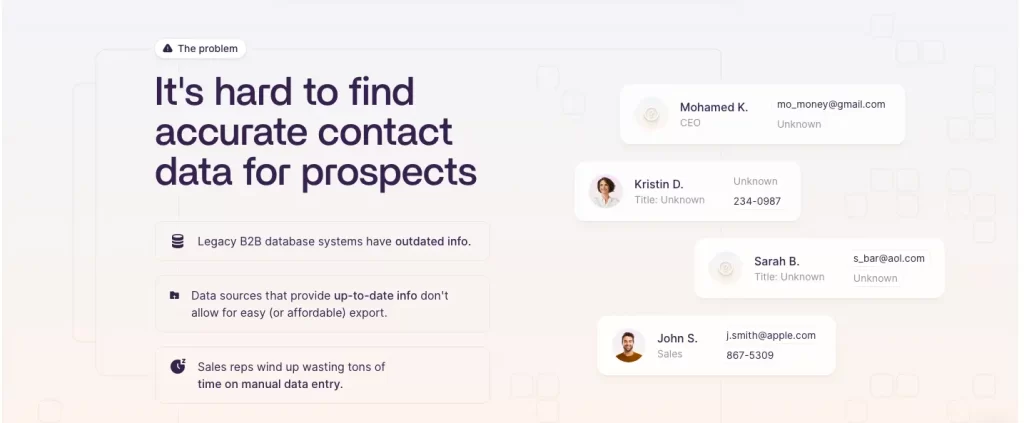
Below the problem statement, Wiza agitates the problem by pointing out the negative consequence for sales teams: wasted time on manual data entry.
This deepens the frustration, making the reader feel the weight of the problem.
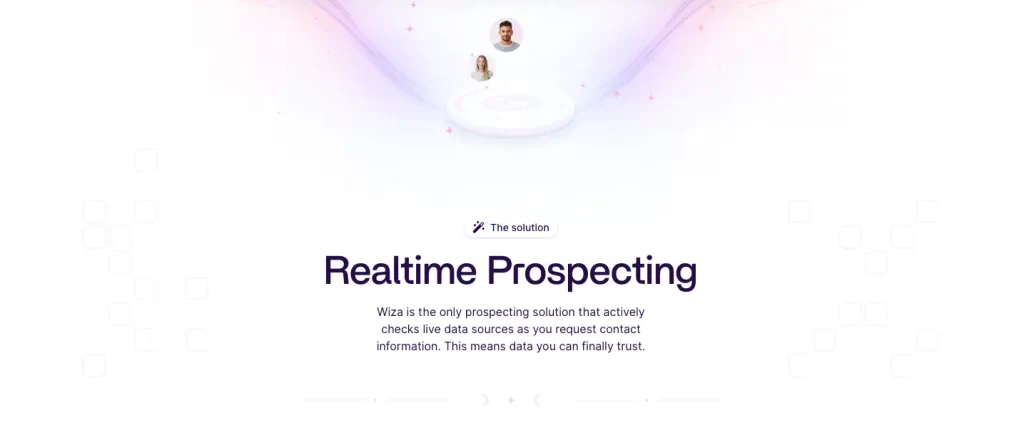
Then comes the solution: real-time prospecting. Wiza positions itself as the only tool that checks live data sources as you request information, ensuring accuracy and reliability.
8. Focus on the Outcomes Instead of Features
Nobody cares about what your product can do. Customers care about what it can do for them.
In the words of Alistair McKechnie, a Freelance B2B Tech Copywriter:
The problem with most B2B copy is a focus on features rather than benefits. Every brand is banging on about us, us, us instead of you, you, you.
 Alistair McKechnie, Freelance B2B Tech Copywriter
 Don’t simply list all the cool features your software has. Explain how it can help the audience achieve their goals.
George Drennan, Freelance B2B Content Writer at Eagle Content, highlights how Slack nails this approach:
Slack does this brilliantly with its marketing. At its core, Slack solves a simple problem: it helps employees cut down on email and communicate faster. But it’s not just about cutting down on email, it’s what that leads to: better focus, smoother collaboration, and quicker decision-making.
 George Drennan, Freelance B2B Content Writer, Eagle Content
 Practical tips
- Translate features into benefits: Instead of “automated reporting,” say “spend less time on spreadsheets and more time making decisions.”
- Use the “so what?” test: For every feature you list, ask “so what?” until you arrive at the outcome the user actually cares about.
- Quantify the outcomes: Use numbers to make the results more specific and measurable. For example, your software doesn’t just “improve team productivity,” but it “cuts project turnaround times by 40%.”
Example
Slack consistently uses outcome-driven headlines on its website to great effect.
Instead of focusing on the technical details of how its messaging platform works, Slack highlights the results teams care about: manage projects and move work forward faster.
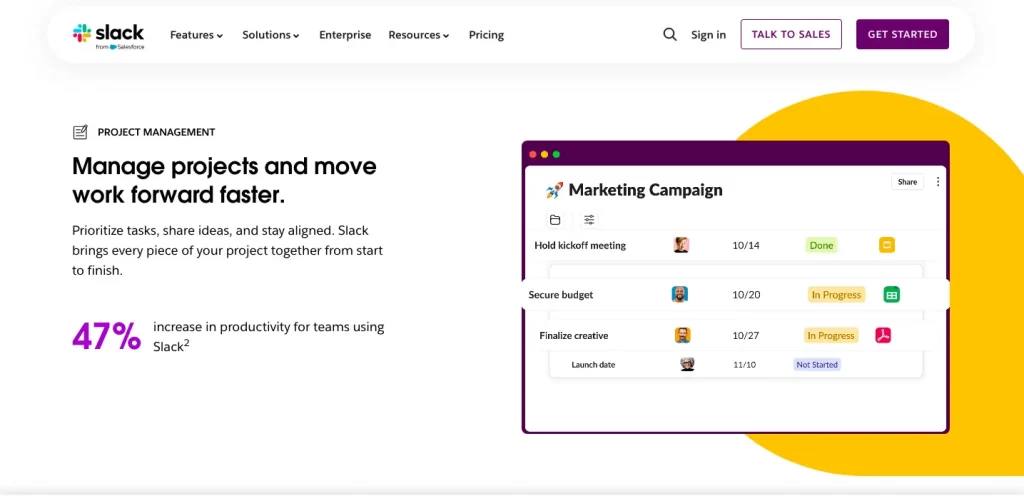
To make the impact even more concrete, Slack also quantifies the benefit: “47% increase in productivity for teams using Slack.”
9. Evoke Emotions
Logic might convince buyers, but emotion is what drives them to act. Even in B2B, people don’t just make decisions based on facts and figures—they want to feel understood, supported, and confident in their choice.
Alistair McKechnie explains why emotion is so powerful:
B2B consumers are extremely cynical about marketing. Justifiably so: 99% of ads are generic and dull. So what I’m trying to do is bypass customers’ critical filters by establishing an emotional connection.
Alistair McKechnie, Freelance B2B Tech Copywriter Mike King, a Freelance B2B SEO Content Writer, reinforces the point:
People always respond to emotion over facts. So include something that reaches people where they are, showing you empathize with their situation.
 Mike King, Freelance B2B SEO Content Writer
 Practical tips
- Identify emotional triggers: Think about what your audience fears (missed deadlines, wasted budget) and what they desire (recognition, peace of mind, efficiency).
- Balance logic with empathy: Pair hard data (ROI, time saved) with emotional outcomes (feeling in control, having more free time).
- Tap into your audience’s biggest dream: Go beyond pain points and speak to their aspirations. Show how your product helps them achieve the success they’ve been dreaming about.
Example
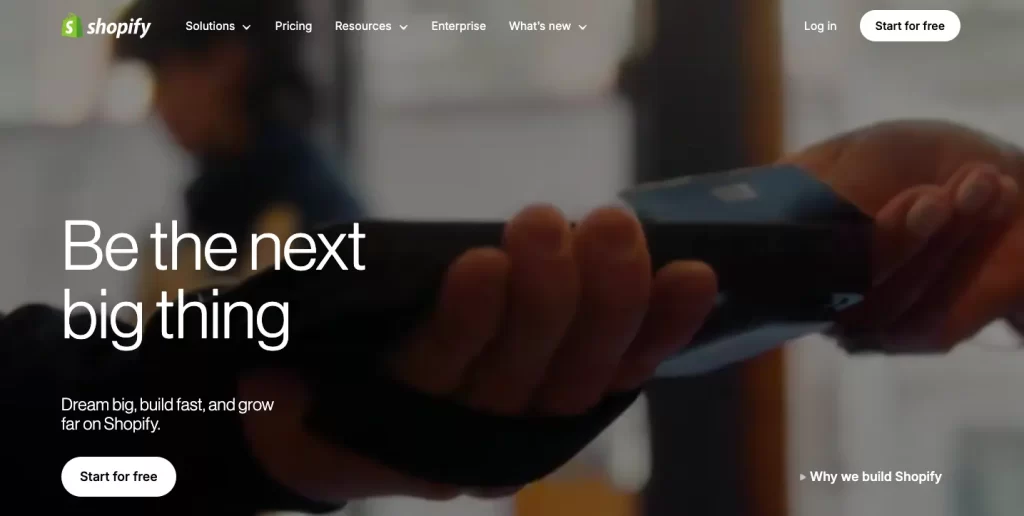
Shopify uses a simple yet powerful tagline, “Be the next big thing,” that speaks directly to the ambition of small business owners and startup founders.
It paints a picture of success and growth, making the emotional payoff clear: Shopify isn’t just a tool to build a store—it’s the platform that helps you achieve your bigger vision.
10. Pick an Enemy
In a crowded SaaS market, playing it safe often makes you invisible. One of the boldest—and most effective—copywriting tactics is to pick an enemy.
By calling out what you stand against, you sharpen your positioning and give your audience a clear reason to rally behind your product.
Diane Wiredu, the Founder of Lion Words, sums it up perfectly:
Explicitly calling out your main competitor is an incredibly powerful copywriting tactic. Your business does not exist in isolation and B2B buyers are not shopping in a vacuum, they are shopping around and weighing you up against alternatives.
 Diane Wiredu, Founder, Lion Words
 And your “enemy” doesn’t always have to be competitors. Maybe it’s a certain concept, way of thinking, or even a well-established industry that goes against your company’s values and beliefs.
Practical tips
- Define your enemy clearly: It could be a competing product, outdated ways of working, or an overhyped industry trend.
- Position yourself as the alternative: Frame your software as the antidote to the enemy, showing prospects there’s a better way forward.
- Reinforce your message in everything you do: From website copy to social media posts, make sure your messaging consistently highlights what you stand against and how your software offers a better solution.
Example
Users are constantly looking for faster, cheaper, and better alternatives to popular, well-established apps. By calling out where the big players fall short, you can emerge as the smarter choice.
This is exactly what ButterDocs does. Their homepage headline says it all:
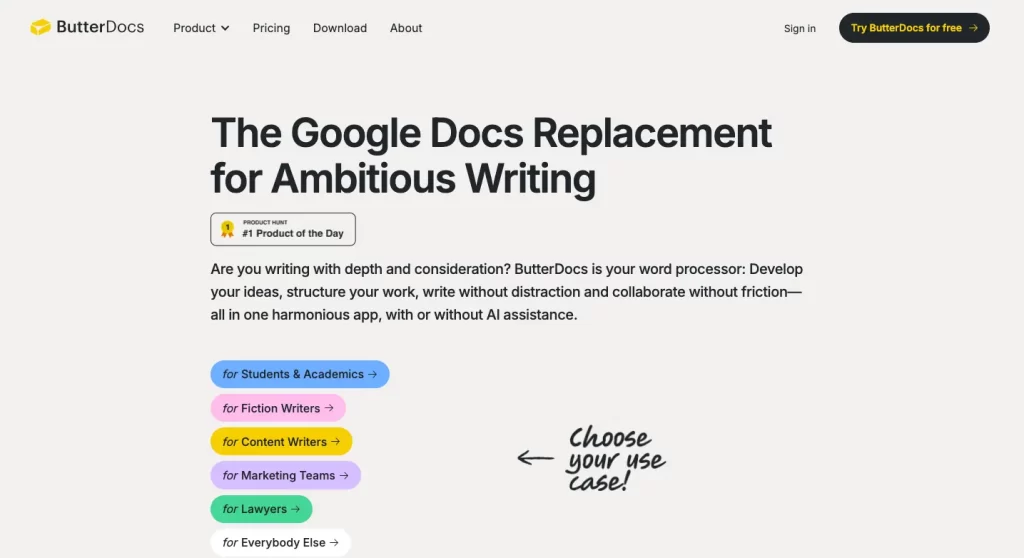
Instead of blending in with vague promises about collaboration, ButterDocs positions itself directly against the market leader.
The copy makes it clear who they’re competing with, who their product is for, and why it matters. It’s bold, memorable, and instantly gives prospects a reason to pay attention.
11. Make it Easy to Get Started
The end goal of your copy is to get people to sign up for your software. This is where strong CTAs (calls-to-action) come in.
A well-crafted CTA should be action-oriented, concise, and crystal clear. But beyond that, it should also remove objections.
According to Sarah Stenlund, our Senior Content Marketing Manager, your CTA has to make the next step feel easy and risk-free:
If someone hesitates to click, it’s usually because they’re worried about cost, commitment, or complexity. Addressing those fears directly in your CTA lowers the barrier to entry.
 Sarah Stenlund, Senior Content Marketing Manager, Position Digital
 Practical tips
- Eliminate risk: No one wants to lose their money. So, use phrases like “30-day money back guarantee” or “Cancel anytime” to eliminate risk.
- Remove friction: Reassure users that getting started won’t take long with CTAs like “No credit card required” and “Get started in minutes.”
- Use low-commitment words: Instead of “Buy” or “Subscribe”, use phrases like “Try for free,” “Start your free trial,” or “Book demo.” This makes the action feel less intimidating, encouraging users to take the first step without overthinking commitment.
Example
Monday.com ensures that users won’t be asked to submit their credit card information, and they can use the free plan for as long as they want.
This reassurance removes two of the biggest barriers to sign-up: fear of hidden charges and pressure from time-limited trials.
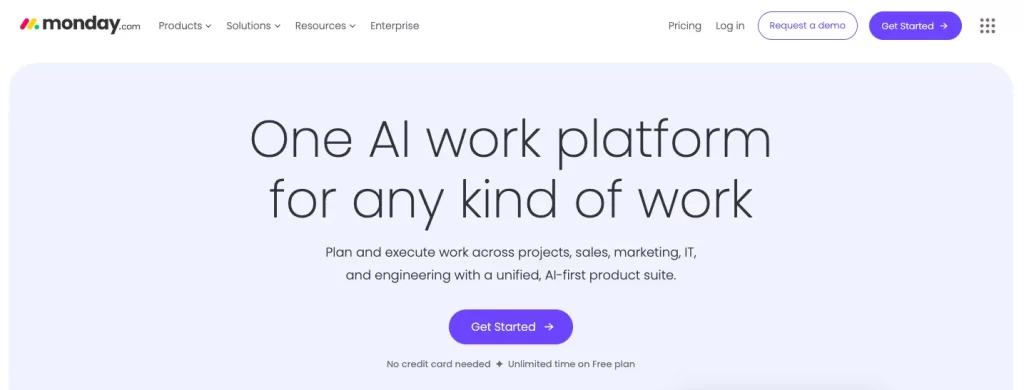
Combined with a simple CTA like “Get Started,” it makes the first step feel effortless and risk-free.
Want More Signups? Partner With a B2B SaaS Copywriting Agency
Strong copy is the difference between a visitor bouncing and a visitor signing up to your software.
At Position Digital, we specialize in helping B2B SaaS brands craft copy that resonates and converts.
Whether you need landing page copy, website messaging, or content that supports the buyer journey, our SEO copywriting services help you attract more visitors and convert them into paying customers.
Ready to boost conversions? Get in touch today!