Listing your SaaS product in the right directories is one of the fastest ways to earn the third-party citations that both Google and AI engines now lean on when deciding who to trust and recommend.
We’ve compiled and curated a list of 260+ SaaS directories that you can use to build brand awareness, trust, and search visibility.
You can find the full directory database here.
But here’s the thing: not all directories are worth pursuing. Some of them have zero traffic and AI citations, so getting listed there won’t do much to your visibility.
That’s why, for this guide, I’ll focus on the top 50 SaaS directories that you should prioritize first.
The 50 Best SaaS Directories at a Glance
How We Curated the SaaS Directories
To build this list, I used Claude Code to scrape SaaS directories, listings, and communities from across the web, then split them into several categories:
- Software review platforms
- Startup launch platforms
- SaaS directories
- Startup directories
- AI Tool directories
- API & MCP server directories
- Communities & forums
From there, I manually checked and reviewed every entry to confirm it was still live, accessible, and genuinely worth submitting to, cutting anything dead, duplicated, or low quality.
Then, for each category, I ranked the directories using domain data from Ahrefs, looking at three metrics in particular:
- Domain rating. The strength and authority of each domain.
- Monthly traffic. The estimated organic search traffic each directory receives per month.
- AI citations. The total number of AI citations across AI Overviews, AI Mode, ChatGPT, Gemini, Perplexity, Grok, and Copilot.
Disclaimer: the domain data isn’t 100 accurate; but it should give you a clear picture of which platforms to submit your tool.
Here’s my curated list.
Software Review Platforms
Having well-optimized profiles in review sites correlates with significantly higher AI citation rates across all platforms, verticals, and brand sizes, according to an AI SEO study by Seer Interactive.
Another study by SE Ranking also found that domains with profiles on review platforms have 3x higher chances to be chosen by ChatGPT as a source, compared to sites without such presence.
Here are the top review platforms that can greatly impact your AI visibility:
G2
- Domain rating: 91
- Monthly traffic: 728k
- AI citations: 92k
- Listing: Free
G2 is the largest B2B software review platform on the web, hosting over 3 million verified user reviews across 2,000 product categories.
It’s also the most cited review platform on ChatGPT, Perplexity, and Google’s AI Overviews for software related queries (Radix).
And since G2 is now the parent company of Capterra, GetApp, and Software Advice, a presence on G2 increasingly anchors your visibility across the largest network of software review sites on the web.
All these factors make a well-maintained G2 profile one of the highest-value listings a SaaS product can hold.
Capterra
- Domain rating: 91
- Monthly traffic: 489k
- AI citations: 68k
- Listing: Free
Established in 1999, Capterra is the pioneer of the online software review category, predating most of the platforms it now sits alongside.
It’s now used by over 3 millions of active buyers each month to shortlist and compare tools, who typically arrive already searching for a specific type of software, making it strong for reaching purchase-ready buyers.
Capterra was acquired by G2 in early 2026 alongside GetApp and Software Advice.
Trustpilot
- Domain rating: 94
- Monthly traffic: 18+ million
- AI citations: 751k
- Listing: Free
Trustpilot is one of the most widely recognized consumer review platforms, with over 60 million active users.
Having a well-optimized Trustpilot profile can really boost your AI visibility. According to Seer Interactive, companies with no Trustpilot profile have a median AI citation rate of 1%. Brands with even a minimal profile (as few as 1–13 reviews) jump to 53.5%.
But be careful. Unlike G2 and Capterra, which only allow actual users of each product to leave a review, Trustpilot doesn’t have the same verification in place.
Anyone can leave a review, whether or not they’ve genuinely used your product, which is why a lot of SaaS brands carry lower ratings on Trustpilot.
Software Advice
- Domain rating: 87
- Monthly traffic: 230k
- AI citations: 45k
- Listing: Free
Software Advice is a recommendation-led review platform aimed at buyers who want guidance, not just a directory to browse.
Alongside reviews and comparisons, it pairs buyers with personalized software shortlists, often through one-to-one advisor calls, so the traffic it sends tends to be high-intent and close to a purchase decision.
It’s the third of the three former Gartner Digital Markets sites now owned by G2, so if you’ve already listed on Capterra your product appears here automatically.
GetApp
- Domain rating: 85
- Monthly traffic: 94k
- AI citations: 25k
- Listing: Free
GetApp is the third member of the G2 Digital Markets. It hosts over 2.5 million verified user reviews across more than 1,000 software categories.
All reviews are manually checked by human moderators who confirm reviewers are real and screen for plagiarism and AI-generated text.
The base listing is free, with paid sponsored profiles and pay-per-click placement available on top.
TrustRadius
- Domain rating: 84
- Monthly traffic: 72k
- AI citations: 25k
- Listing: Free
TrustRadius is built around long-form, verified reviews aimed squarely at B2B technology buyers.
It holds fewer reviews than the bigger directories, but each one is rigorously vetted. Reviewers have to authenticate via a corporate email or LinkedIn, and TrustRadius confirms genuine product experience before publishing.
That makes it a strong fit for considered, higher-ticket SaaS purchases where buyers want detailed peer experience rather than a star rating.
SourceForge
- Domain rating: 92
- Monthly traffic: 2.4 million
- AI citations: 25k
- Listing: Free
SourceForge is the highest traffic B2B software review platform on this list, driving over 2.4 million users each month.
The site began as the home of open-source projects and downloads, and that heritage still shapes its audience: a large share of buyers arrive via developer tools, freemium SaaS, and IT-focused software rather than enterprise procurement.
Reviews are verified (via LinkedIn or proof of billing) but the editorial bar is lighter than buyer-trust platforms like TrustRadius or G2.
Startup Launch Platforms
Are you launching a new product? The best way to create buzz and attract early adopters is through startup launch platforms.
Here are the ones you should consider.
Product Hunt
- Domain rating: 91
- Monthly traffic: 375k
- AI citations: 6.7k
- Listing: Free
Product Hunt is the best-known launch platform in tech, where makers post new products for a community of early adopters, founders, investors, and product people to discover, upvote, and comment on.
Products compete on a daily leaderboard, with the top spots (Product of the Day, Week, and Month) driving the most exposure, traffic, and press pickup.
Anyone can submit a product for free, and you can launch each major version (v1, v2, v3) separately, so it’s a channel you can return to as you grow.
Hacker News (Show HN)
- Domain rating: 91
- Monthly traffic: 733k
- AI citations: 51k
- Listing: Free
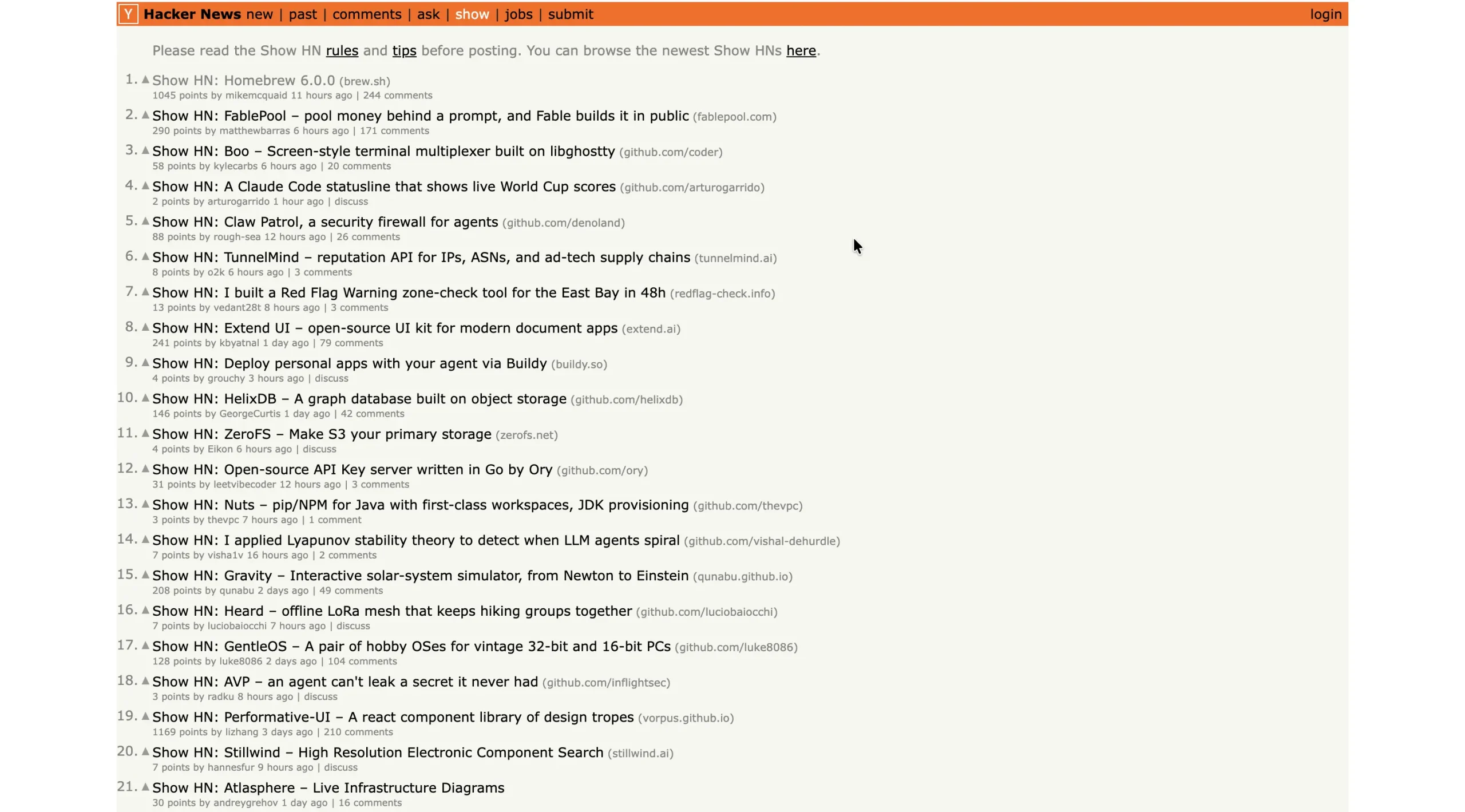
Hacker News runs a “Show HN” section where makers post things they’ve built for the site’s large community to try and discuss.
It isn’t a structured directory, there are no profiles or categories, just a submission and a comment thread. But a post that lands well draws a sharp, developer-heavy audience and a burst of high-authority traffic, backlinks, and discussion.
That makes it especially valuable for developer tools, open-source projects, and technical SaaS, where this crowd is exactly the early adopter you want.
AppSumo
- Domain rating: 83
- Monthly traffic: 108k
- AI citations: 2k
- Listing: Free (but curated)
AppSumo is a deals marketplace, where SaaS companies list their product at a steep one-time, lifetime-access price for a limited window (usually a few weeks) to reach its large audience of founders, freelancers, and small businesses.
Listing is free in the sense that there’s no upfront fee (AppSumo takes a commission on sales), but it’s curated: you apply, and not every product is accepted.
Peerlist
- Domain rating: 76
- Monthly traffic: 115k
- AI citations: 229
- Listing: Free
Peerlist is a professional network for developers and designers with a weekly Launchpad built for early-stage products.
It emerges as a friendlier alternative to Product Hunt: launches run on a week-long cycle starting every Monday rather than a single frantic day and every submitted project gets featured (not just a top 30).
Rankings are also randomized for the first couple of days, so smaller teams and solo founders aren’t drowned out.
TechPluto

- Domain rating: 49
- Monthly traffic: 5.1k
- AI citations: 439
- Listing: Free
TechPluto is a long-running startup and tech news blog that features new companies and covers emerging web technologies and trends.
It’s a Google News-approved publication, so a feature here is editorial coverage rather than a self-serve directory entry, which gives the resulting link and mention a bit more weight than a typical listing.
Its audience skews towards tech enthusiasts, investors, and early adopters, and the site positions itself as being read by VCs and angel investors scouting for new companies.
Submitting is free via its Submit a Startup page, though as with any editorial feature, coverage isn’t guaranteed.
Uneed
- Domain rating: 74
- Monthly traffic: 4.5k
- AI citations: 71
- Listing: Free
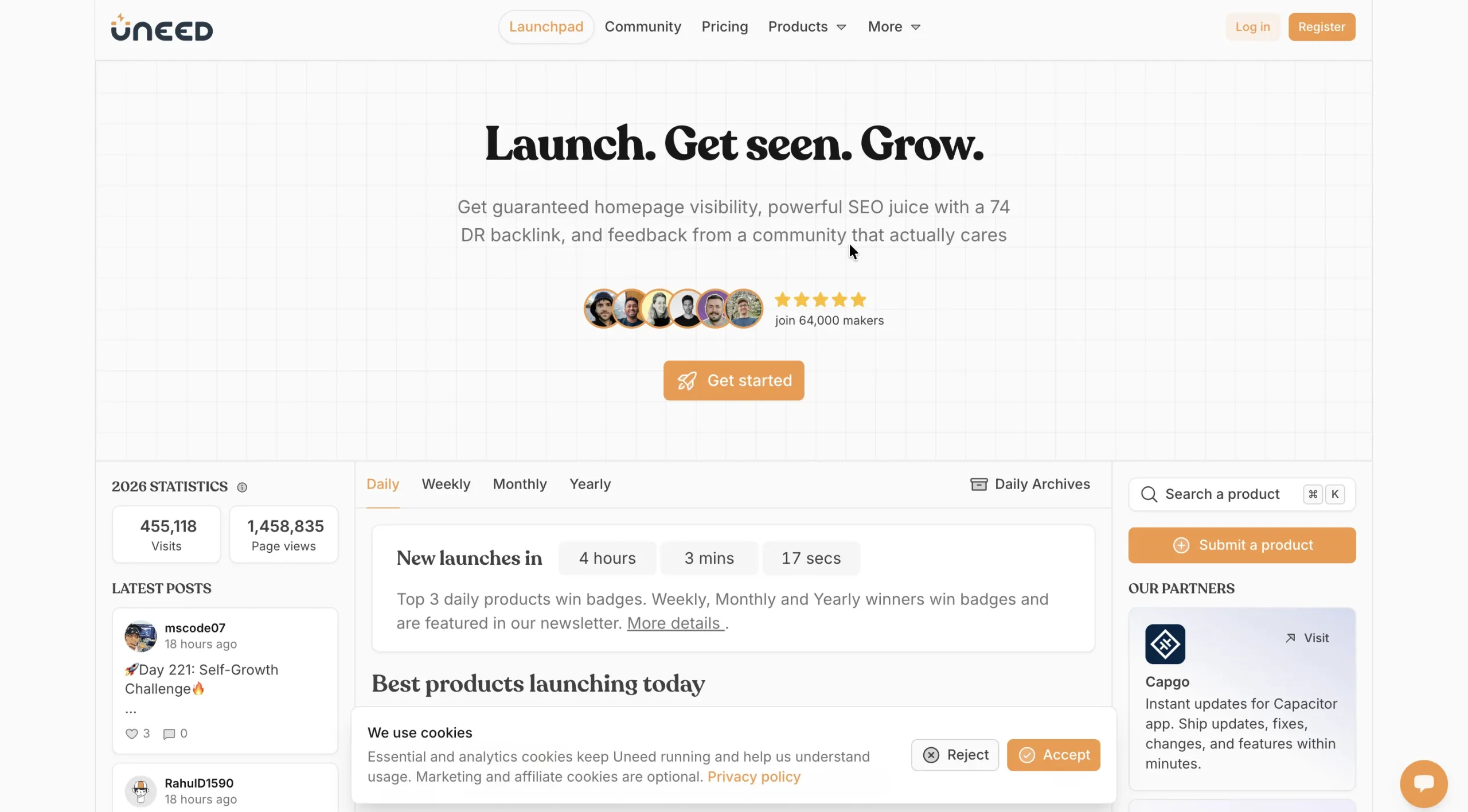
Uneed is a curated launch platform for indie makers and early-stage founders.
Rather than burying new products beneath the already-popular, every submission gets a chance to appear in the daily feed, which makes it a realistic shot at visibility for smaller teams.
Listing is free: you submit your product and join a waiting line, with the option to pay to skip the queue and pick an exact launch date.
A profile earns a dofollow backlink from a DR 74 domain, and you can relaunch when you ship significant updates.
SaaS Databases & Directories
Next up are the general SaaS databases and directories: the broad, searchable catalogues where buyers browse and compare software by category, feature, or use case.
Most are free, sit on high-authority domains, and take only minutes to join, so they’re some of the easiest wins on this whole list.
Here are the ones worth prioritizing.
GetLatka
- Domain rating: 72
- Monthly traffic: 29k
- AI citations: 7.6k
- Listing: Free
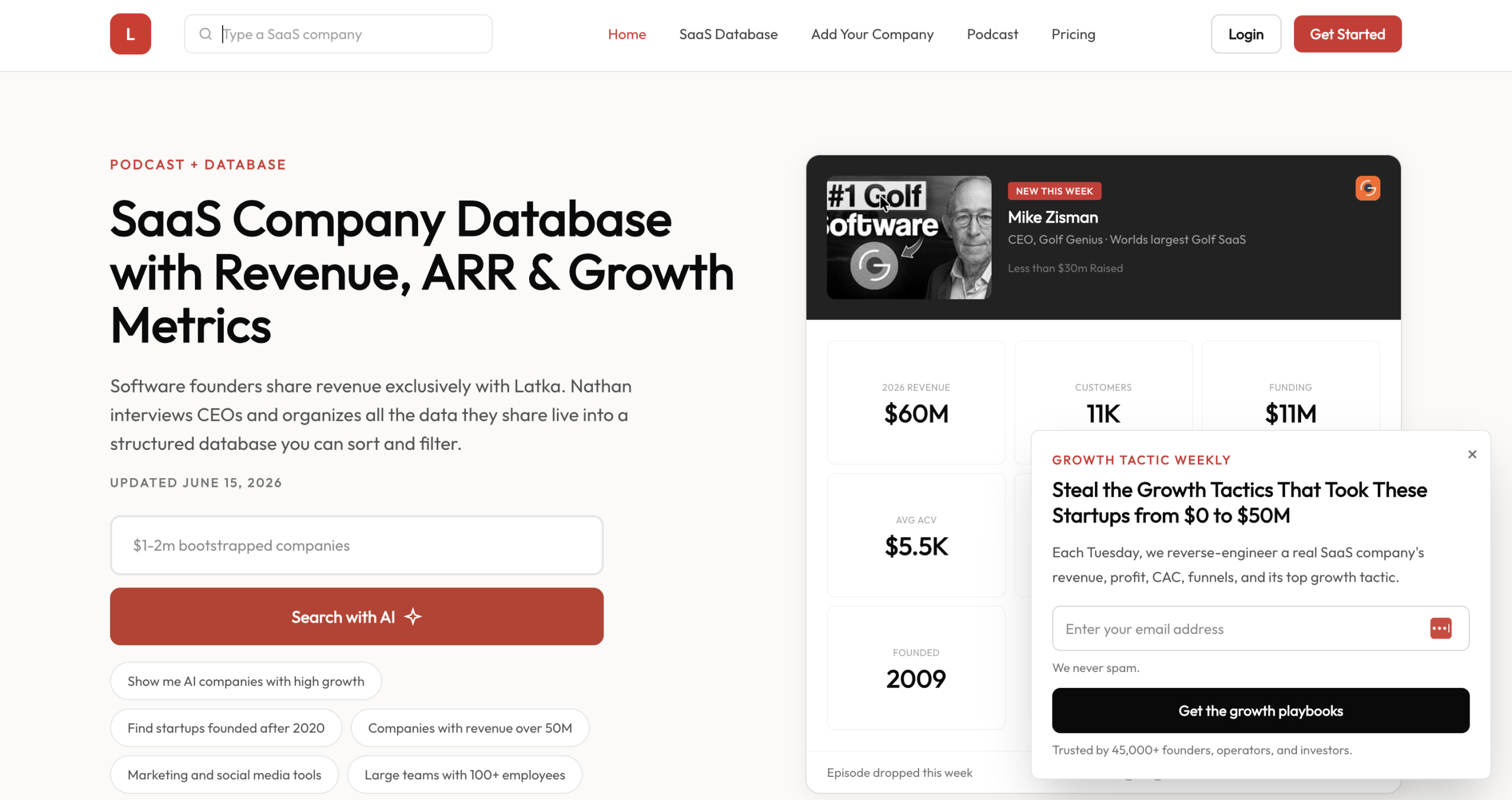
GetLanka is a SaaS company database that gives hard-to-find financial data like annual revenue, total customers, valuation, and funding.
A select few companies can also secure a recorded interview with founder Nathan Latka, which is a great way to share your software growth story and attract both investors and end users.
SaaSHub
- Domain rating: 79
- Monthly traffic: 9.1k
- AI citations: 2.6k
- Listing: Free
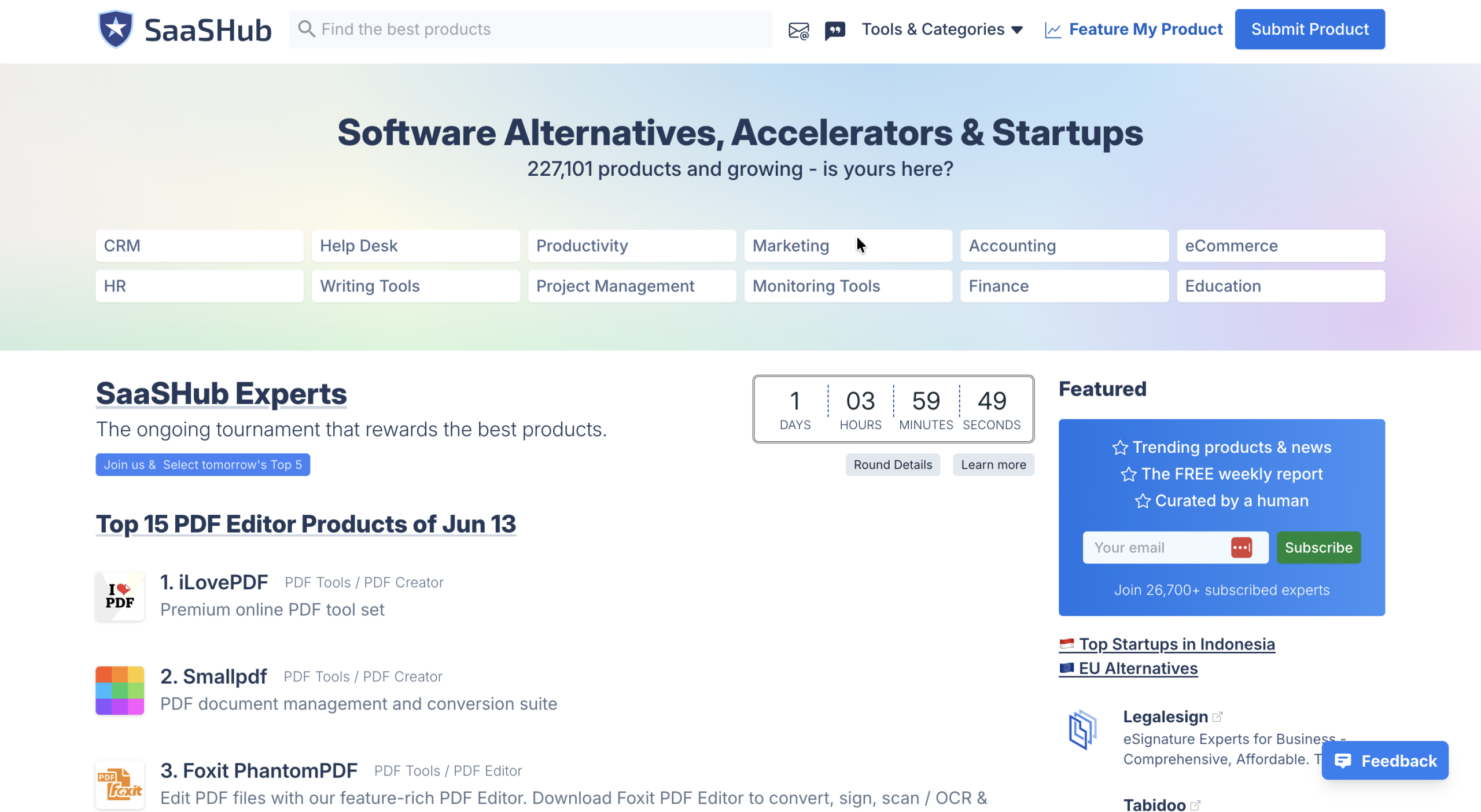
SaaSHub is a software discovery platform that helps users find, compare, and evaluate software products across hundreds of categories.
Unlike traditional review sites, SaaSHub focuses heavily on alternatives, comparisons, and curated rankings of products.
AlternativeTo
- Domain rating: 79
- Monthly traffic: 117k
- AI citations: 7.3k
- Listing: Free
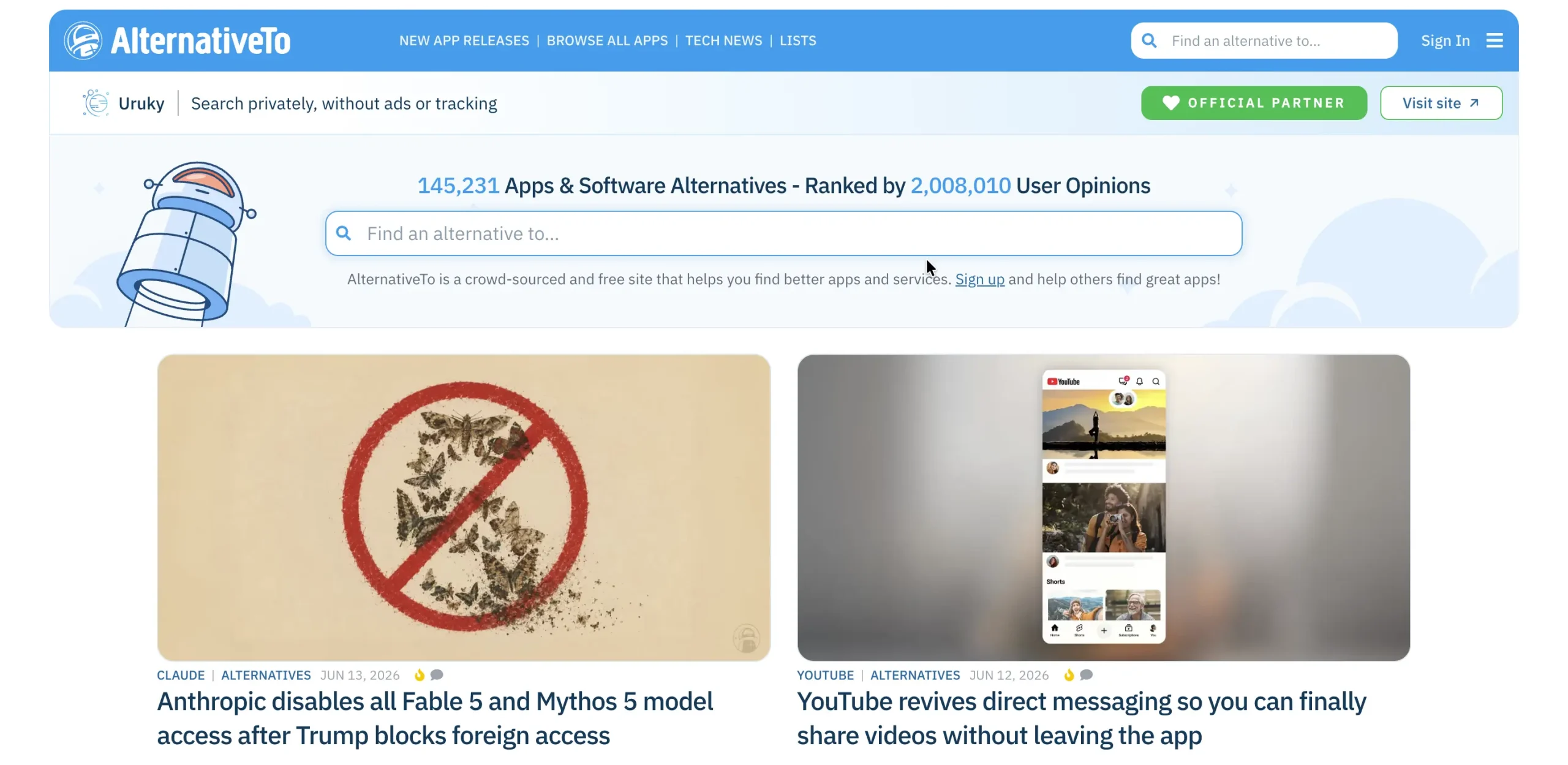
AlternativeTo is an independent software marketplace built around one core behaviour: people searching for alternatives to tools they already use.
List your product and it starts surfacing on the “alternatives” and side-by-side comparison pages for competing software.
This is exactly the kind of place your potential buyers land when they’re frustrated with their current tool and actively looking to switch.
Alternative.me
- Domain rating: 75
- Monthly traffic: 92k
- AI citations: 1.6k
- Listing: Free
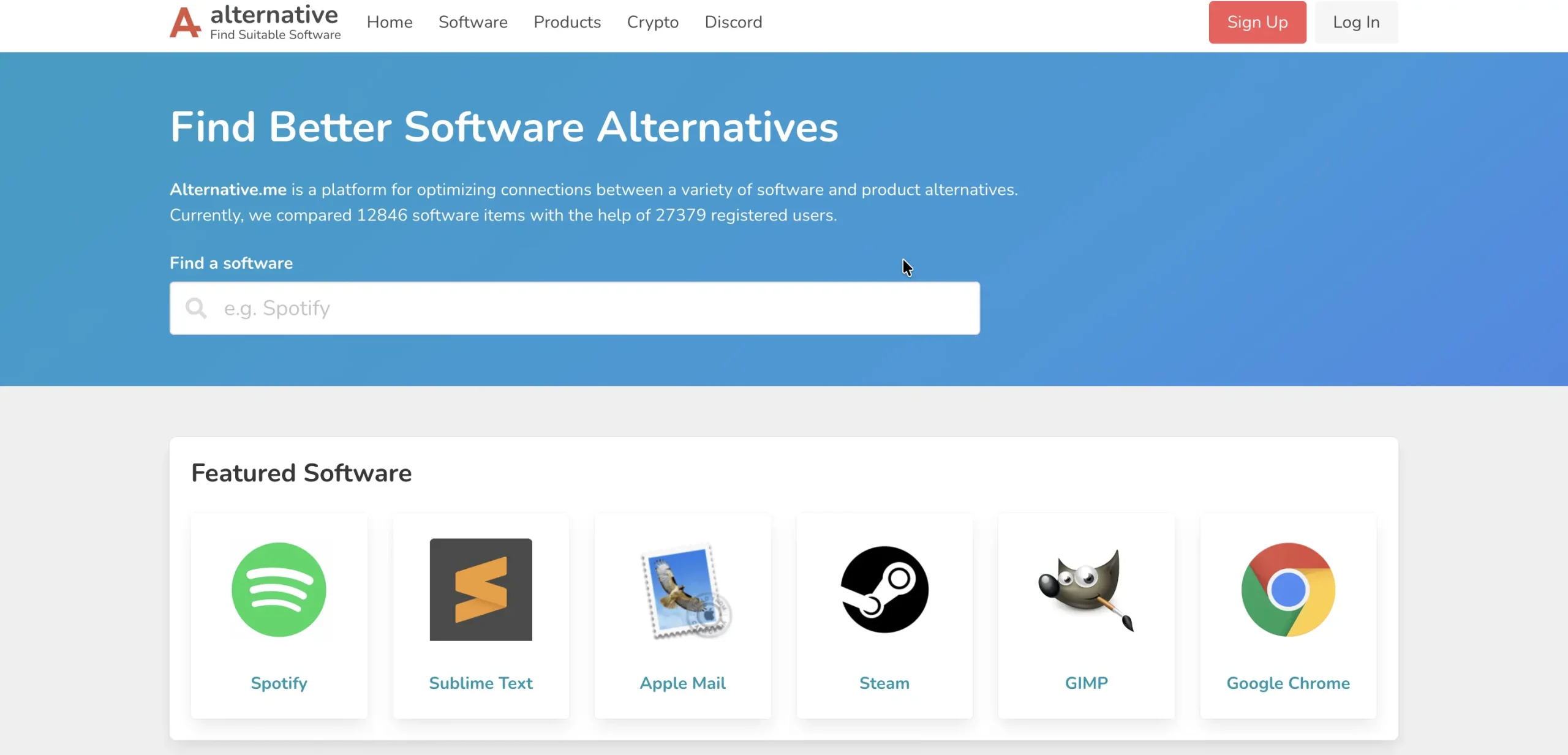
Alternative.me is a software recommendation platform designed to help users discover alternatives to popular applications and services.
Similar to AlternativeTo, it attracts visitors who are already familiar with a product category and are actively exploring competing solutions.
SaaSGenius
- Domain rating: 57
- Monthly traffic: 7.4k
- AI citations: 764
- Listing: Paid
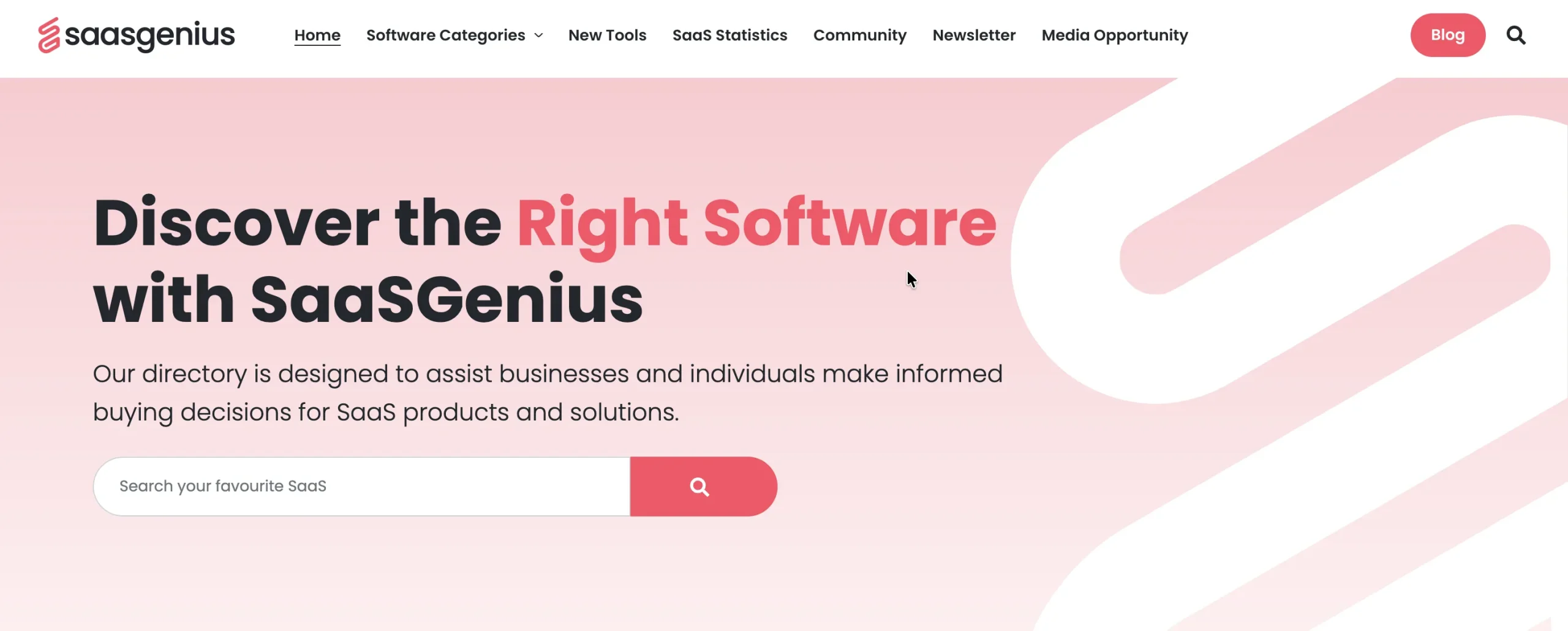
SaaSGenius is a curated business software directory built around reviews, comparisons, and its own 0–100 “Genius Score”, which rates tools on user reviews, expert assessment, and key features.
But here’s the catch: SaaSGenius no longer accepts free listings due to high demand and now only lists products through a paid service. However, it doesn’t specify the listing fee on its website.
Startup Stash
- Domain rating: 65
- Monthly traffic: 19k
- AI citations: 673
- Listing: Free
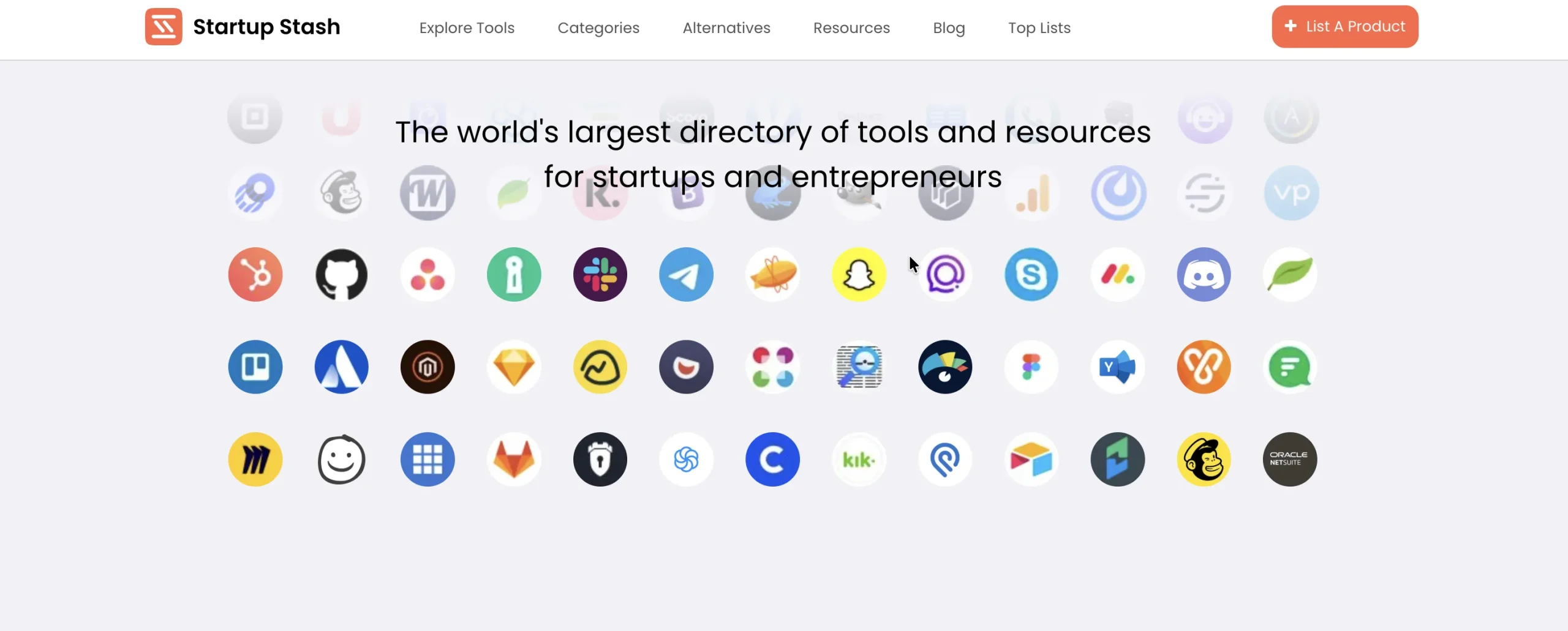
Startup Stash is a curated directory of tools and resources for startup founders, organized into categories like idea generation, marketing, raising capital, and customer support.
Listing is free, but you can also advertise on Stash to get your product featured on the website and weekly newsletter.
DiscoverCloud
- Domain rating: 36
- Monthly traffic: 8.4k
- AI citations: 465
- Listing: Free
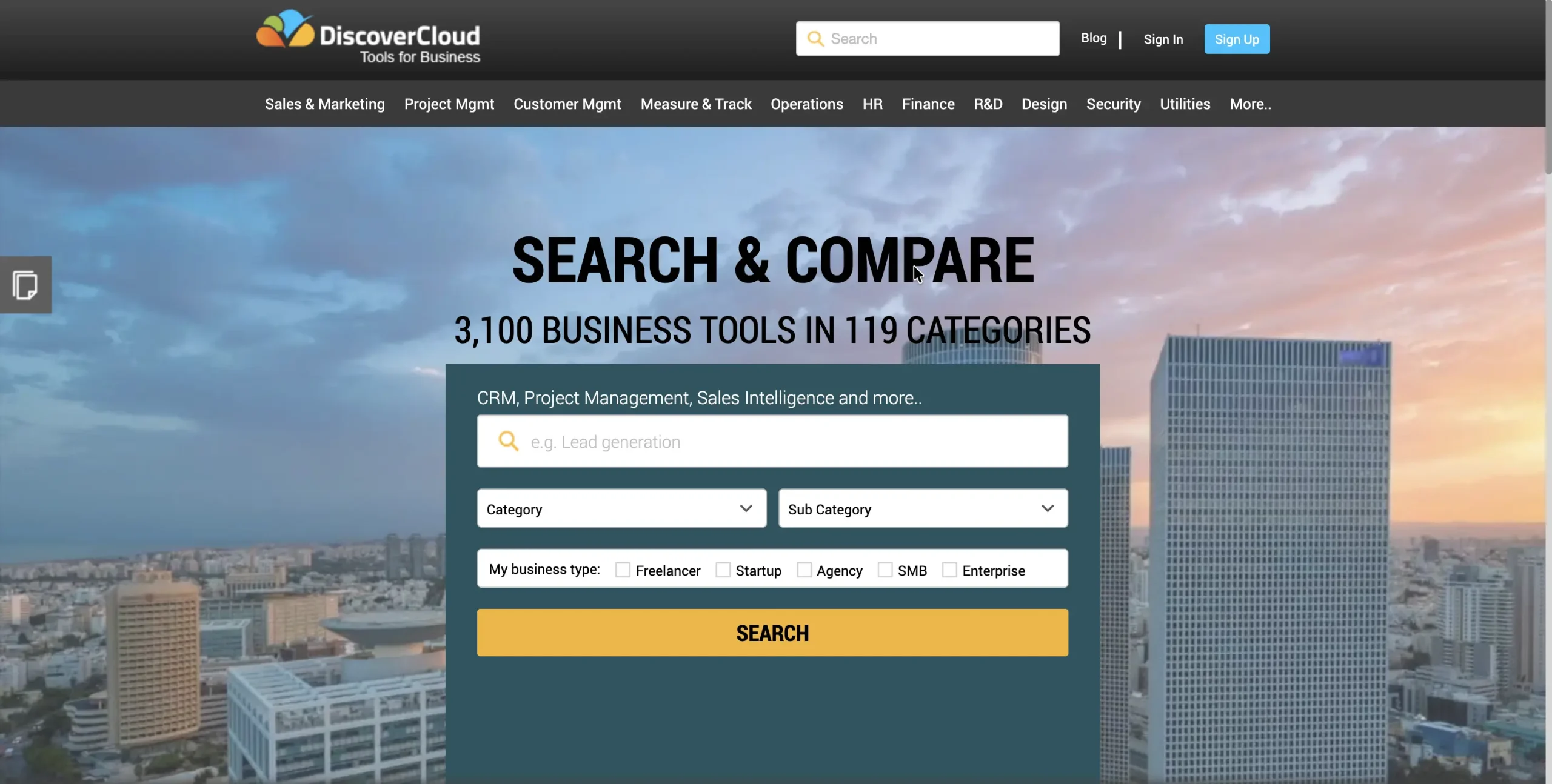
DiscoverCloud is a B2B marketplace for SaaS products and outsourced services, built to pair business buyers with the right software based on their use cases and needs.
It classifies listings by language, the needs a tool meets, and who it’s best suited for, which is aimed particularly at connecting international buyers and sellers.
Registering your product or service is free, and a listing earns you a profile plus a backlink, with paid premium tiers adding targeted advertising and “special offers” to drive conversions.
Startup Directories
The following platforms host an extensive database of startup companies.
They show crucial information like funding rounds, revenue, user count, and growth milestones — which is exactly what investors, journalists, and potential hires ask AI when researching startups.
Crunchbase
- Domain rating: 91
- Monthly traffic: 3.5 million
- AI citations: 146k
- Listing: Free
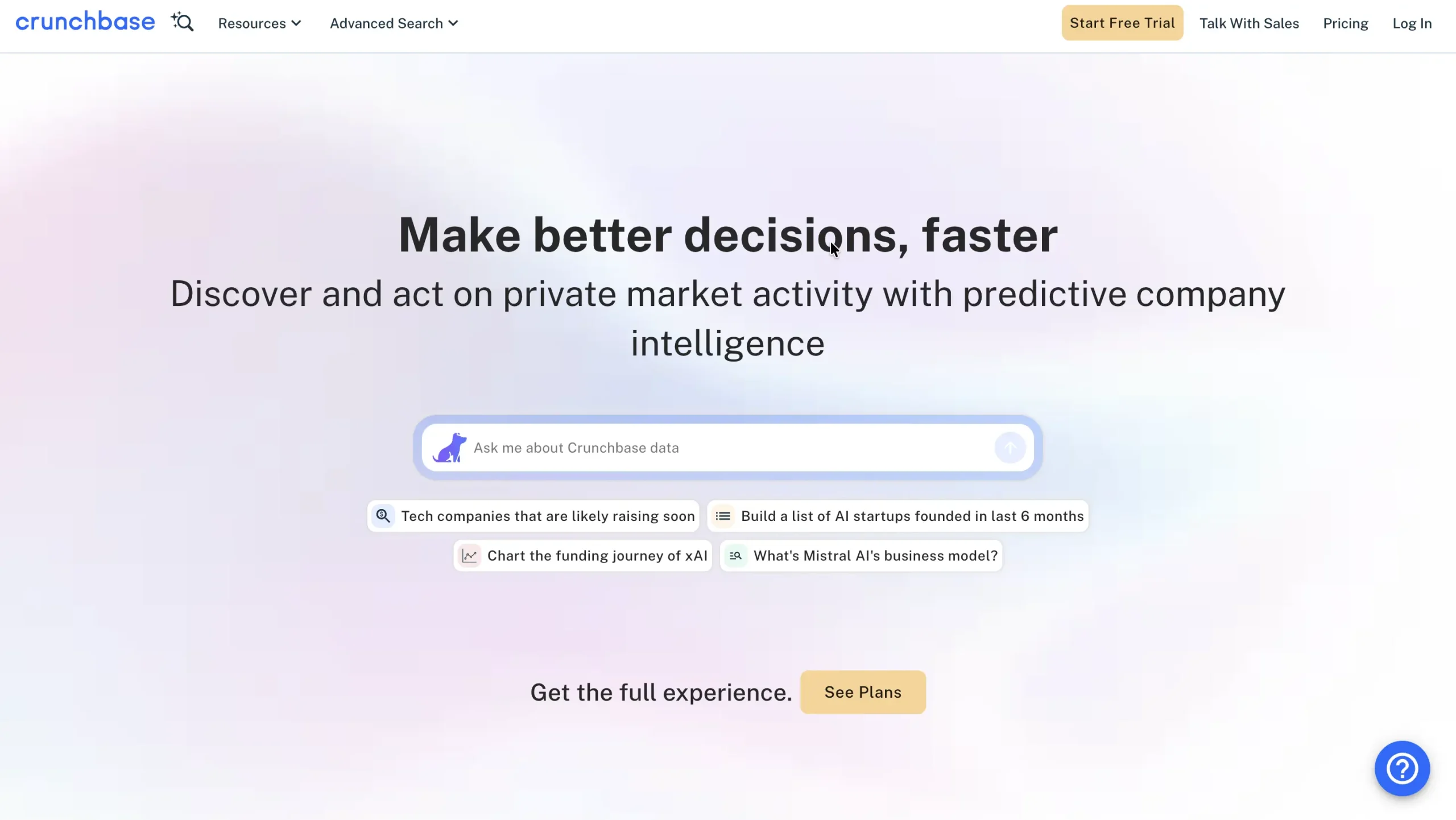
Crunchbase is one of the world’s largest startup and company databases, used by investors, journalists, researchers, and potential customers to discover and evaluate businesses.
Company profiles can include key information such as funding rounds, investors, leadership teams, acquisitions, and business milestones.
Because Crunchbase data is widely referenced across the web and frequently cited by AI systems, maintaining an accurate profile can help improve your startup’s discoverability and credibility.
Tracxn
- Domain rating: 78
- Monthly traffic: 1+ million
- AI citations: 177k
- Listing: Free
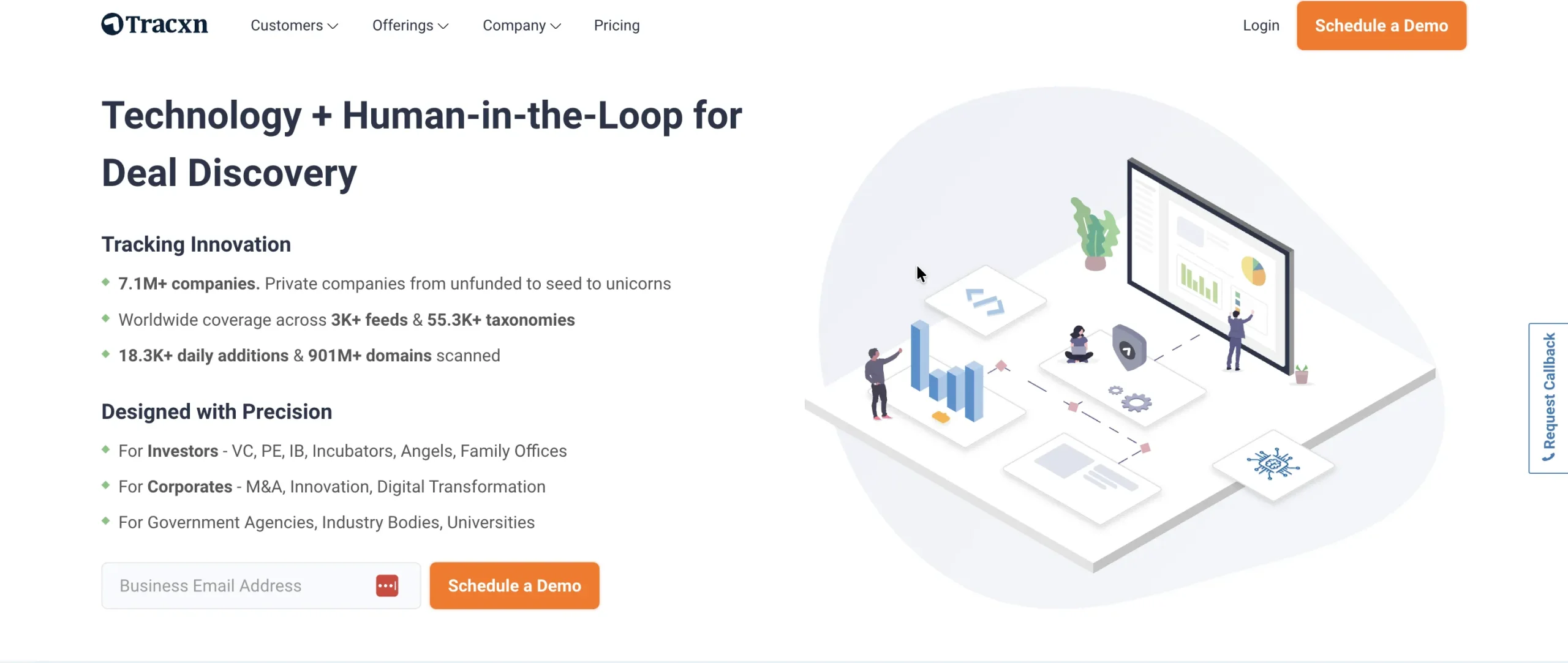
Tracxn is one of the largest private-company and startup intelligence platforms in the world.
It tracks millions of companies across thousands of sectors, used primarily by VCs, private equity, M&A teams, and corporate innovation groups to discover and research startups to acquire.
F6S
- Domain rating: 83
- Monthly traffic: 391k
- AI citations: 21k
- Listing: Free
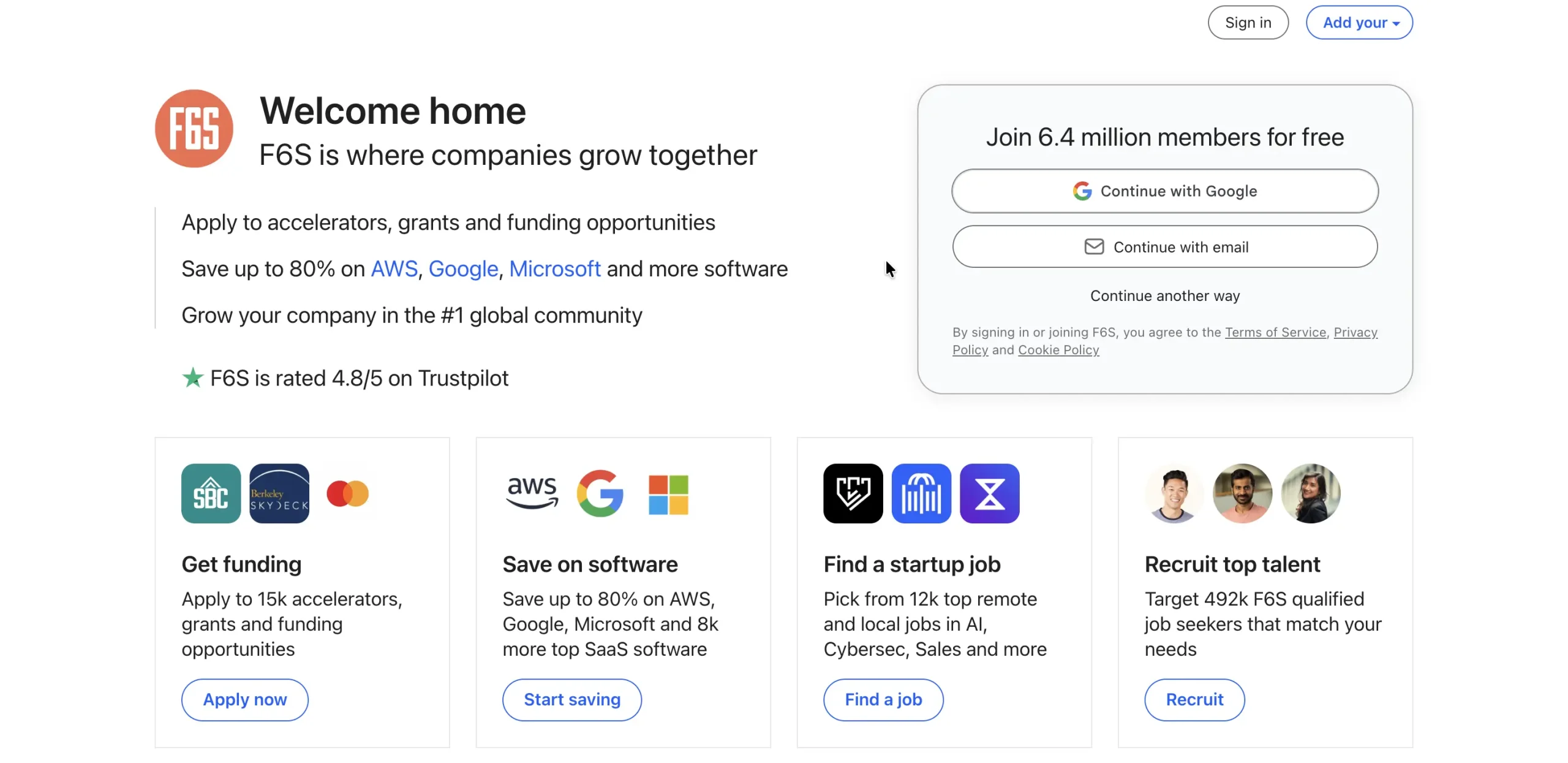
F6S is a global startup platform that connects founders with funding opportunities, accelerators, incubators, grants, investors, and startup programs.
Aside from that, a well-optimized listing can also improve your online presence, as F6S profiles frequently appear in search results and AI answers.
StartupBlink
- Domain rating: 72
- Monthly traffic: 12.3k
- AI citations: 419
- Listing: Free
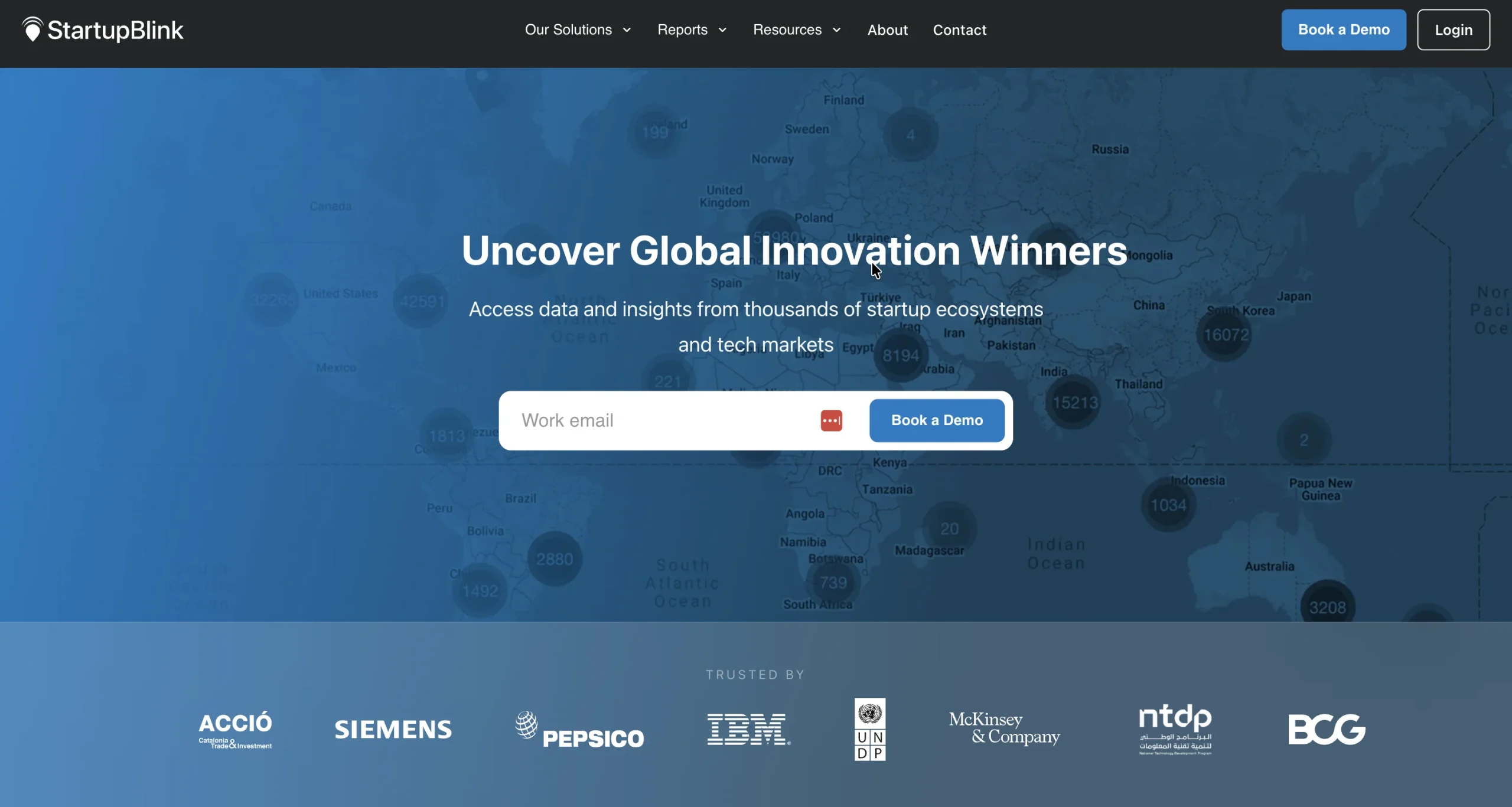
StartupBlink is a crowdsourced, interactive map plotting tens of thousands of startups, coworking spaces, and accelerators across 1,000 cities and 100 countries.
It’s best known for its annual Global Startup Ecosystem Index, a free ranking of cities and countries that’s widely cited by governments, press, and investors.
So, a presence on the map ties your company into a genuinely authoritative, frequently-referenced research resource.
Startup Ranking
- Domain rating: 61
- Monthly traffic: 12k
- AI citations: 367
- Listing: Free
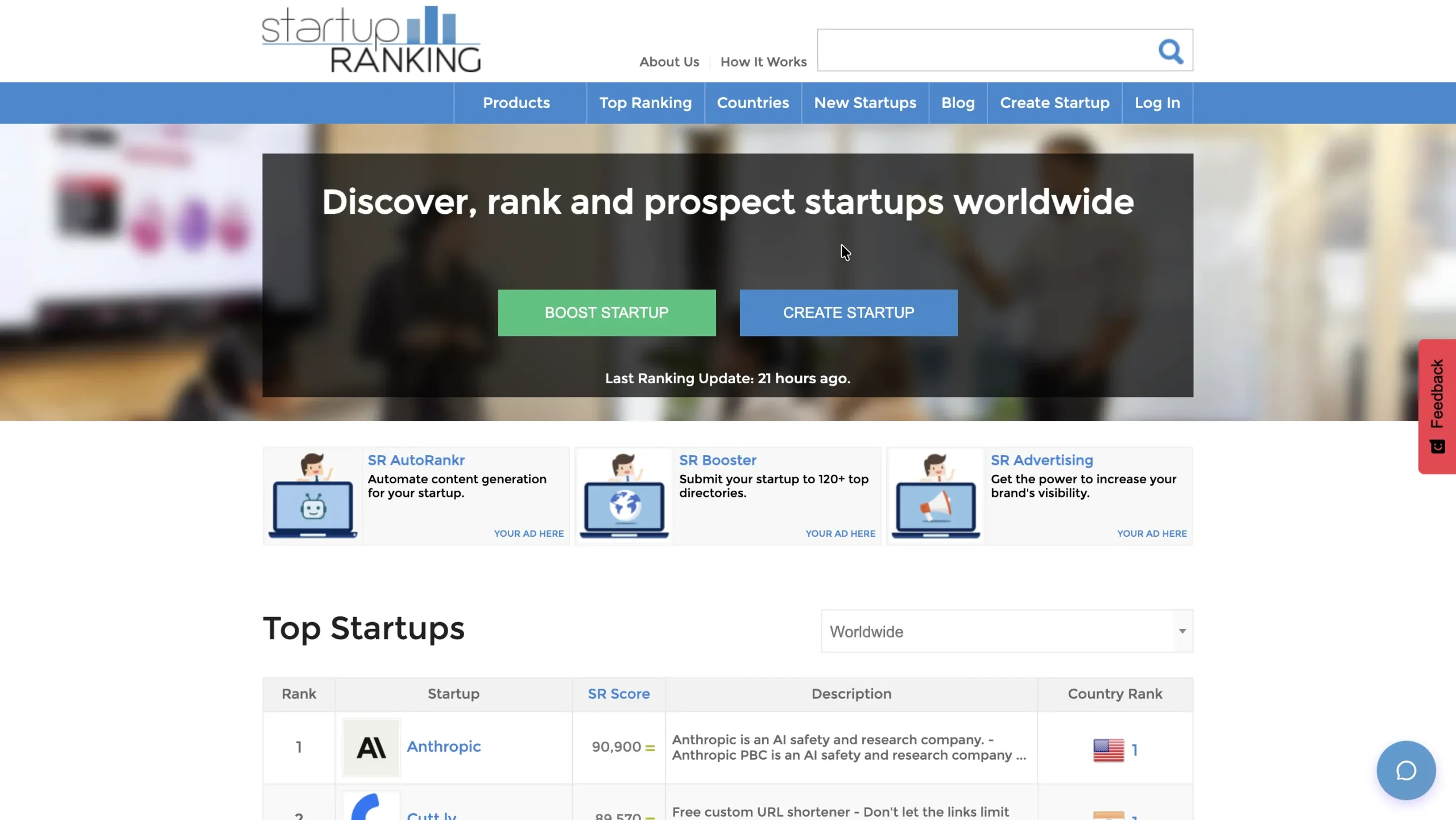
Startup Ranking is a global startup tracking directory that scores and ranks companies by online presence.
Each profile carries an “SR Score” (0–100,000), built from an SR Web component (the quantity and quality of links pointing to your site) and an SR Social component, with global, country, and state rankings derived from it.
Listing is free but the standard approval is slow, which could take up to 80 days, though a paid fast-track option drops that to around 24 hours if you’re in a hurry.
AI Tool Directories
If your product is an AI tool, or has a meaningful AI feature, it’s worth listing in the directories built specifically for AI software.
A lot of people are using these directories to find the right AI tools for their use cases.
There's An AI For That
- Domain rating: 77
- Monthly traffic: 1.6 million
- AI citations: 2.9k
- Listing: Paid ($49–$347)
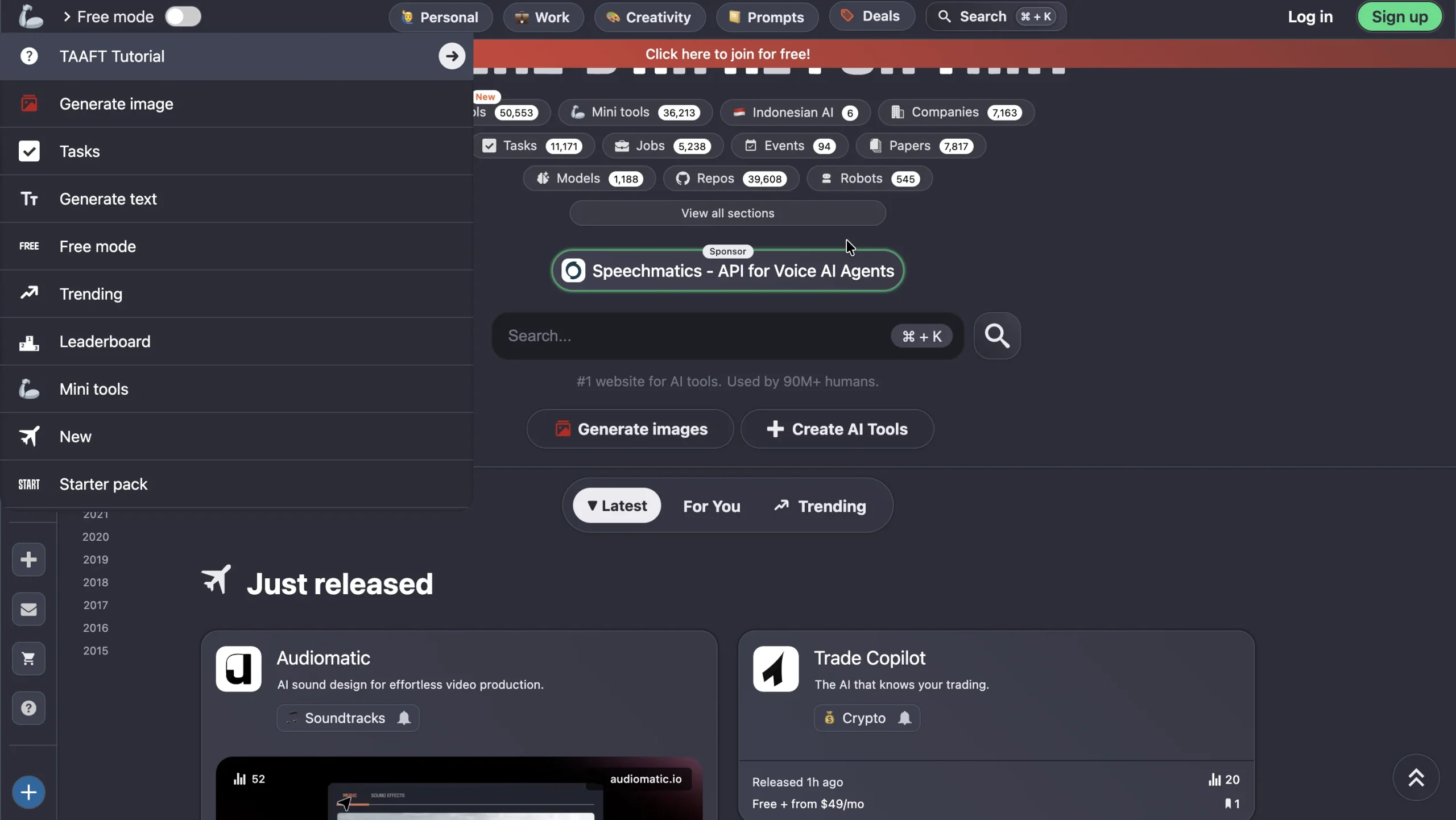
There’s An AI For That (TAAFT) is the largest AI-tool discovery site with over 1.6 million monthly visitors.
The platform is built around a task-based search: users type “I need an AI to do X” and get matched to the right tools.
Listings don’t expire, so a placement keeps sending traffic indefinitely. But unfortunately, submission isn’t free; you need to pay $49 to get listed on the website.
Futurepedia

- Domain rating: 72
- Monthly traffic: 106k
- AI citations: 1.7k
- Listing: Paid ($247–$497)
Futurepedia is a curated collection of AI tools, GPTs, and apps for working professionals, organized by role, task, and industry so buyers can browse by what they’re trying to do.
Each listing carries structured detail (features, use cases, pricing, direct links), and the editorial framing (guides, a newsletter, a YouTube channel) gives a placement more context than a bare directory row.
Listing is paid and editorially gated: you choose a tier, submit, and pay, with all submissions subject to editorial approval and a refund if your tool is rejected.
Toolify.ai
- Domain rating: 73
- Monthly traffic: 50k
- AI citations: 5.3k
- Listing: Paid ($99)
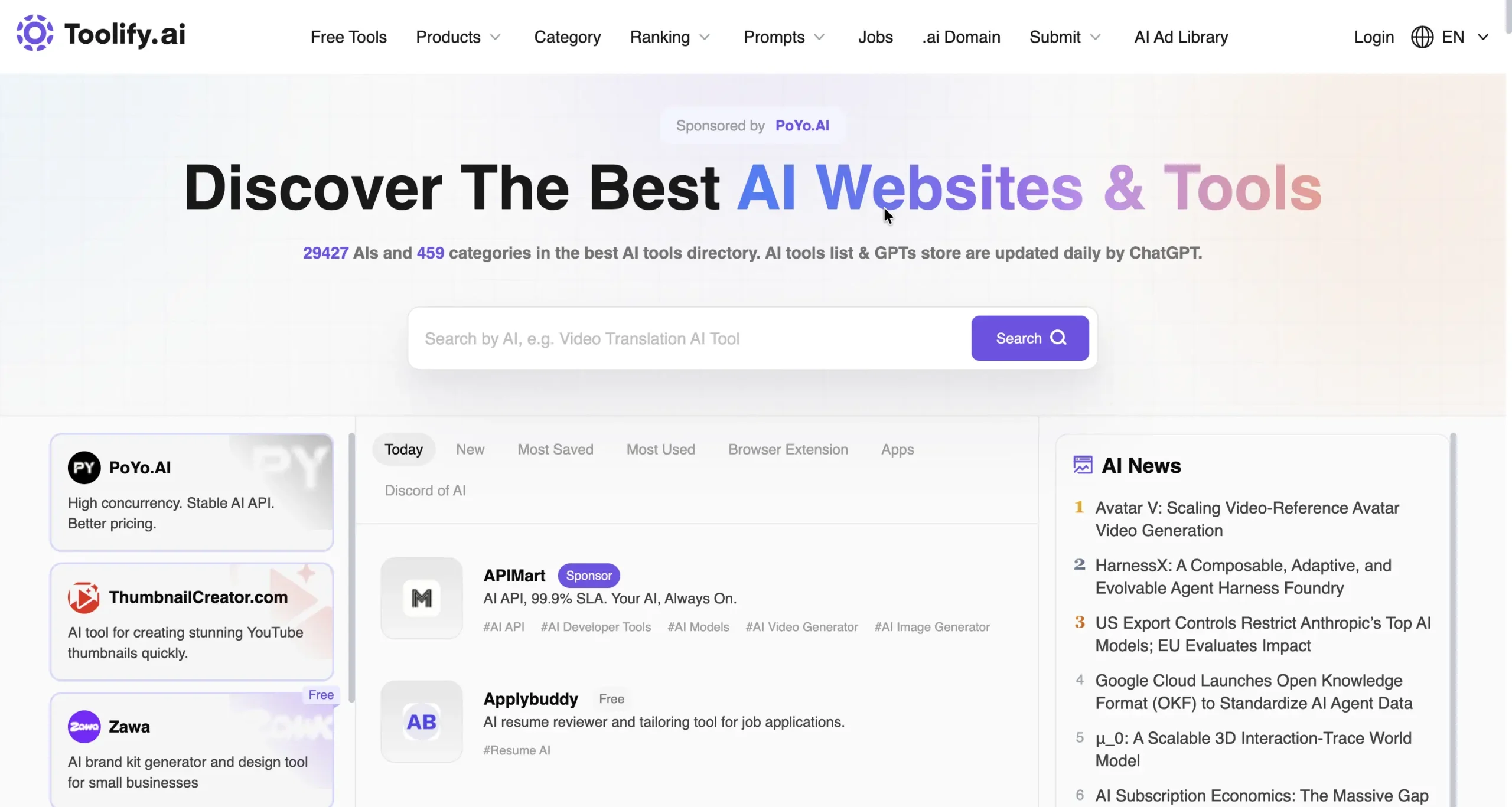
Toolify has an index of nearly 30,000 AI tools across 450+ categories with a granular, task-and-category taxonomy that’s auto-updated daily.
Its real strength for this guide is the link profile: a paid listing earns no less than six dofollow backlinks from a DR 73 domain, which is a materially better SEO return than the nofollow links you get free from TAAFT.
Aixploria
- Domain rating: 55
- Monthly traffic: 120k
- AI citations: 1k
- Listing: Paid ($79–$399)
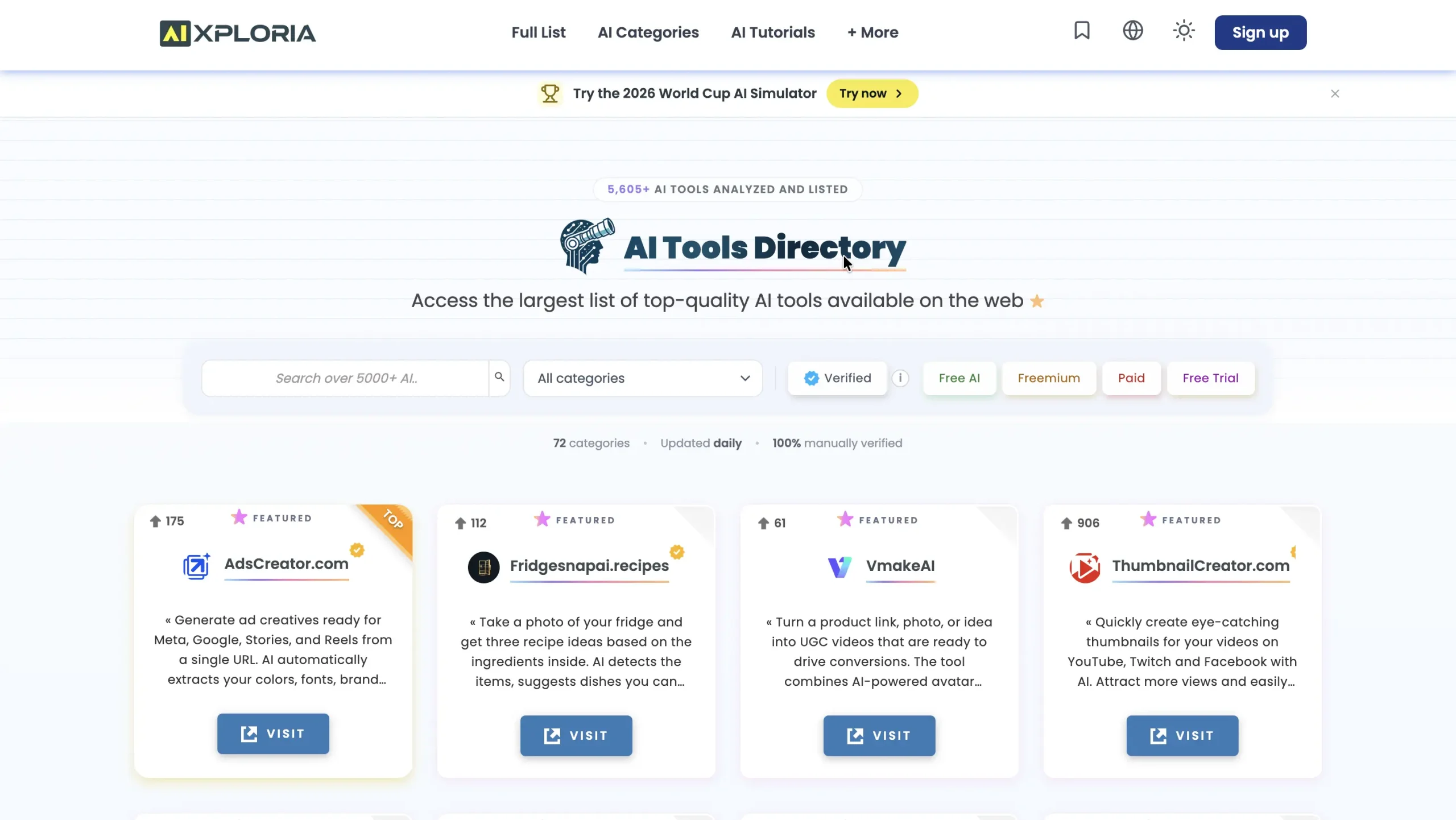
Aixploria is an AI-tool directory and search engine built around a clean, keyword-driven discovery experience.
Users can browse thousands of tools by category, profession, or price, with community voting and top-10 rankings layered on top.
It runs an editorial layer too, publishing explainer articles on how each tool works alongside the listings.
OpenFuture AI
- Domain rating: 53
- Monthly traffic: 146k
- AI citations: 72
- Listing: Free
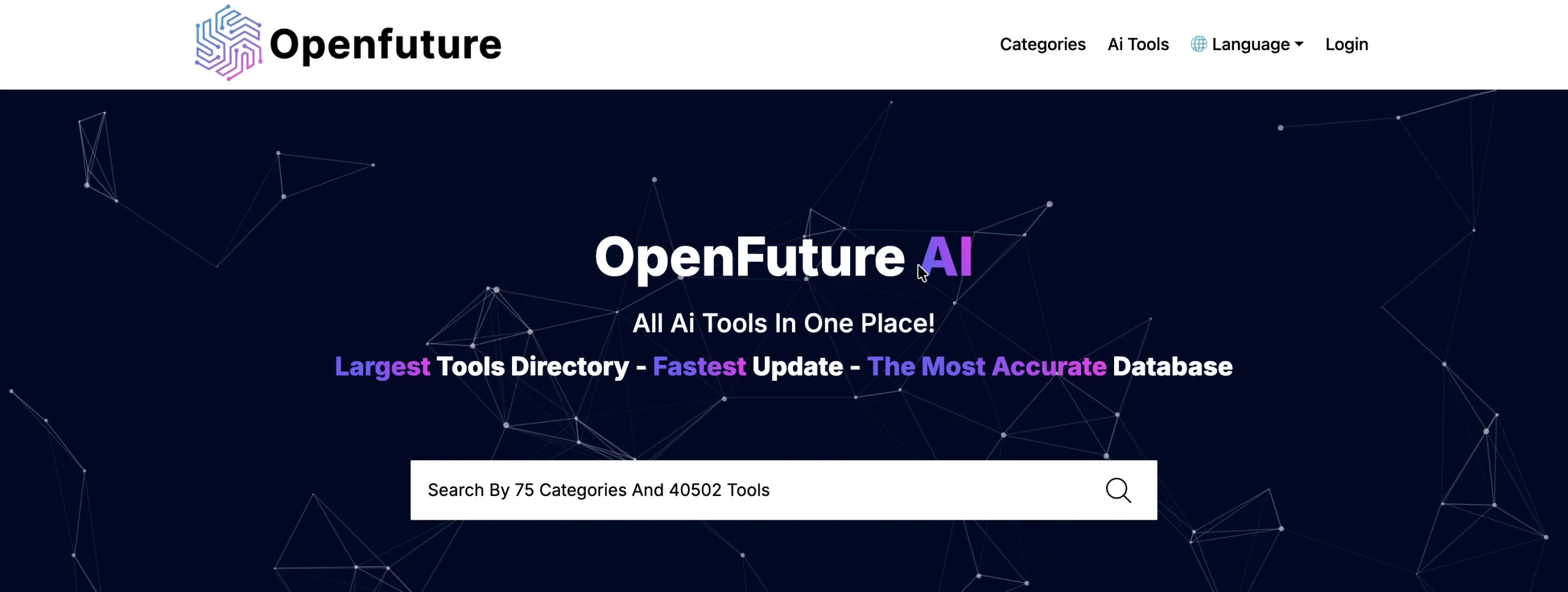
OpenFuture AI is a large, fast-updating AI-tool directory that aggregates tens of thousands of AI tools into one searchable, filterable library.
You can submit your tool for free, and get a profile in a high-traffic directory plus a backlink. The trade-off is OpenFuture AI has a very low AI-citation number compared to the paid platforms above.
TopAI.tools
- Domain rating: 61
- Monthly traffic: 30k
- AI citations: 479
- Listing: Paid ($47–$229)
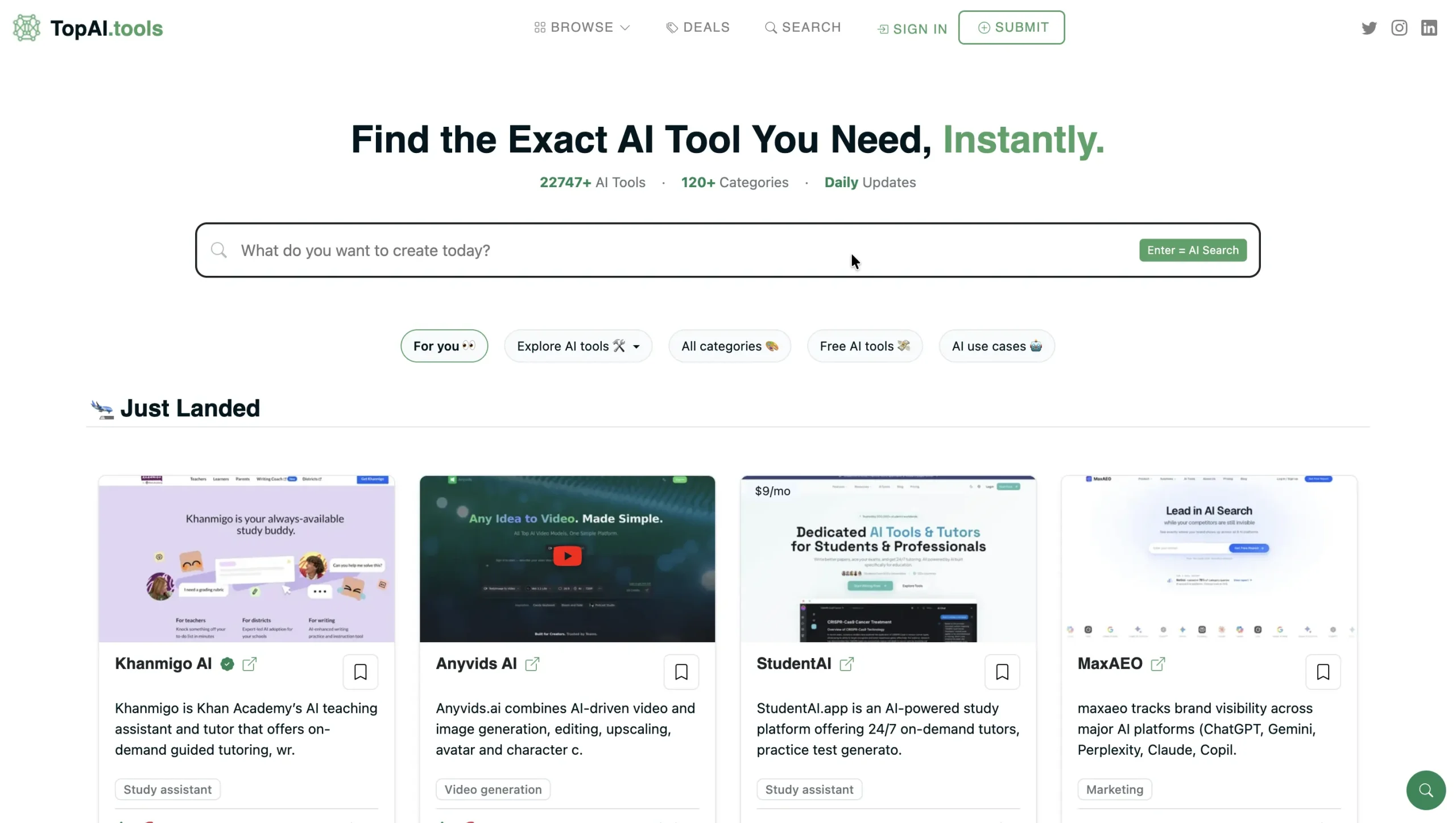
TopAI.tools is an AI-tool aggregator listing thousands of tools across categories, with a semantic search bar that matches users to a tool by the task they describe.
A useful differentiator is its “stacks” feature, users can bookmark tools and build shareable shortlists to compare options, which means listings get pulled into genuine buyer comparison sets rather than just sitting in a category.
AI Valley
- Domain rating: 32
- Monthly traffic: 101k
- AI citations: 66
- Listing: Free
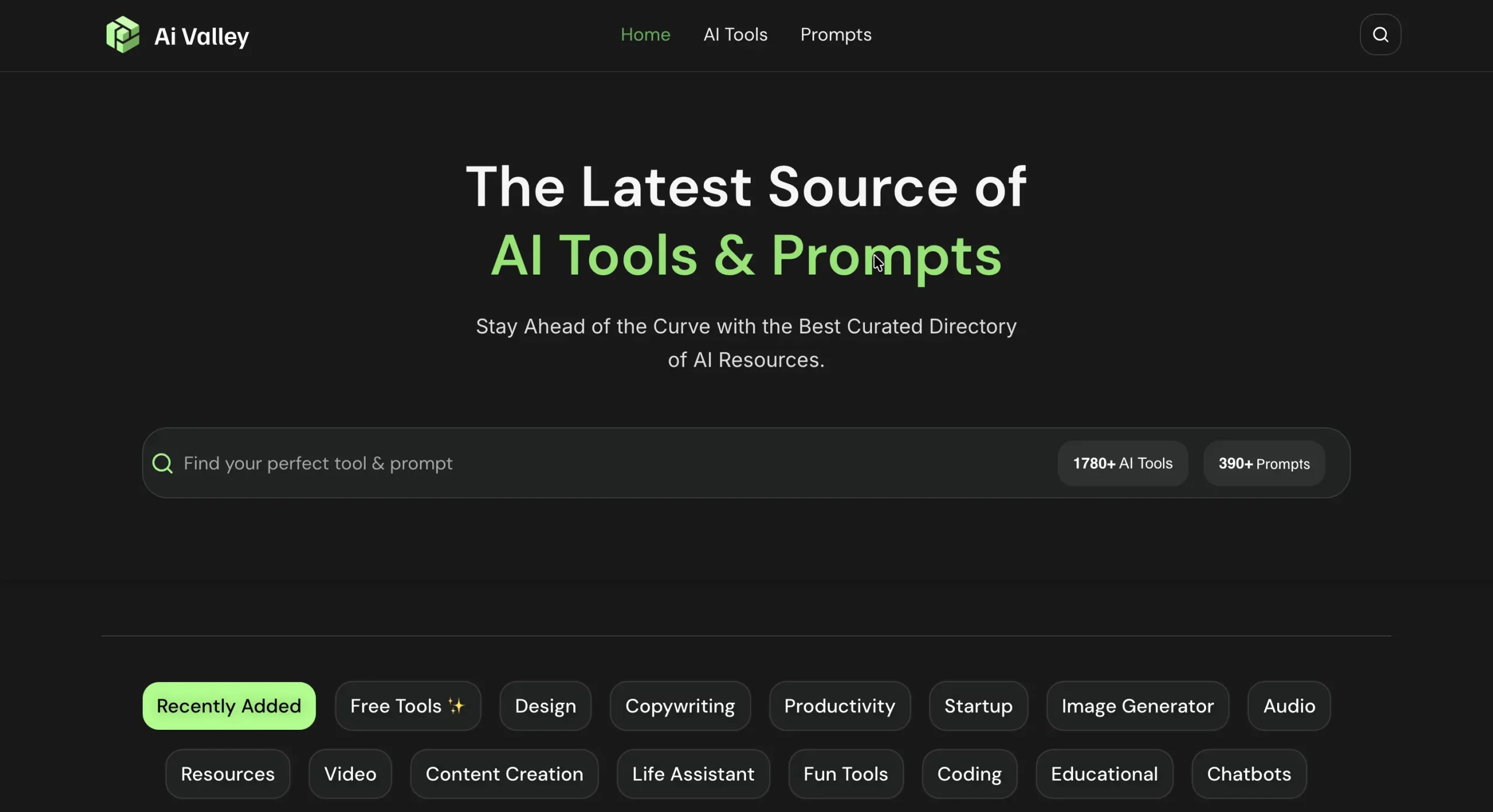
AI Valley is a daily-updated directory of AI tools and prompts, grouped into categories spanning design, research, productivity, and marketing.
Its slight twist on the format is the prompt library that sits alongside the tool listings, so it serves people hunting for ready-made prompts as well as tools.
Submission is free and self-serve: fill in a short form (your name, email, tool name, URL, and an optional description, plus a category), and the entry goes through a review before publishing.
API & MCP Server Directories
As MCP adoption grows across AI assistants, agents, and developer tools, SaaS products are increasingly exposing their functionality through MCP servers.
Listing your server in dedicated MCP and API directories can help developers, AI builders, and autonomous agents discover and integrate with your product.
Github’s Official MCP Registry
- Domain rating: 97
- Monthly traffic: 37k
- AI citations: 10
- Listing: Free
GitHub’s Official MCP Registry is the central directory for discovering and distributing Model Context Protocol (MCP) servers.
For SaaS companies that offer an MCP server, listing in the registry can improve discoverability among developers and AI builders actively searching for integrations.
It also provides a standardized way to showcase your server’s capabilities, documentation, and installation instructions for AI agents and users to connect with your product.
RapidAPI
- Domain rating: 83
- Monthly traffic: 107k
- AI citations: 162
- Listing: Free
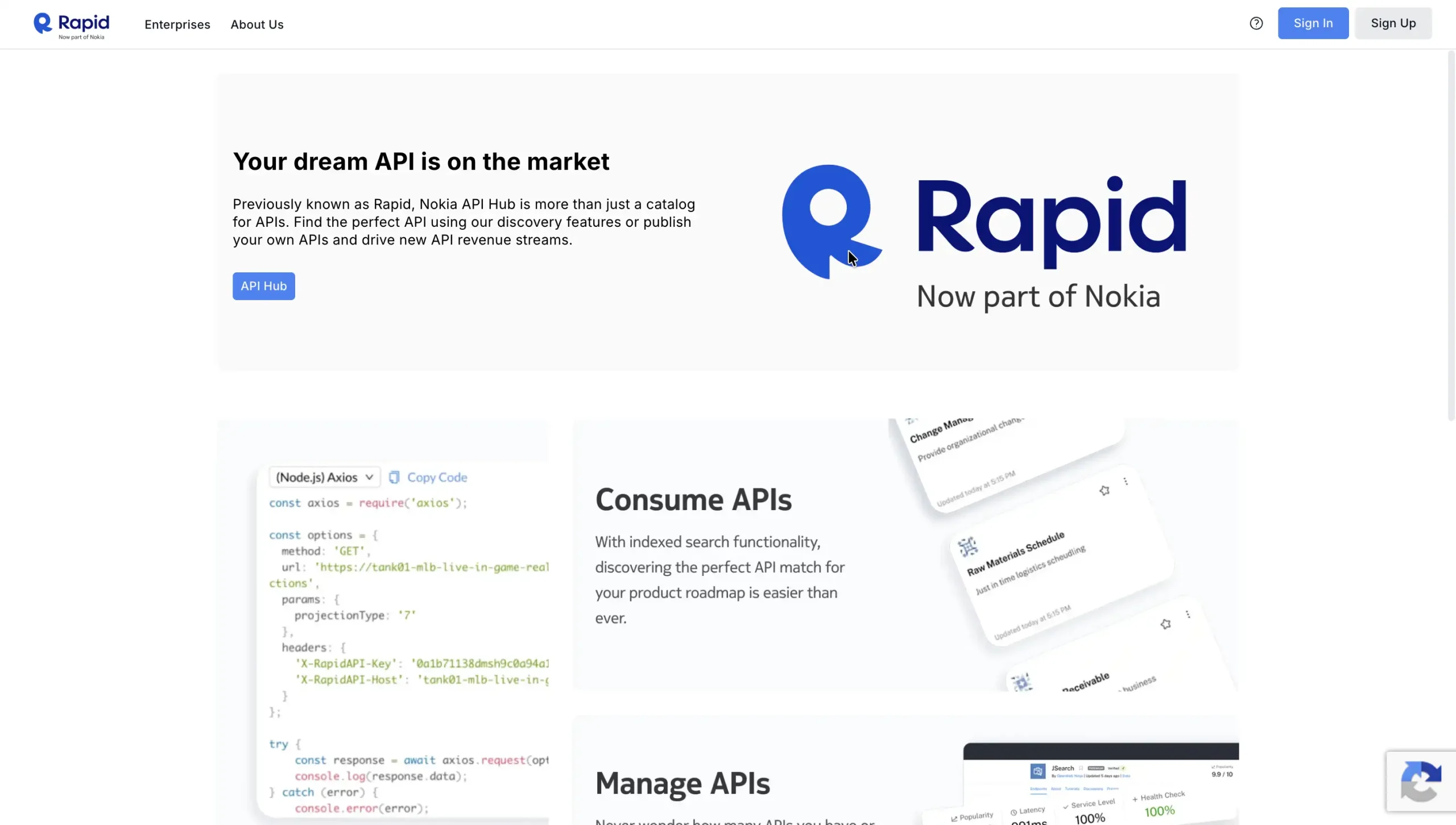
RapidAPI is the world’s largest API marketplace, a hub where providers list APIs and millions of developers discover, test, and consume them from one place.
For an API provider it’s both a directory and a monetization layer: you add your endpoints, RapidAPI auto-generates interactive docs and code snippets in multiple languages.
Developers can then test and subscribe in-browser, with the platform handling billing across free, freemium, tiered, and pay-as-you-go models.
Postman API Network
- Domain rating: 90
- Monthly traffic: 1 million
- AI citations: 638
- Listing: Free
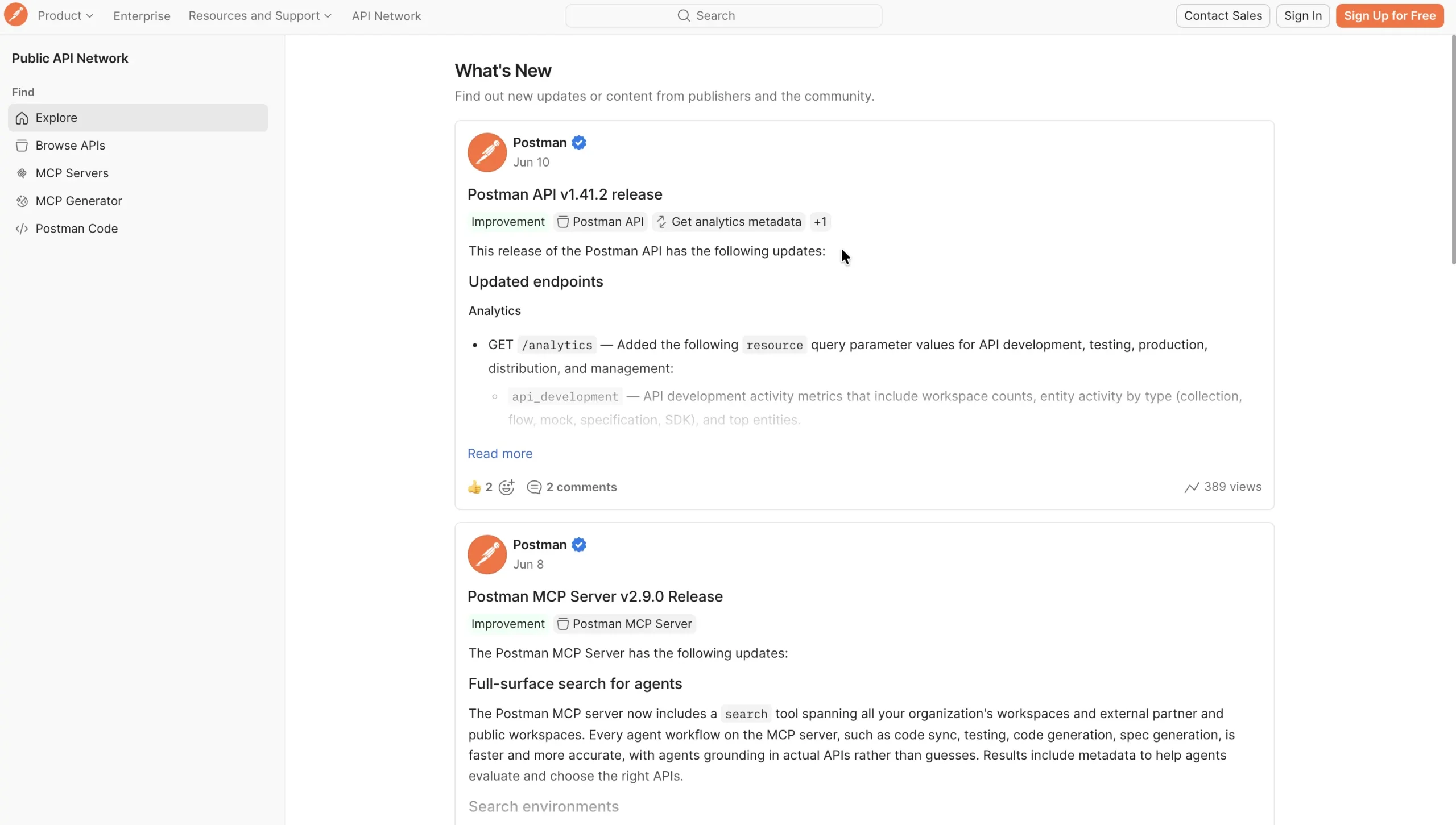
The Postman API Network is one of the largest API discovery platforms, helping developers find, evaluate, and integrate APIs from thousands of companies.
APIs listed on the network can be explored directly within Postman, making it easy for developers to test endpoints, review documentation, and start building without extensive setup.
MCP.so
- Domain rating: 72
- Monthly traffic: 10k
- AI citations: 7
- Listing: Free
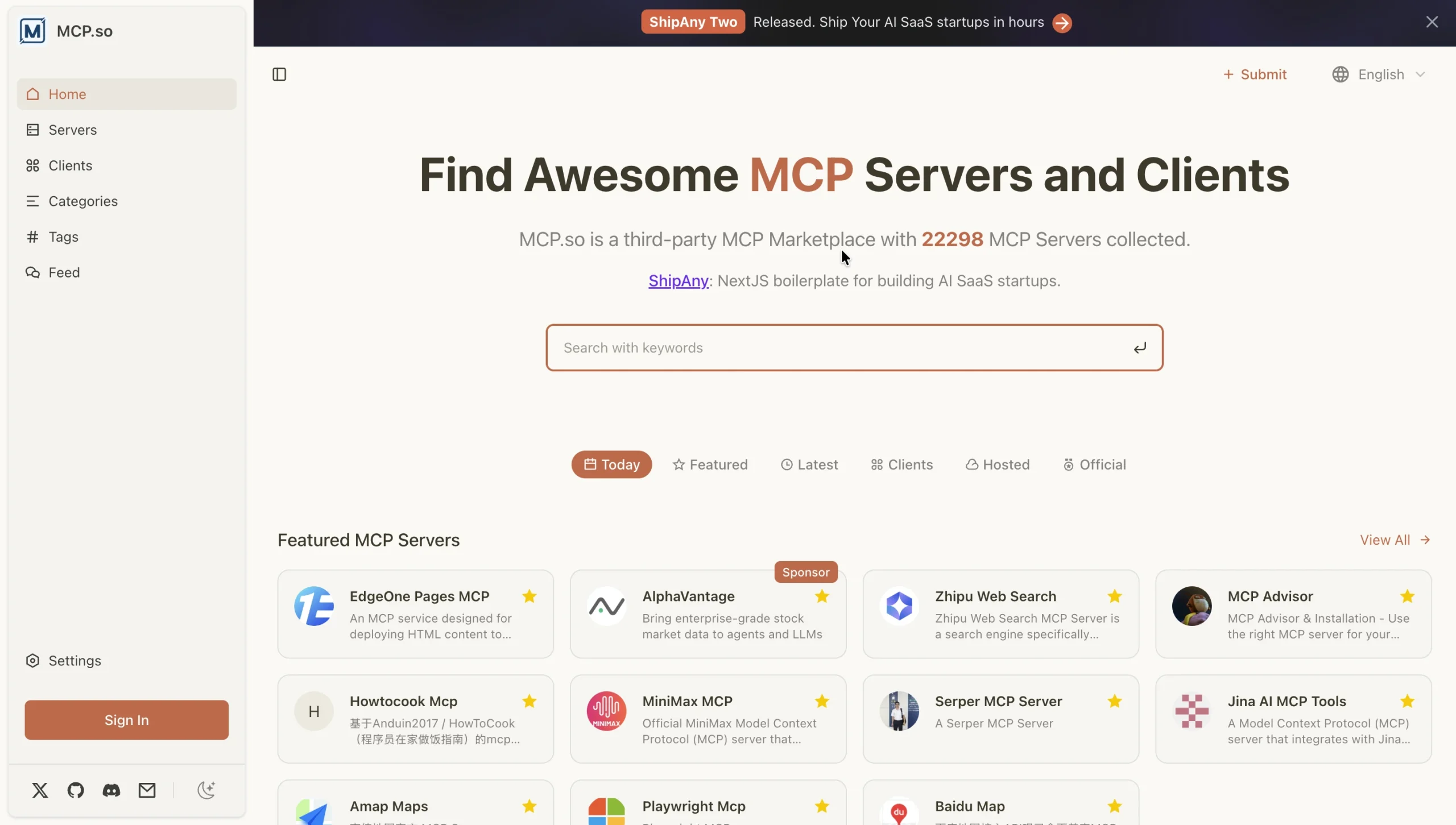
MCP.so is a community-driven MCP marketplace that acts as a central directory for discovering, sharing, and learning about third-party MCP servers.
Submission is free but slightly more manual than a web form: you submit your server by opening an issue in its GitHub repository (via the “Submit” button in the nav), providing your server’s name, description, features, and connection details.
MCP Market
- Domain rating: 54
- Monthly traffic: 7.6k
- AI citations: 102
- Listing: Free
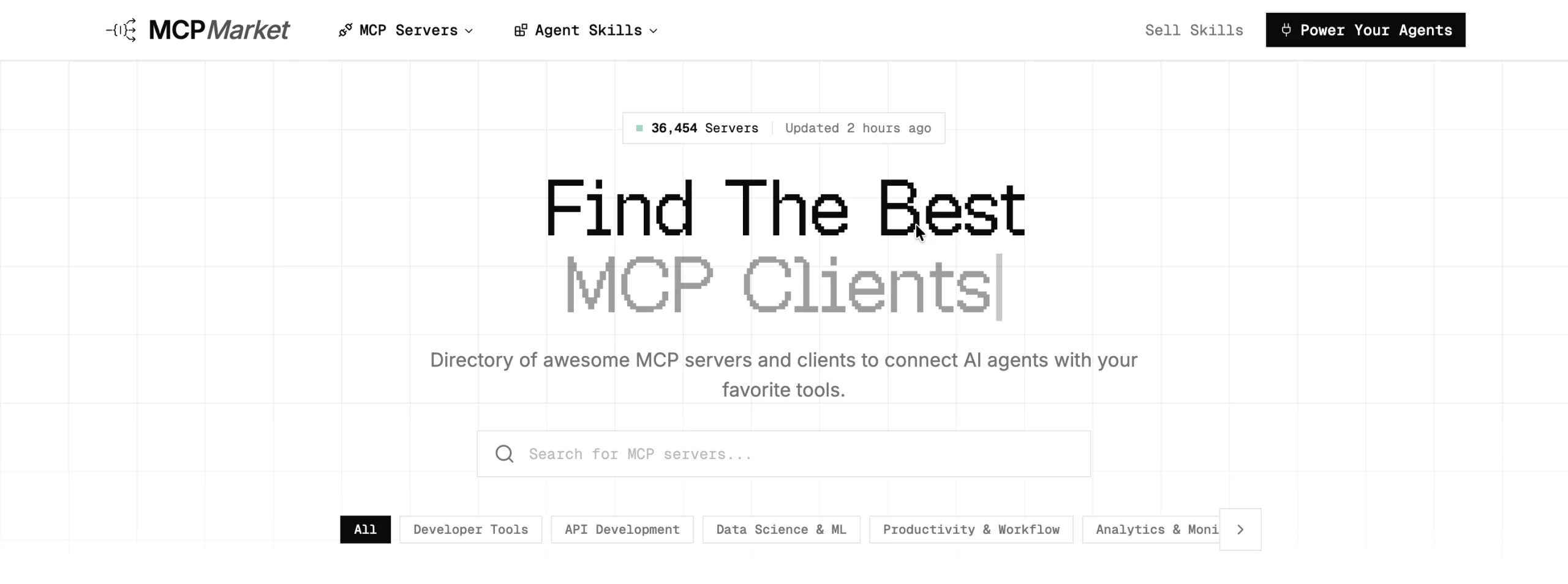
MCP Market is an MCP server directory that helps developers and AI builders discover ready-to-use servers that connect large language models with external tools, APIs, and data sources.
Beyond plain discovery it offers organisation-level features, connecting servers to a team, bundling tools from multiple servers into one endpoint, and hosting from a GitHub repo, npm/PyPI package, or Docker image.
Blogging Platforms
These blogging platforms come with large built-in audiences and strong domains, so your content can reach thousands of readers without you having to build and rank a blog of your own.
Medium
- Domain rating: 94
- Monthly traffic: 31 million
- AI citations: 1.2 million
- Listing: Free
Medium is one of the largest open publishing platforms on the web. It’s a place where anyone can publish essays, founder stories, and thought-leadership pieces to a vast built-in readership.
For a SaaS founder it’s a low-friction way to put your story on a DR 94 domain that AI engines cite heavily (1.2 million citations is among the highest in this entire guide), without building or maintaining a blog of your own.
HackerNoon
- Domain rating: 87
- Monthly traffic: 60k
- AI citations: 3.1k
- Listing: Free
HackerNoon is a leading independent tech-publishing platform, home to a network of 45,000+ contributors.
It’s a great platform for sharing startup stories, technical tutorials, and founder thought leadership content.
Every submission is reviewed by a human editor (with over half of submissions rejected), so getting your content published here carries some credibility.
Reddit Communities
Reddit threads consistently rank in Google search results, and the May core update has further strengthened the platform’s search visibility.
According to several AI SEO studies, Reddit is also consistently the top cited domain in AI Overviews, AI Mode, and ChatGPT.
Here are top Reddit threads to build your presence.
Reddit r/SaaS
- Domain rating: 95
- Monthly traffic: 244k
- AI citations: 7.4k
- Listing: Free
r/SaaS is the main hub for software founders, where people swap advice on building, launching, pricing, and growing SaaS products.
It’s the most on-topic Reddit community for your product, so build a genuinely helpful presence here: answer questions, join “what tool do you use for X” threads, and host AMA (ask me anything) sessions.
This will put your brand in front of exactly the right audience and into discussions that rank and get cited.
Reddit r/startups
- Domain rating: 95
- Monthly traffic: 232k
- AI citations: 5.6k
- Listing: Free
r/startups is the largest startup community on Reddit, covering the whole founder journey, ideas, fundraising, hiring, product, and growth.
It skews broader than r/SaaS, so it’s strong for founder-story and lessons-learned content rather than niche product talk. Note it has strict self-promotion rules (a dedicated weekly thread for sharing your product), so read the sidebar before posting.
Reddit r/SideProject
- Domain rating: 95
- Monthly traffic: 438k
- AI citations: 3.4k
- Listing: Free
r/SideProject is a community for makers sharing things they’ve built, side projects, indie tools, and early-stage products.
It’s friendlier to “here’s what I made” posts than most subreddits, which makes it one of the more forgiving places to surface a new SaaS or tool, provided you frame it as sharing and inviting feedback rather than hard selling.
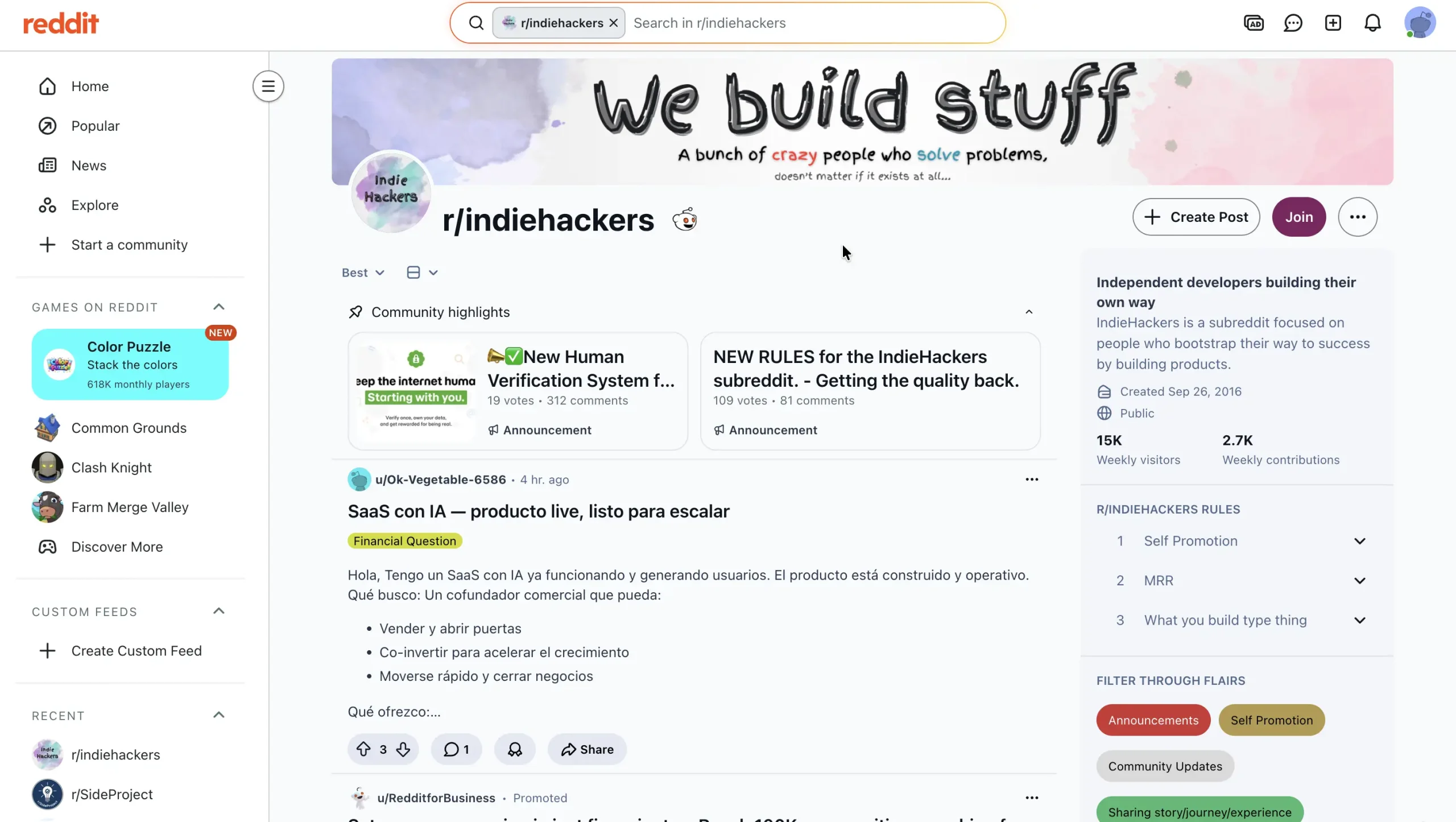
Reddit r/indiehackers
- Domain rating: 95
- Monthly traffic: 8.9k
- AI citations: 293
- Listing: Free
r/indiehackers is a community for solo, self-funded founders and bootstrappers building and growing their own products.
For SaaS founders, r/indiehackers can be a valuable channel for authentic storytelling and early feedback.
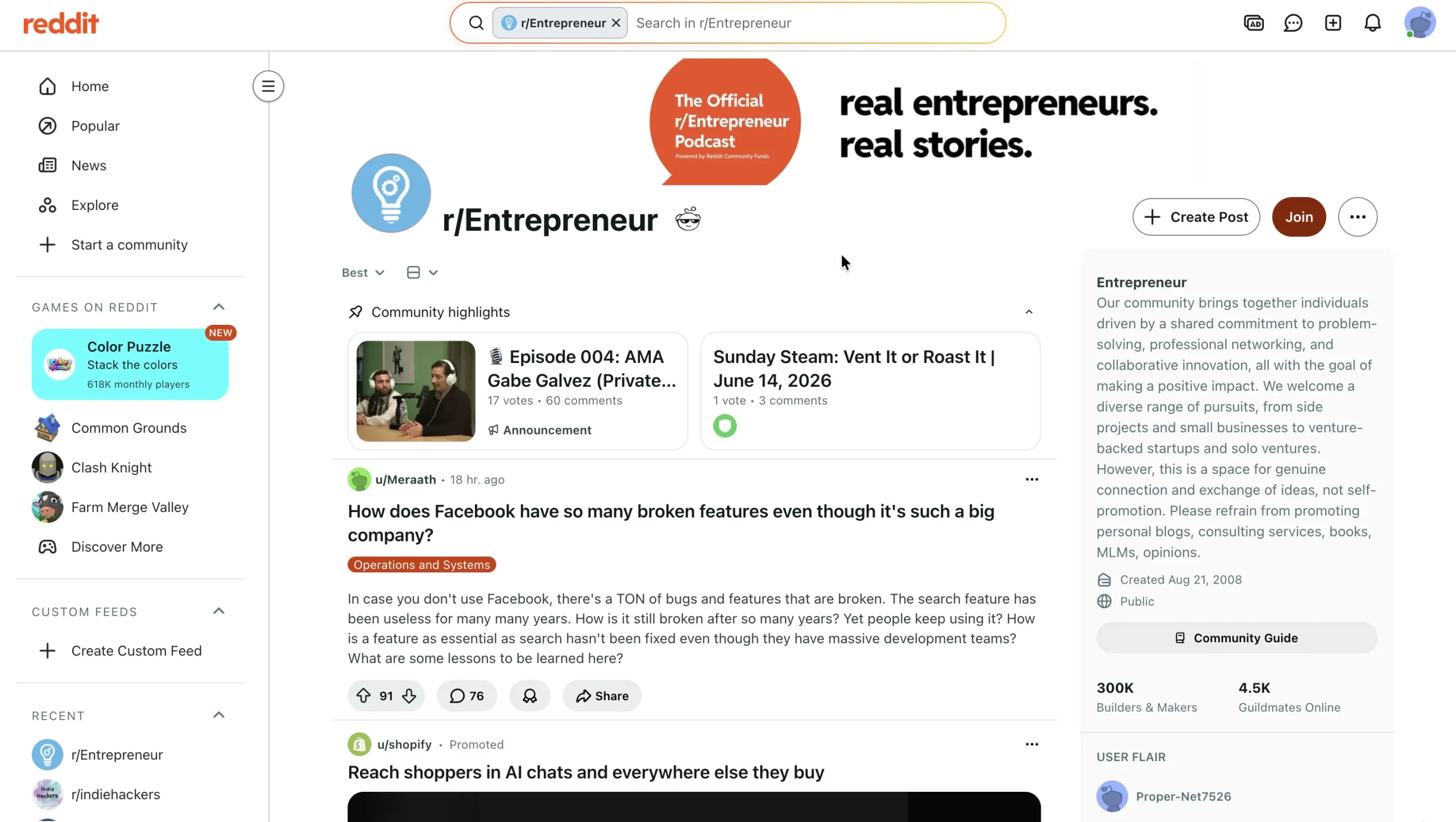
Reddit r/Entrepreneur
- Domain rating: 95
- Monthly traffic: 928k
- AI citations: 36k
- Listing: Free
r/Entrepreneur is one of the biggest business communities on Reddit, spanning startups, small business, side hustles, and general entrepreneurship.
It’s the highest-traffic, most-cited community in this section (36k AI citations), so a credible presence here has real reach.
But the audience is broader than SaaS-specific threads, and the self-promotion rules are strict. Best for wide-audience thought leadership and genuinely useful answers rather than product pitches.
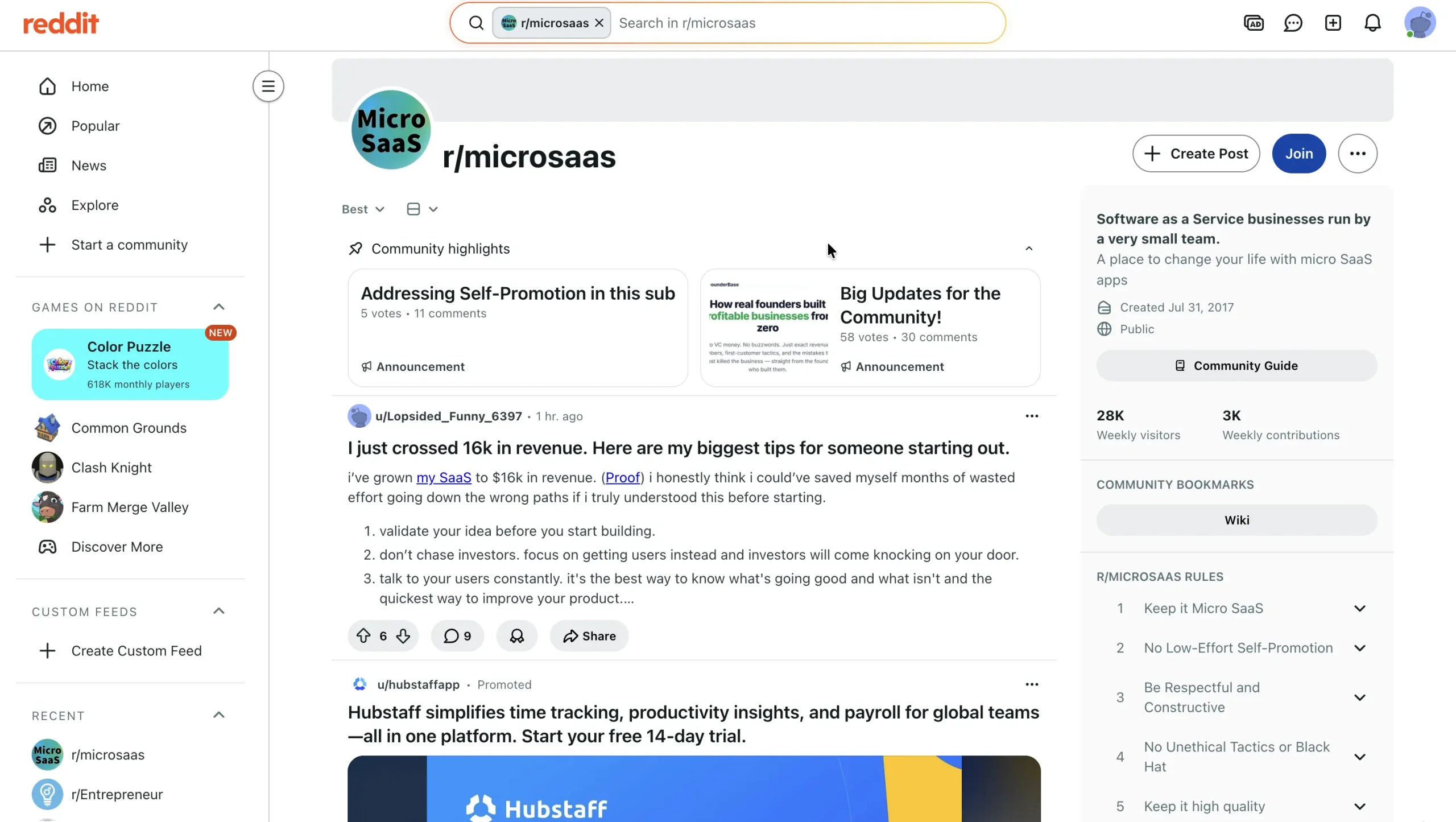
Reddit r/microsaas
- Domain rating: 95
- Monthly traffic: 65k
- AI citations: 338
- Listing: Free
r/microsaas is a focused community for founders building small, lean, often one-person SaaS products.
It’s a smaller, more niche audience than r/SaaS, but a highly relevant and engaged one if your product targets indie hackers or bootstrappers, the conversations are practical and tool-heavy, which suits authentic product mentions in context.
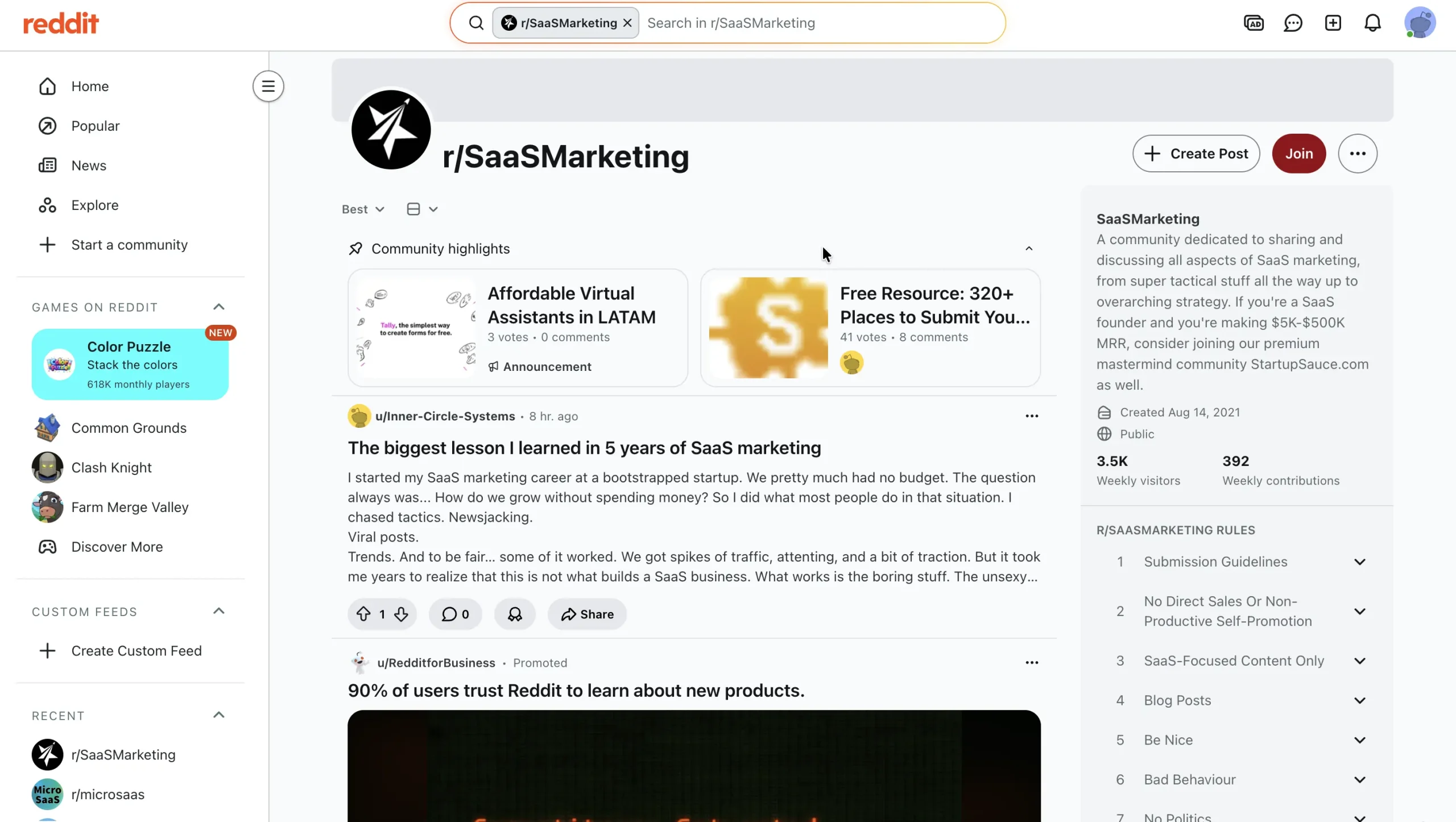
Reddit r/SaaSMarketing
- Domain rating: 95
- Monthly traffic: 5.7k
- AI citations: 203
- Listing: Free
r/SaaSMarketing is a smaller community focused specifically on marketing and growth tactics for SaaS, SEO, content, paid acquisition, retention, and the like.
It’s niche and lower-traffic, but tightly relevant if your product is a marketing or growth tool, since the audience is actively discussing exactly the problems such tools solve.
Developer Communities
If your product is technical or developer-facing, dedicated developer communities are some of the most valuable places to build a presence.
These are high-trust, high-authority spaces where engineers share what they’re building and what they use, so genuine participation earns you the right audience plus citations and backlinks that carry real weight.
Indie Hackers
- Domain rating: 81
- Monthly traffic: 67k
- AI citations: 3k
- Listing: Free
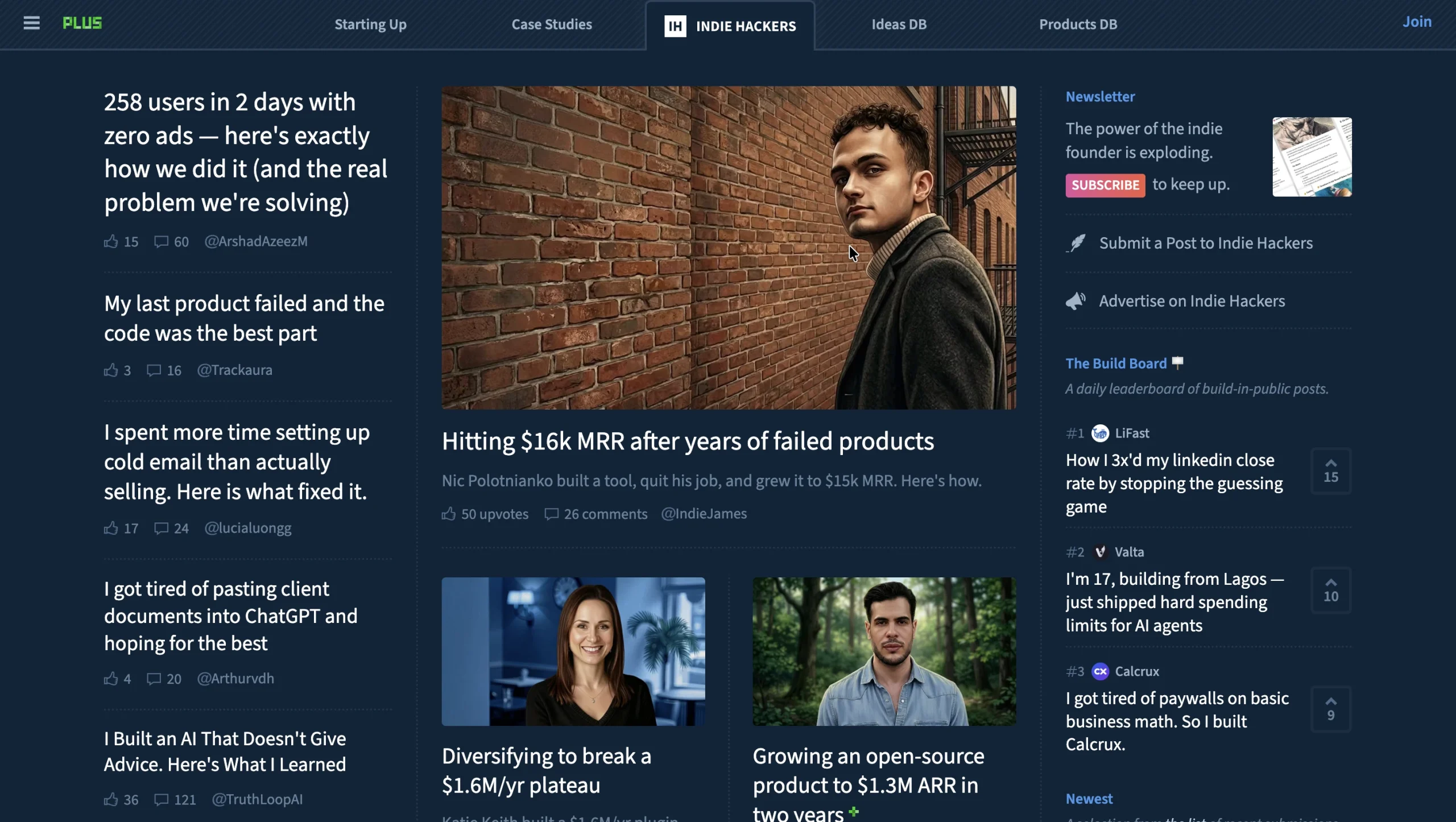
Indie Hackers is the best-known community for bootstrapped founders and makers building profitable businesses and side projects.
Its whole ethos is transparent story-sharing: founders post revenue numbers, lessons, and build-in-public updates, and the community gives and receives feedback.
Unlike a launch platform, it rewards the long game: you share your journey as you build, so when you launch you’re launching to people who already know your work.
A free account lets you post updates, create a profile, and engage; the value comes from genuine participation rather than a one-off post.
StackShare
- Domain rating: 79
- Monthly traffic: 8k
- AI citations: 897
- Listing: Free
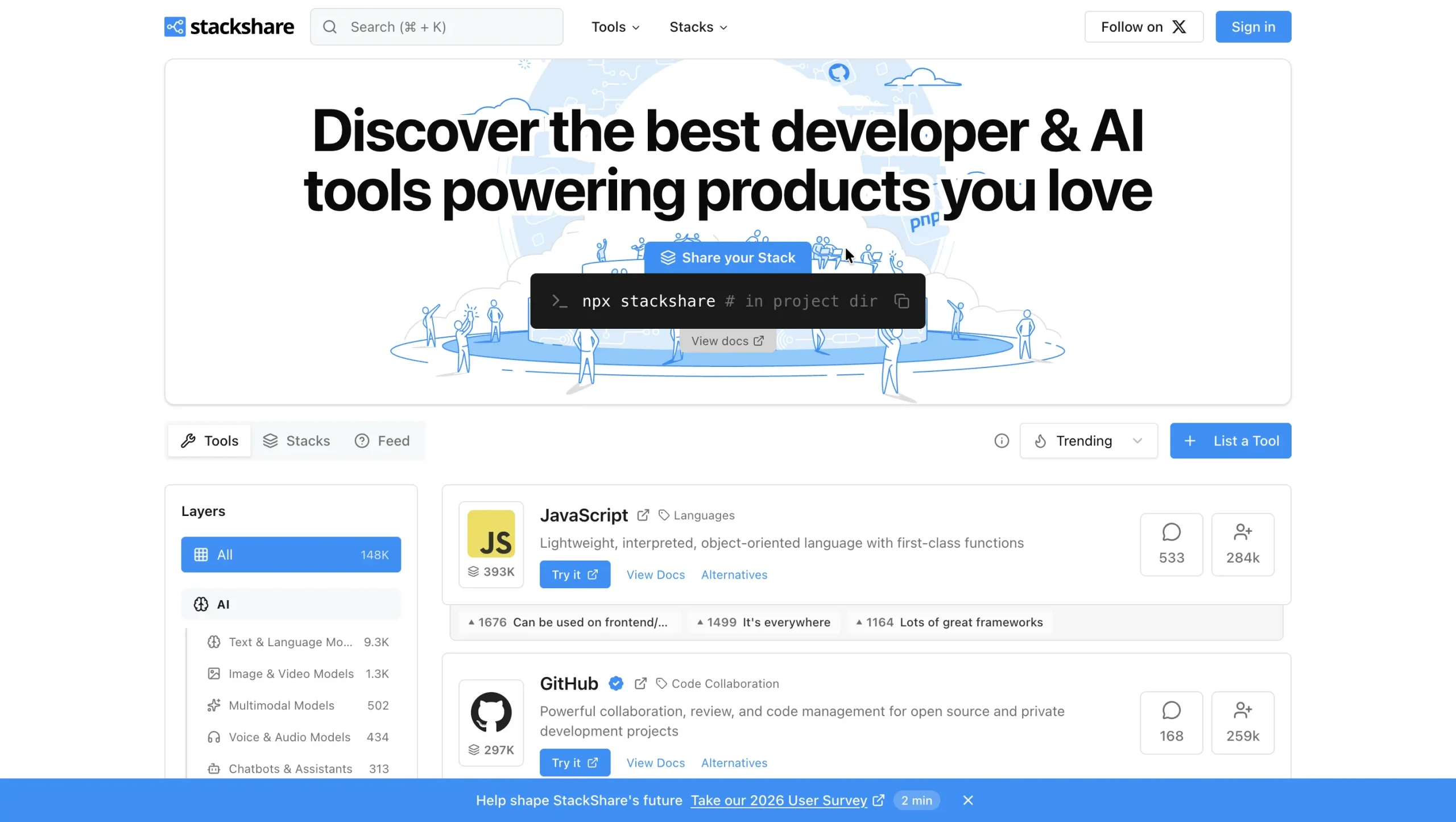
StackShare is a community of over a million developers who share the tech stacks behind their companies and products.
You list your own tools, and they can appear in other companies’ published stacks and in StackShare’s side-by-side “Stackups” comparison pages, exactly where developers land when deciding which tool to adopt.
Dev.to
- Domain rating: 90
- Monthly traffic: 1.4 million
- AI citations: 26k
- Listing: Free
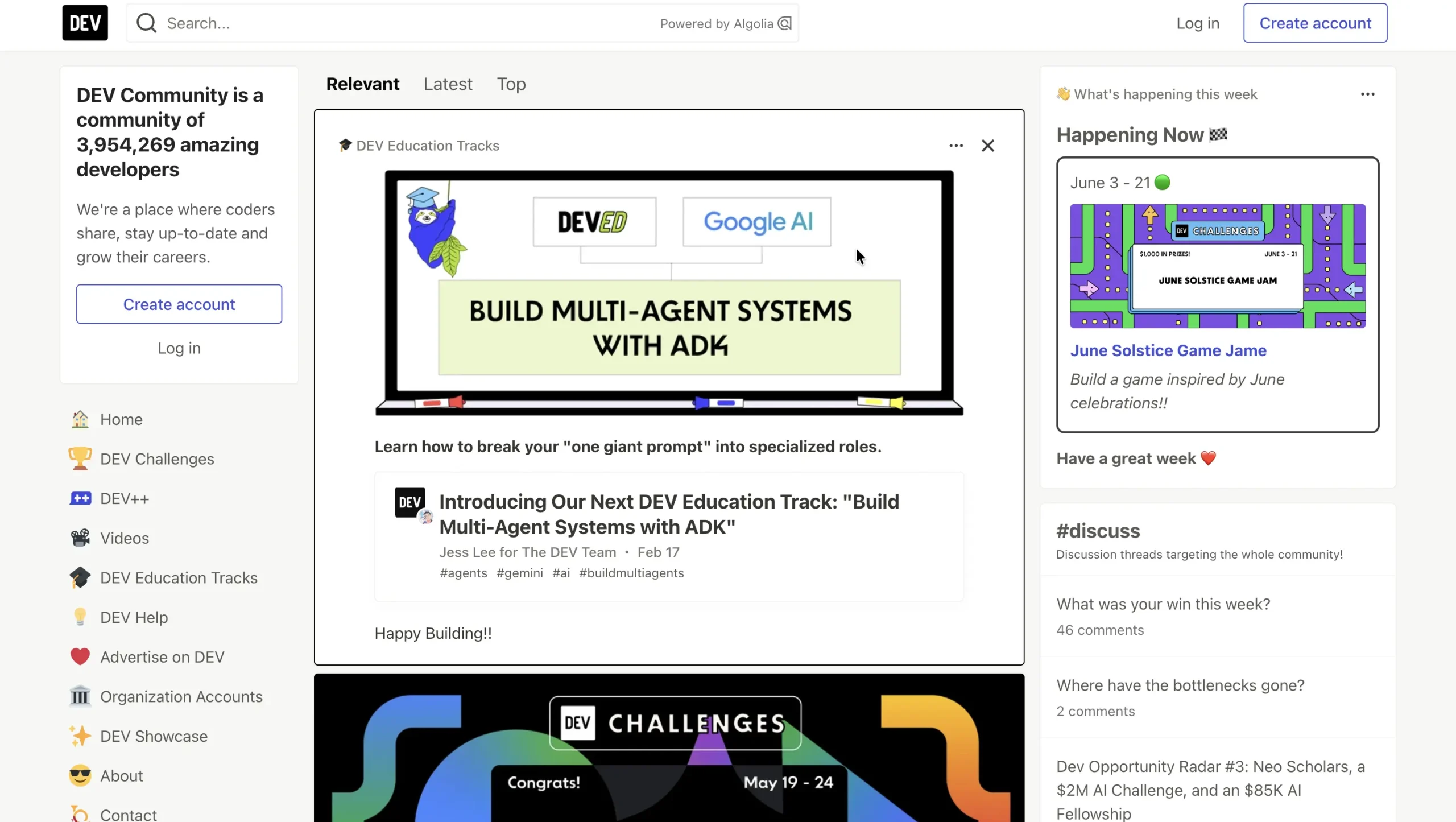
Dev.to is one of the largest developer blogging communities on the web, where engineers publish tutorials, technical write-ups, and experience posts to a huge, engaged audience.
For a developer-facing SaaS it’s a strong publishing channel: a DR 90 domain with 26k AI citations means a well-written technical post can earn search and AI visibility.
WIP
- Domain rating: 55
- Monthly traffic: 2.1k
- AI citations: 27
- Listing: Paid ($29/month)
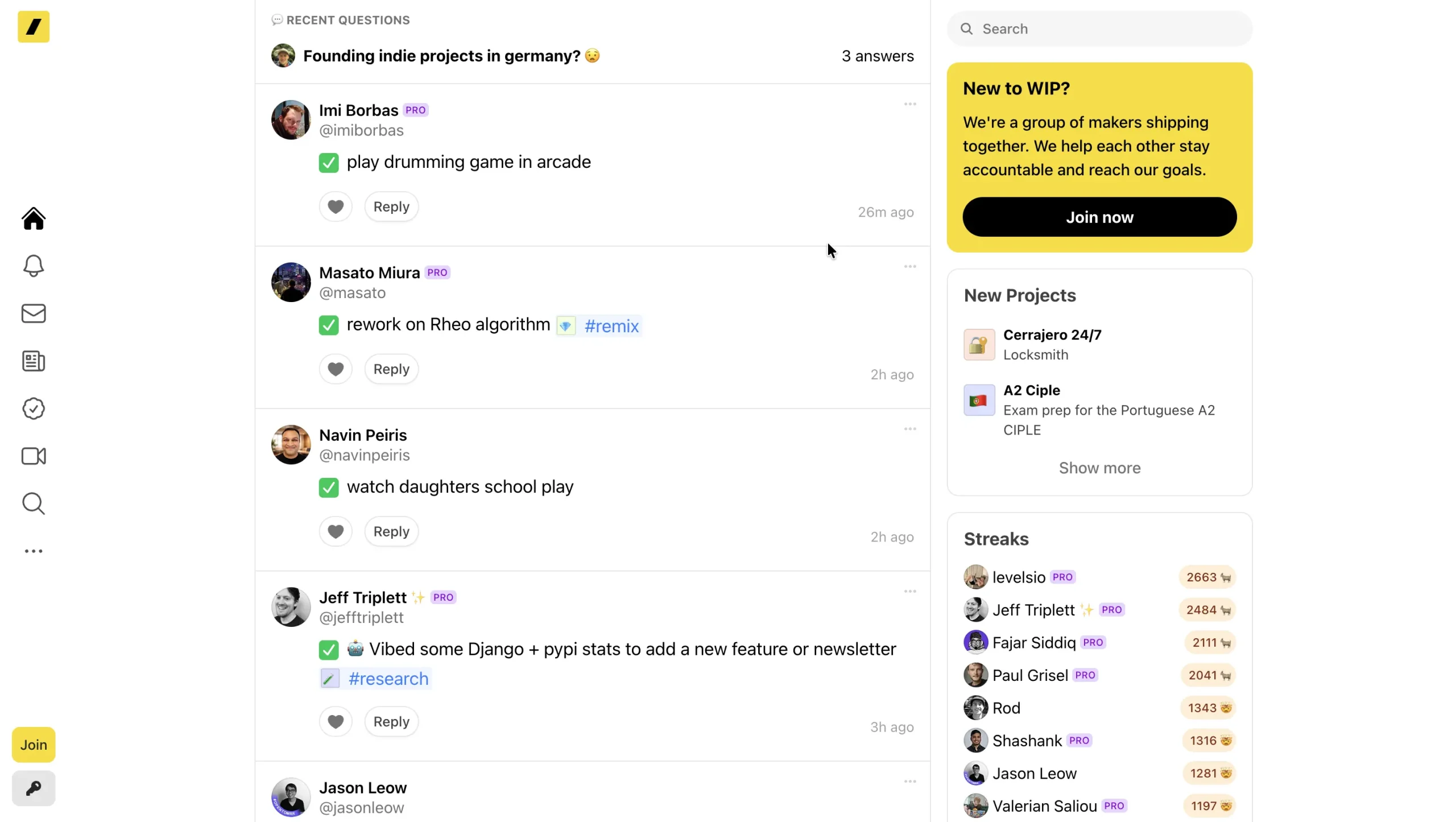
WIP is a “build in public” community and virtual co-working space for makers.
The community is structured around a simple ritual: instead of posting plans, you share completed to-dos, the concrete things you shipped that day.
It’s like Twitter, but every post is a changelog entry with public timelines, project hashtags, and daily streaks driving accountability and momentum.
For a founder building in public, it’s a place to document your product’s progress alongside a tight community of other makers who give feedback and cheer each other on.
Bonus: Niche and Market Specific Directories
Beyond the big general directories, there’s a long tail of niche and regional listings worth a look if one matches your product’s category, audience, or location.
A niche-specific SaaS directory often sends better-qualified traffic than a broad one, so it’s worth picking out any that fit.
Here are some of the most useful:
- SHRM Vendor Directory. A directory exclusively for HR software. It’s run by the largest professional HR body, so it reaches HR practitioners directly.
- NoCode Tech. A curated directory of no-code and low-code tools. If you want to reach vibe coders, this is the place to promote your software.
- HostAdvice. A reviews and listings platform for web hosting providers and related infrastructure services.
- CyberSec Tools. A directory of cybersecurity products and services, aimed at security professionals and buyers.
- OpenAlternative. A directory of open-source alternatives to popular SaaS products.
- Toools.design. A curated collection of tools and resources for designers.
- Compare Software. A software review and rating platform for Spanish-speaking audiences.
- GeekWire Startup List. A curated directory of tech startups in the US Pacific Northwest (Washington, Oregon, Idaho, and British Columbia).
- EU-Startups. A well-established online magazine and database covering the European startup scene.
How to Use This List Without Going Crazy
50 directories is a lot, and trying to tackle them all at once is the fastest way to burn out and abandon the whole effort.
You don’t need to be everywhere overnight.
The smarter approach is to work through them in priority order over a few weeks, starting with the placements that move the needle most and letting the long tail accumulate over time.
Here’s a simple way to phase it.
Week 1: Start with software review platforms
These are the most cited categories in AI search, so they should be your primary focus.
Get your profiles up on major platforms like G2, Capterra, and Trustpilot first, since they carry the most weight with both Google and the AI engines.
Once your profiles are live, reach out to your existing customers and clients and ask them to leave an honest, positive rating and review. A profile with genuine reviews behind it is what actually earns the citations.
Week 2: Submit your product to listings and directories
With your review profiles in place, move on to SaaS databases, startup directories, and tool aggregators.
This stage is quicker and lower-effort: most of the time you simply create a profile, add your company details, and submit.
Work down the list by priority (highest domain rating and most relevant to your audience first).
Don’t feel you have to finish in a single sitting. Focus on 3-5 submissions per day.
Week 3 and ongoing: Publish content and join communities
The final stage isn’t a one-off task, it’s a habit. This is where you turn a static presence into an active one.
Start publishing your startup stories, founder lessons, and technical write-ups on high-authority platforms like Product Hunt, Medium, and Dev.to, where a single good post can earn search and AI visibility for years.
At the same time, become a genuine presence in the communities where your audience already gathers: the relevant subreddits, Indie Hackers, StackShare, and the like.
Let Position Digital Do the Heavy Lifting
Manually submitting your product to hundreds of SaaS directories can take hours and even days of your time, which is better spent on growing your business instead.
Let us do the heavy lifting instead. Directory submissions are included in our link building and digital PR services.
We’ll pick the right review platforms and directories, create and optimize your profile, and ensure your listings remain accurate and up to date.
Get in touch to find out how we can build your brand’s visibility across traditional and AI search.