What makes ChatGPT cite or recommend one B2B SaaS brand over another? And how closely do citations correlate with brand mentions?
To find out, we ran 278 buyer questions through ChatGPT across six B2B SaaS categories, then analyzed the responses.
Key Findings
- ChatGPT rewrites conversational user prompts into short keyword strings, retaining only 60% of the original queries.
- Being cited and being recommended are different games. 66% of brand recommendations happen without ChatGPT citing that brand’s website at all.
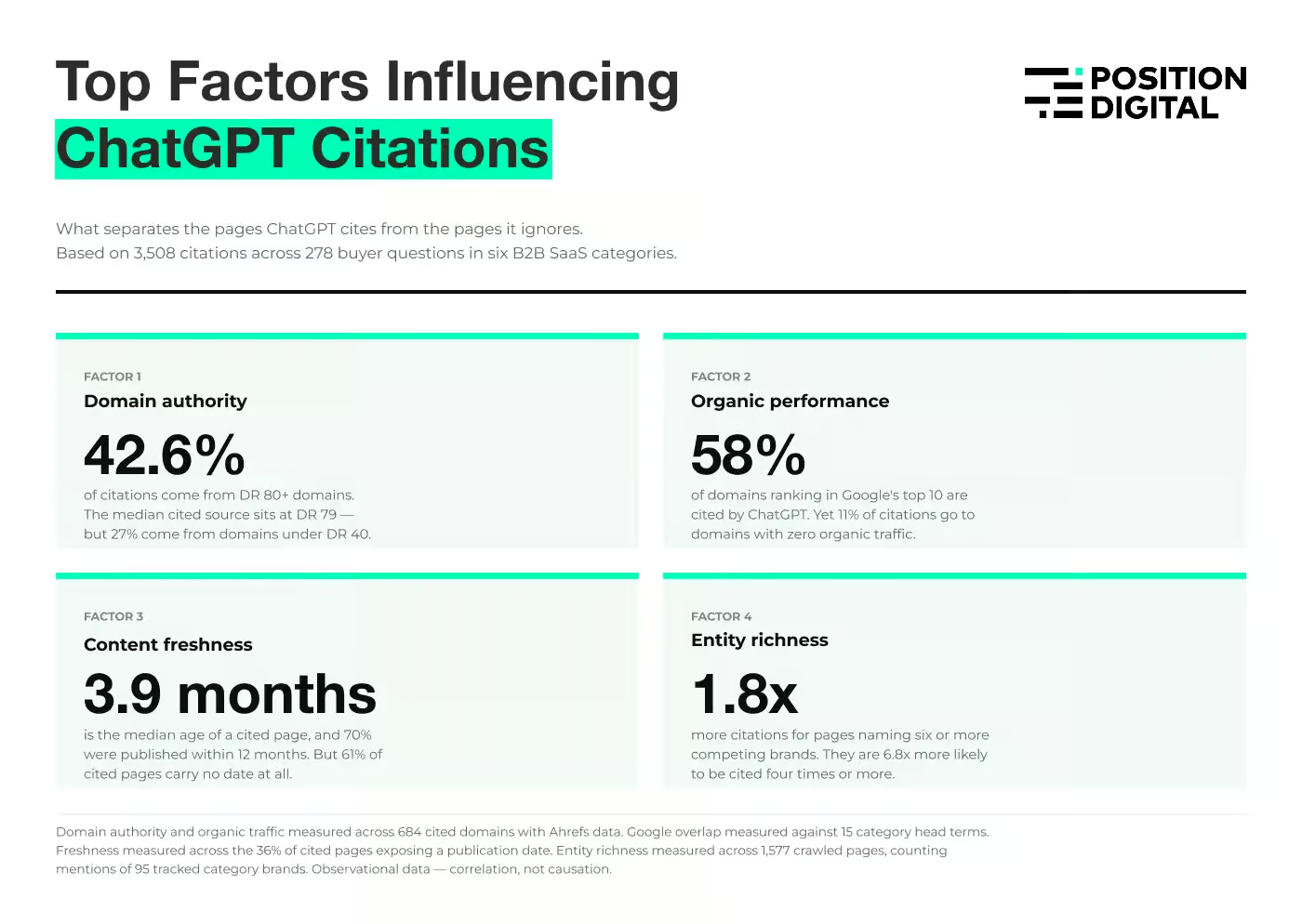
- Top factors that influence ChatGPT citations are domain authority, organic performance, content freshness, and entity richness.
- Pages with zero traffic still get cited 11% of the time, showing that newer and less established brands can still earn visibility in ChatGPT.
- Three page types carry almost 50% of citations: listicles, service pages, and documentation.
- Categories behave completely differently. Shipping is a listicle market; automotive APIs is a documentation market. The same tactics do not transfer.
- Top factors that drive brand recommendations in ChatGPT answers are third-party listicle presence, branded web mentions, Reddit presence, and user review count.
Methodology: How We Built the Dataset
Our dataset covers six B2B SaaS categories in which we actively track AI visibility for clients:
- Content moderation
- Enterprise decision AI
- eCommerce shipping software
- Automotive data APIs
- SMB endpoint security
- AI visibility monitoring
For each category, we gathered a custom prompt set reflecting how buyers actually ask — a mix of category education, vendor selection, and branded questions.
Across six B2B SaaS categories, we collected a total of 278 unique prompts:
- 43% are informational prompts
- 38% are commercial prompts
- 18% are branded prompts
We then ran each prompt through ChatGPT using Ahrefs Brand Radar, which captures the complete generated response, including cited sources and the retrieval queries used to produce the answer.
What we collected
The final dataset included:
- 278 ChatGPT responses
- 3,508 citations
- 2,845 unique cited pages
- 1,429 cited domains
- 187 retrieval queries (the search terms ChatGPT generated when researching its answers)
We then analyzed this data to identify the factors most closely associated with citations, brand mentions, and recommendations in ChatGPT responses.
Here’s what we found.
ChatGPT Rewrites User Prompts
For prompts that trigger the web search, ChatGPT didn’t search what the user typed.
Instead, it rewrote conversational questions into short keyword strings — 29% shorter, retaining only 60% of the prompt’s content words.
| What the buyer asked | What ChatGPT actually searched |
| "I've been using a free security app on my personal Mac and I want to roll it out at work. What's the business case I'd make to my CEO?" (29 words) | business case endpoint security CEO (5 words) |
| "My company just had a security incident involving an unpatched employee laptop..." (23 words) | security controls unpatched endpoints best practices (6 words) |
| "I'm a CMO at a CPG brand. Where should I start with AI?" (14 words) | AI for CMO CPG getting started frameworks (7 words) |
| "Should we build or buy our causal AI platform?" (9 words) | build vs buy causal AI platform enterprise (7 words) |
ChatGPT also added certain words to the original prompts, depending on the intent.
Across 184 queries the most-added terms were practices (18), best (17), official (17), 2026 (12), providers (11), comparison (11), vs (11) and alternatives (8).
The term “official” appearing 17 times matters: ChatGPT actively seeks primary sources, which is why it cites documentation and government pages far more than any other engine.
What this means for you
ChatGPT retrieves sources using a much shorter query than the one the user originally entered. This means your content does not necessarily need to match the full conversational prompt word for word.
Instead, focus on the core search intent behind the question. Pages should clearly target the main category, feature, use case, problem, or comparison ChatGPT is likely to extract from the prompt.
Being Cited ≠ Being Recommended
66% of brand recommendations happen without ChatGPT citing that brand’s website at all.
Across 278 answers and 95 tracked brands, ChatGPT named a brand in prose 552 times but cited that brand’s own domain only 375 times. The two overlapped just 185 times.
This is the single most important structural fact in the dataset. Getting your page into ChatGPT’s source list is not the same thing as getting recommended.
The recommendation comes from third-party content — not from your website being read at answer time.
What this means for you
You need to track and optimize for citations and recommendations separately. Below, we’ll explore the most important factors that influence both.
Top Factors Affecting ChatGPT Citations
The factors below showed the clearest relationships with citation visibility across the six B2B SaaS categories in our study.
Note that these findings show correlation rather than direct causation.
Factor 1: Domain authority
ChatGPT clearly favors high-authority sources.
42.6% of ChatGPT citations come from pages with a 80+ DR (Domain Rating). The median cited source sits at DR 79.
| Domain rating | Citation share |
| DR 80+ | 42.6% |
| DR 60–79 | 19.8% |
| DR 40–59 | 10.6% |
| DR 20–39 | 10.9% |
| DR 1–19 | 10.8% |
| DR 0 | 5.3% |
Domain authority doesn’t just decide whether ChatGPT cites your content, but also how often it cites content from your domain.
A DR 80+ domain is cited 2.1x more often than a DR<40 domain.
| Domain rating | Citations per domain |
| DR 80+ | 6.91 |
| DR 60–79 | 5.90 |
| DR 40–59 | 3.78 |
| DR under 40 | 3.36 |
What to do
Keep building your domain authority through targeted link building and digital PR campaigns.
Factor 2: Organic performance
Strong organic performance increases the likelihood of being cited by ChatGPT, but it is not a strict requirement.
58% of pages ranking in the top 10 of Google search results were also cited by ChatGPT. However, the level of overlap varies depending on the specific category and query.
Organic traffic is also a significant ranking factor. 37.1% of ChatGPT citations go to domains with over 100,000 monthly visits.
Interestingly, pages with zero traffic still get cited 11% of the time. This shows that newer and less established brands can still earn visibility in ChatGPT.
| Monthly traffic of cited domain | Citation share |
| 100k+ | 37.1% |
| 10k–100k | 12.1% |
| 1k–10k | 12.5% |
| 100–999 | 16.0% |
| 1–99 | 11.2% |
| 0 | 11.0% |
What to do
Keep investing in traditional SEO to improve your Google rankings and organic traffic. AI visibility will follow.
Contact us if you’re looking for a proven B2B SaaS SEO agency to help.
Factor 3: Content freshness
Among cited pages that expose a date, the median is 3.9 months old and 69.7% were published within 12 months.
News articles are the freshest, followed by editorial content (blog posts and how-to guides) and commercial pages (listicles and product pages).
| Page type | Median age |
| News articles | 3.4 months |
| Blog articles | 3.2 months |
| How-to guides | 3.5 months |
| Listicles | 3.4 months |
| Service / product pages | 5.2 months |
| Documentation | 17.0 months |
Continuously refreshing your old content can also boost your chances of being cited by ChatGPT.
Out of 101 citations to pages published 2+ years ago, 38.6% went to pages refreshed within the last 12 months
What to do
Put your most important pages (listicles, guides, and comparison posts) on a quarterly refresh cycle.
Follow the full steps in our content refresh guide.
Factor 4: Entity richness
ChatGPT favors pages that name specific entities: brands, products, persons, places, and tools.
Cited pages carry about 10 named entities per 1,000 words against 8 for pages that rank but aren’t cited.
Moreover, pages naming 6+ brands averaged 2.13 citations versus 1.21 for pages naming none.
| Brands named on page | Avg. citations | % reaching 4+ citations |
| 0 | 1.21 | 1.3% |
| 1-2 | 1.33 | 3.2% |
| 3-5 | 1.33 | 3.1% |
| 6+ | 2.13 | 8.8% |
The Top Cited Page Types in ChatGPT
Listicles, service pages, and documentation together carry 49.9% of ChatGPT’s citations. Reviews — the format many brands invest in most heavily — carry just 1.6%.
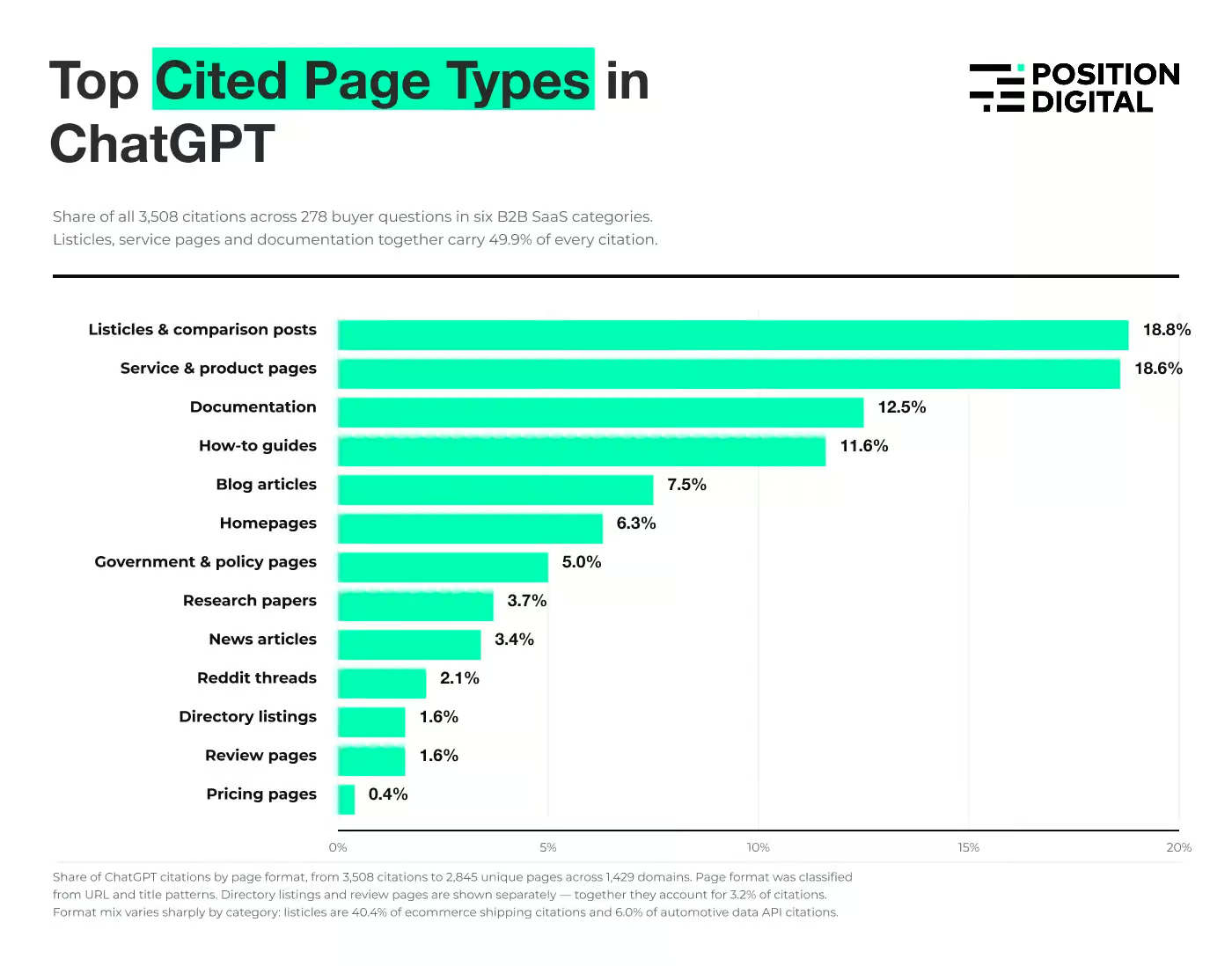
Here’s the full breakdown:
| Page type | Citation share |
| Listicles | 18.8% |
| Service / product pages | 18.6% |
| Documentation | 12.5% |
| How-to guides | 11.6% |
| Blog articles | 7.5% |
| Homepages | 6.3% |
| Government / policy | 5.0% |
| Research papers | 3.7% |
| News articles | 3.4% |
| Reddit threads | 2.1% |
| Directories | 1.6% |
| Review platforms | 1.6% |
| Pricing pages | 0.4% |
What to do
- Get featured in relevant listicles, roundups, and comparison pages in your niche
- Make sure your product and pricing pages contain accurate information
- If you’re in complex niches like API and security, provide clear documentation on your products
- Continue publishing editorial content; but make sure it contains unique information, such as original data and first-hand experience
- Build your presence in Reddit and other relevant forums
- Submit your product to relevant SaaS directories and review platforms
Which Factors Drive Brand Mentions and Recommendations?
For B2B SaaS companies, being recommended is generally more valuable than being cited.
It places the brand directly in front of a prospective buyer as a potential solution, often alongside an explanation of why it may be suitable.
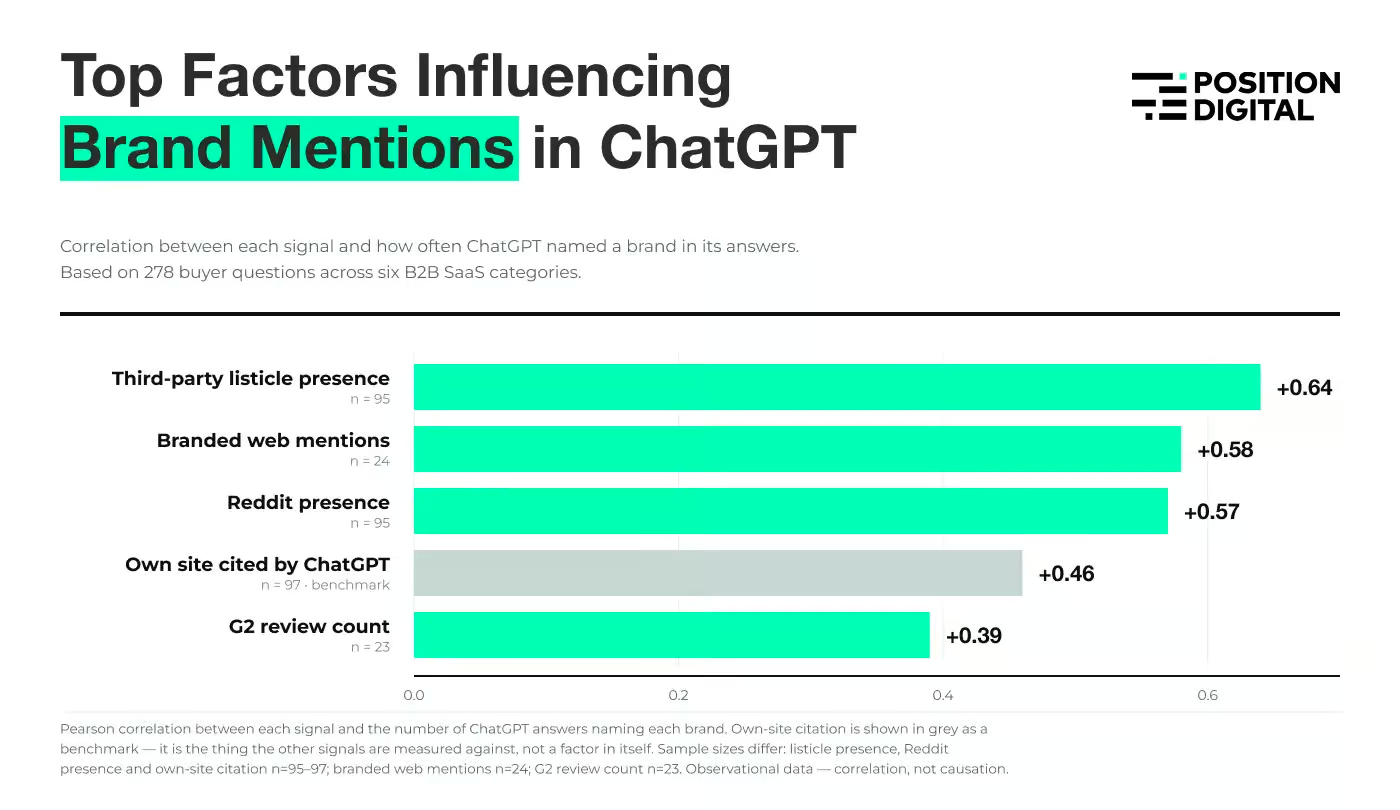
Here are the top two factors that influence ChatGPT recommendations calculated using the Pearson correlation:
Factor 1: Third-party listicle presence
This is the biggest driver in the dataset: getting featured in relevant third-party listicles and comparison content.
Across 95 brands and 390 crawled listicles, the share of category listicles a brand appears in correlates with how often ChatGPT names it at r = +0.64 — higher than the correlation for having your own site cited (+0.46).
| Listicle presence | Avg. mentions | % of answers naming them | % reaching 10+ mentions |
| 0 (absent) | 2.6 | 6% | 0% |
| 1–9% | 4.2 | 9% | 10% |
| 10–24% | 7.3 | 15% | 21% |
| 25–39% | 10.8 | 25% | 30% |
| 40%+ | 20.5 | 47% | 100% |
Every brand appearing in 40%+ of its category’s listicles was named in at least 10 answers. Not one brand absent from listicles reached that threshold.
What to do
Use ListBrew to audit which comparison posts, “best X” roundups and alternatives pages already rank in your category, then get included in them.
Factor 2: Branded web mentions
The more the web talks about your brand, the more likely ChatGPT is to recommend it — but only if those mentions sit in the right places.
We pulled Ahrefs Content Explorer page counts for 25 brands across four categories and compared them against how often ChatGPT named each brand.
Web mentions correlate with recommendations at +0.58 on average. But volume alone doesn’t buy visibility; where you get mentions matter more.
For example, Imagga and Hive have near-identical web footprints (4,319 vs 4,700 pages) and completely different outcomes — 0 mentions vs 7.
What separates them is where those mentions live: Imagga appears in 2% of category listicles, Hive in 25%.
What to do
Continue building your brand presence across the web.
Appear in as many listicles, comparison pages, review platforms, social media, forums, and news articles as you can.
Factor 3: Reddit presence
Reddit presence correlates with how often ChatGPT names a brand at r = +0.57 across 95 brands and 141 crawled threads — close behind listicle presence (+0.58) and ahead of having your own site cited (+0.46).
| Reddit presence | Avg. mentions | Appears in % of answers |
| 0% (absent) | 4.6 | 10% |
| 1–9% | 4.8 | 10% |
| 10–24% | 8.7 | 17% |
| 25%+ | 15.2 | 37% |
Furthermore, the top 3 category leaders in each niche appear in 22.6% of Reddit threads, compared to just 4.2% for everyone else.
What to do
Identify the two or three subreddits that ChatGPT frequently cites in your category, and start building your presence there.
Factor 4: User review count
G2 is the most cited review platform in the SaaS space, so we used it to compare the category leaders and brands with zero mentions.
We found that brands with a stronger presence on G2 tended to appear more often in ChatGPT answers. However, the number of reviews mattered far more than the average rating.
Review count correlates with mentions at +0.39, while star rating correlates at −0.07 — effectively zero.
The effect also appears to plateau. A larger review count is associated with more mentions up to a point, but the benefit weakens once a brand has established a substantial review footprint.
| Total reviews in G2 | Avg. mentions | Appears in % of answers |
| None | 2.0 | 4% |
| 1–49 | 4.9 | 10% |
| 50–499 | 21.0 | 40% |
| 500+ | 10.6 | 27% |
Additional factor: Brand co-occurence
ChatGPT names an average of 3.1 brands per answer and often groups the same brands together.
Brands that sit outside these established clusters are mentioned far less frequently.
| Category | Brands named per answer | Strongest pairing | Times |
| Ecommerce shipping | 4.3 | ShipStation + Shippo | 28 |
| AI visibility | 3.2 | Ahrefs + Semrush | 10 |
| Content moderation | 3.1 | Microsoft/Azure + OpenAI Moderation | 10 |
| Endpoint security | 3.1 | Jamf + Kandji | 14 |
| Automotive data APIs | 2.7 | DVLA + DVSA | 11 |
| Enterprise decision AI | 1.5 | Databricks + Snowflake | 3 |
The number of different brands a company appears alongside is also closely associated with how often ChatGPT recommends it:
| Co-occurs with | Total times named in the answer |
| 0 other brands | 1.0 |
| 1–2 brands | 2.4 |
| 3–5 brands | 2.9 |
| 6+ brands | 9.1 |
If your brand name never appears alongside the category leaders, you have a positioning problem that no amount of on-site content will fix.
What to do
Talk about your brand name alongside your competitors on your own content, third-party listicles, industry roundups, review platforms, and relevant community discussions.
The goal is not simply to mention competitors more often. It is to establish your brand as a credible alternative within the same category and buying conversation.
How to Turn This Data into Action
ChatGPT does two separable things: it cites sources and it names brands.
Winning in one area doesn’t necessarily mean you’ll win the other; ChatGPT cites and mentions the same brand in its answers only 34% of the time.
That’s why you need to treat citations and mentions as separate campaigns:
- For citations: Classic SEO metrics still apply: domain authority, Google rankings, and organic traffic. So, continue investing in SEO, content optimization, and link building.
- For brand mentions: Build your brand presence across the web through digital PR: third-party listicles, forums, review platforms, and other relevant publications.
If you’re looking for a partner that can do both, contact us.
At Position Digital, we’ve helped numerous B2B SaaS companies build solid presence in both search and answer engines through proven SaaS SEO and AI search optimization strategies.