Every startup faces the same struggles: your domain authority is too low to rank for anything, and you don’t have the digital footprint needed to be recommended in AI answers.
Link building solves both of these problems. The more trusted sites that link to yours, the higher your authority climbs, and the more likely you are to appear in both Google and AI search.
Our own research at ListBrew makes the pattern clear: domains with strong backlink profiles tend to rank higher in Google and get more AI citations.
The good news? Link building doesn’t have to be expensive and time-consuming. Here are 7 free and quick ways to earn high-quality backlinks for your startup.
Proven Link Building Tactics for Startups
As a SaaS link building agency, we’ve helped tech startups earn backlinks from top media sites like Forbes, BBC, and The Telegraph, as well as popular SaaS blogs like HubSpot, Ahrefs, Surfer SEO, and SaaStock.
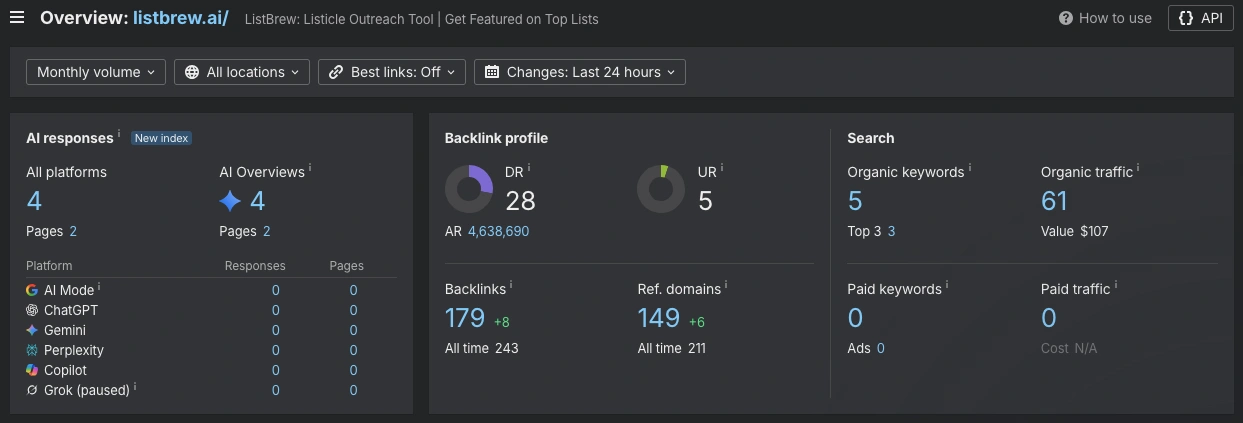
We’re also currently building our own software startup called ListBrew. The site was launched in February 2026, and in just 7 months, we managed to secure 179 backlinks and grow the DR to 28.
Here are the tactics we use:
- Submitting product to directories & review sites
- Contributing to journalist requests
- Writing guest posts in relevant publications
- Publishing and distributing original data
- Create link magnet assets (like free tools and templates)
- Asking creators & influencers to review your software (offer free plan)
- Doing listicle outreach
1. Submit product to directories & review sites
If you’re building a SaaS startup, this tactic is free and easy, but the impact can be huge.
SaaS directories are among the fastest, most reliable sources of early backlinks. Sites like G2, Capterra, Product Hunt, GetApp, and Trustpilot all offer free listings, and most include a link back to your website.
Beyond the link itself, directories carry an additional advantage for new sites: they’re frequently cited by AI when users ask about tools in your category.
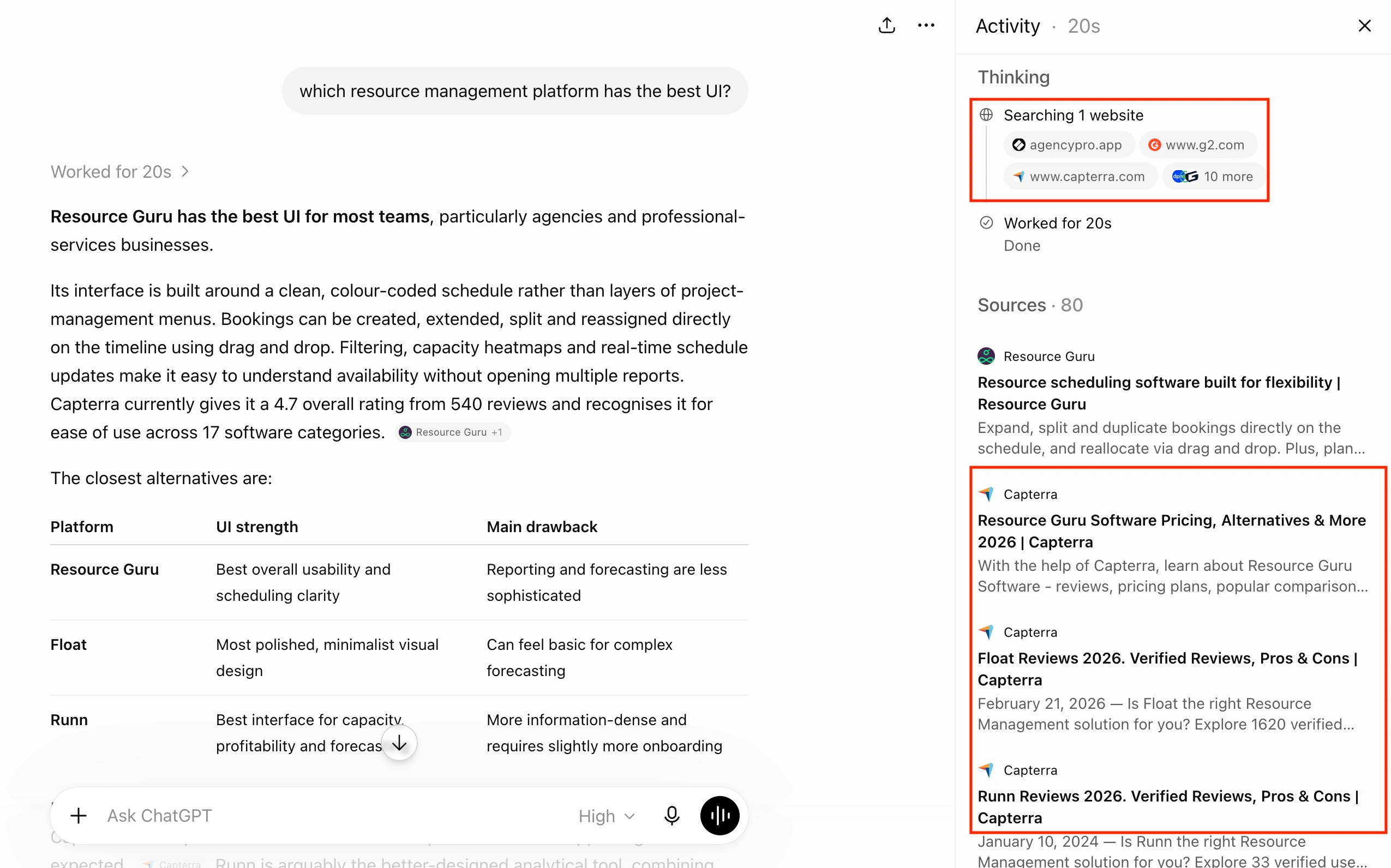
Appearing on even a handful of well-known directories puts your brand into the citation pool early.
How to do it
- Download our free list of 260+ SaaS directories, review platforms, and forum threads.
- Filter the list by Domain Rating (DR), monthly traffic, and AI citation count.
- Submit your brand and product to the highest-impact directories first.
- Create a consistent brand profile (name, description, screenshots, logo).
- For review platforms, encourage early users to leave positive ratings and reviews.
More reviews improve your visibility within the platform and make your listing more credible to prospective customers finding you through search.
2. Respond to journalist requests
Many journalists use platforms like Qwoted, Connectively, HARO, and MentionMatch to connect with subject-matter experts who can provide quotes in exchange for a byline and, usually, a backlink.
For startup founders, this is a straightforward route to links from news sites and publications with domain ratings of 70 to 90+.
It’s totally free, but you need to be quick. Most journalists work to same-day or next-day deadlines, so responses submitted within the first hour have significantly higher acceptance rates.
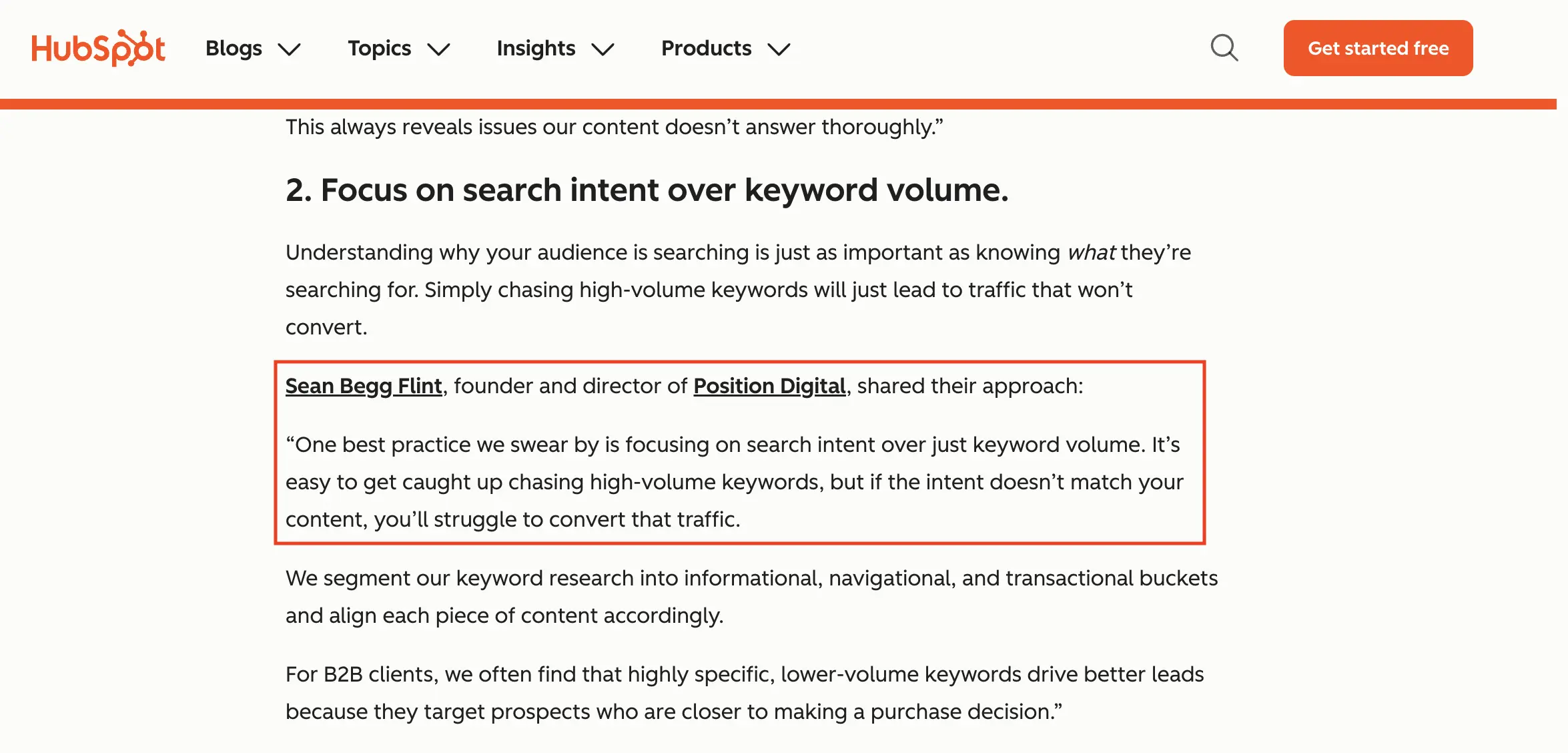
With this tactic, I managed to get featured in leading marketing blogs like Ahrefs, HubSpot, and Surfer SEO.
How to do it
- Set up keyword alerts on platforms like MentionMatch and HARO for terms relevant to your niche.
- Build a 15-minute daily routine around checking and responding to relevant queries.
- When you respond, don’t pitch your product. Lead with a specific insight, a data point, or a concrete example from your experience.
3. Write guest posts in relevant publications
Contributing expert quotes is great, but writing guest posts gives you more creative freedom to showcase your expertise and talk deeper about your brand, product, key features, selling points, etc.
It’s a smart way to seed information about your brand across the web, increasing the likelihood that AI engines will find, learn about, and eventually, recommend your products or services.
How to do it
At Position Digital, we’ve developed the GP (Guest Post) Engine framework that turns a single piece of content into a compounding source of guest post placements.
Here’s how it works:
- Pick a broad topic relevant to your SaaS niche, then brainstorm sub-topics that could each work as a standalone guest post on another site.
- Identify 10 to 20 experts in your space who aren’t direct competitors. Use LinkedIn, Hunter, or Apollo to find their contact details.
- Invite them to contribute a quote or insight to an article you’re publishing on your own site. A LinkedIn DM works better than cold email for the first approach.
- Publish the article, tag all contributors in a LinkedIn post, then follow up with each one and pitch a guest post on their site using one of the sub-topics from step one.
- Write the guest post. When it’s live, repeat the process: invite new contributors and offer them a return placement.
Each cycle leaves behind a warmer pool of contacts than the one before it. Over time, you’re building a network rather than relying on cold outreach.
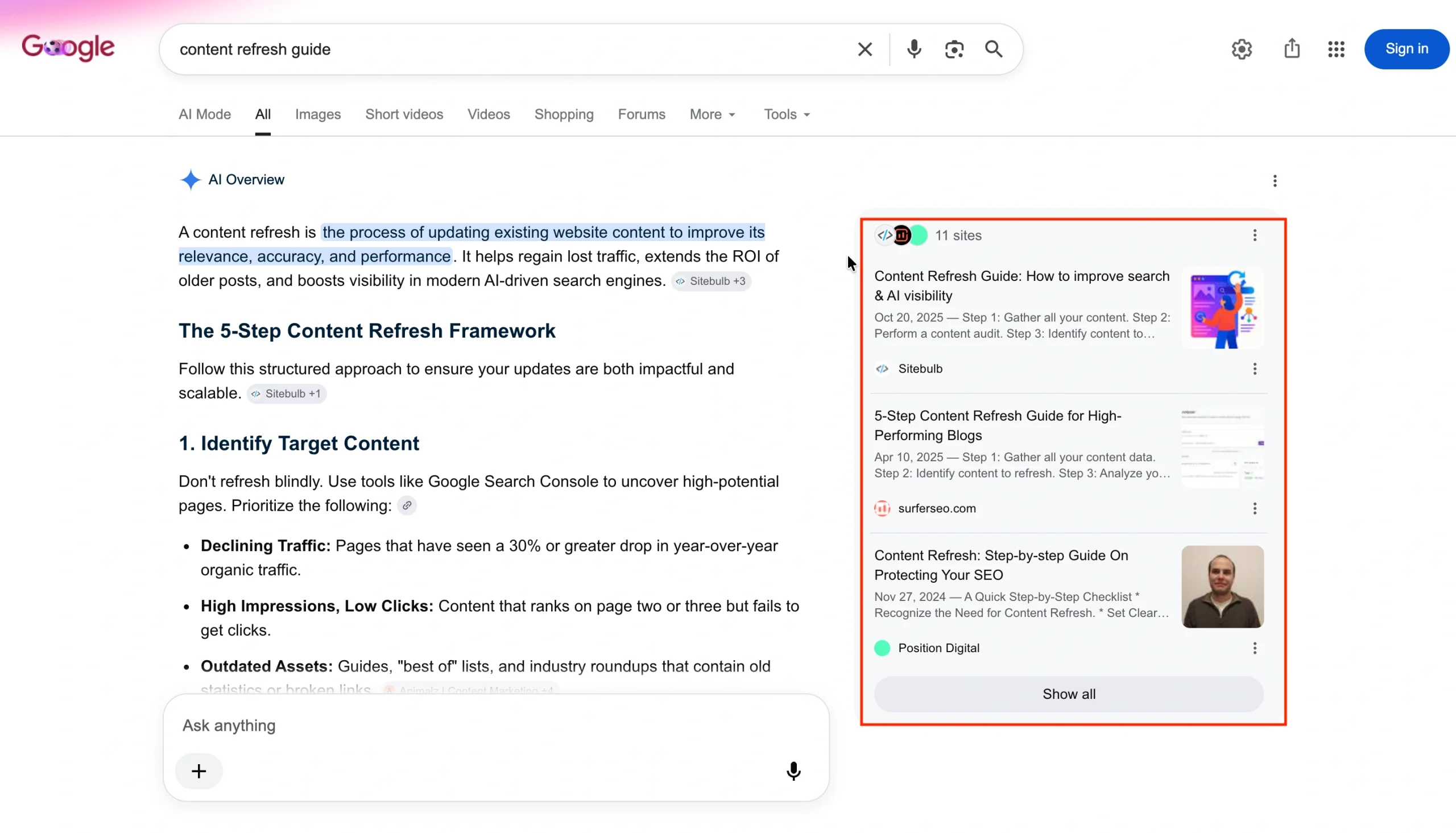
In one particular case, we published a guide on “content refresh” and wrote guest posts on Surfer SEO and Sitebulb for the same topic.
All three articles ended up getting cited by AI Overviews.
4. Publish and distribute original data
Proprietary research is one of the highest-leverage link building tactics available to a startup.
When you publish original data that no one else has, journalists, publications, and AI tools have no option but to cite your source.
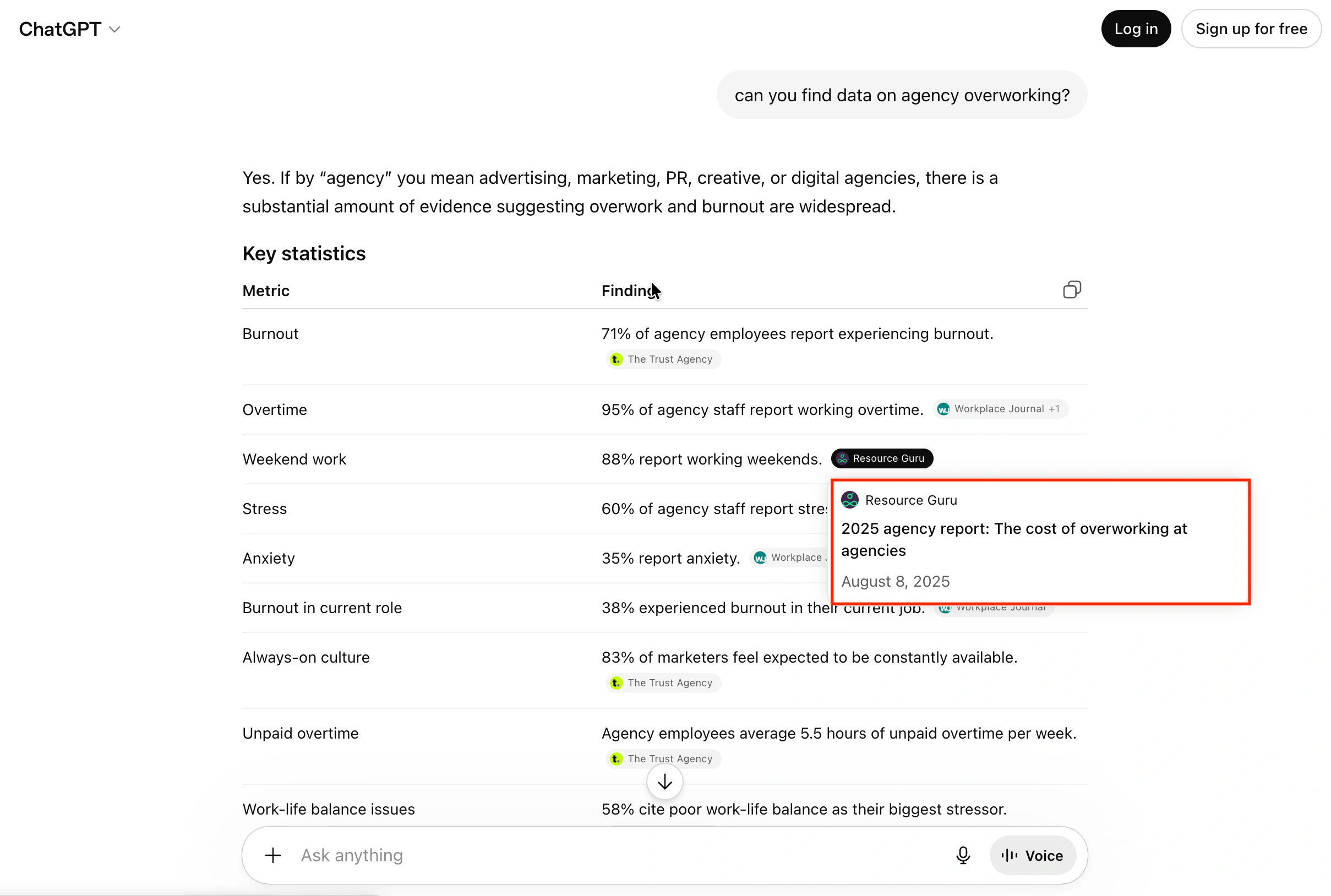
Our client Resource Guru used this approach. They produced an Agency Overworking Report by surveying agency professionals on workload and burnout.
We helped distribute it to relevant media contacts and, since publication, the report has generated over 50 backlinks, a Forbes feature, and multiple LLM citations.
How to do it
- Identify a question your audience keeps asking.
- Conduct the study: mine your own client results, survey your customers, or analyze publicly available third-party datasets to uncover patterns others have missed.
- Publish the study on your site and structure it for AI extraction. For a full walkthrough, check out our guide to data-driven content.
- Take the most interesting data point and distribute it to journalists, bloggers, and niche publications in your space.
5. Create link magnet assets
A link magnet is a resource so useful that other sites reference it without being asked. Free tools, templates, calculators, databases, and checklists all qualify.
Unlike tactics that require active outreach, link magnets generate links passively once published.
How to do it
- Identify a gap in your niche: something your audience searches for that doesn’t have a great free resource yet.
- Check AI Overviews for those keywords: does Google Google generate interactive tools and calculators directly in the AIO answer? If yes, abandon it.
- If not, build the asset. Keep it free with no email gate and no paywall. Gated assets don’t earn links.
- Publish it on its own dedicated URL so it can rank independently and be linked to directly.
- Promote it to publications and creators most likely to reference it.
For SaaS companies, you can also offer a free version of your main software. It’s a great way to attract links while also letting users try out your product.
6. Ask creators & influencers to review your software
This is another excellent tactic for startups in the SaaS space.
YouTube creators, bloggers, and affiliate marketers frequently publish honest reviews of tools in their category.
Their audiences trust their recommendations, and their articles and videos typically include a link to the product they’re reviewing.
Some channels might ask you for a paid placement. But there are plenty of smaller creators who would settle for a free trial of your product (if it’s relevant).
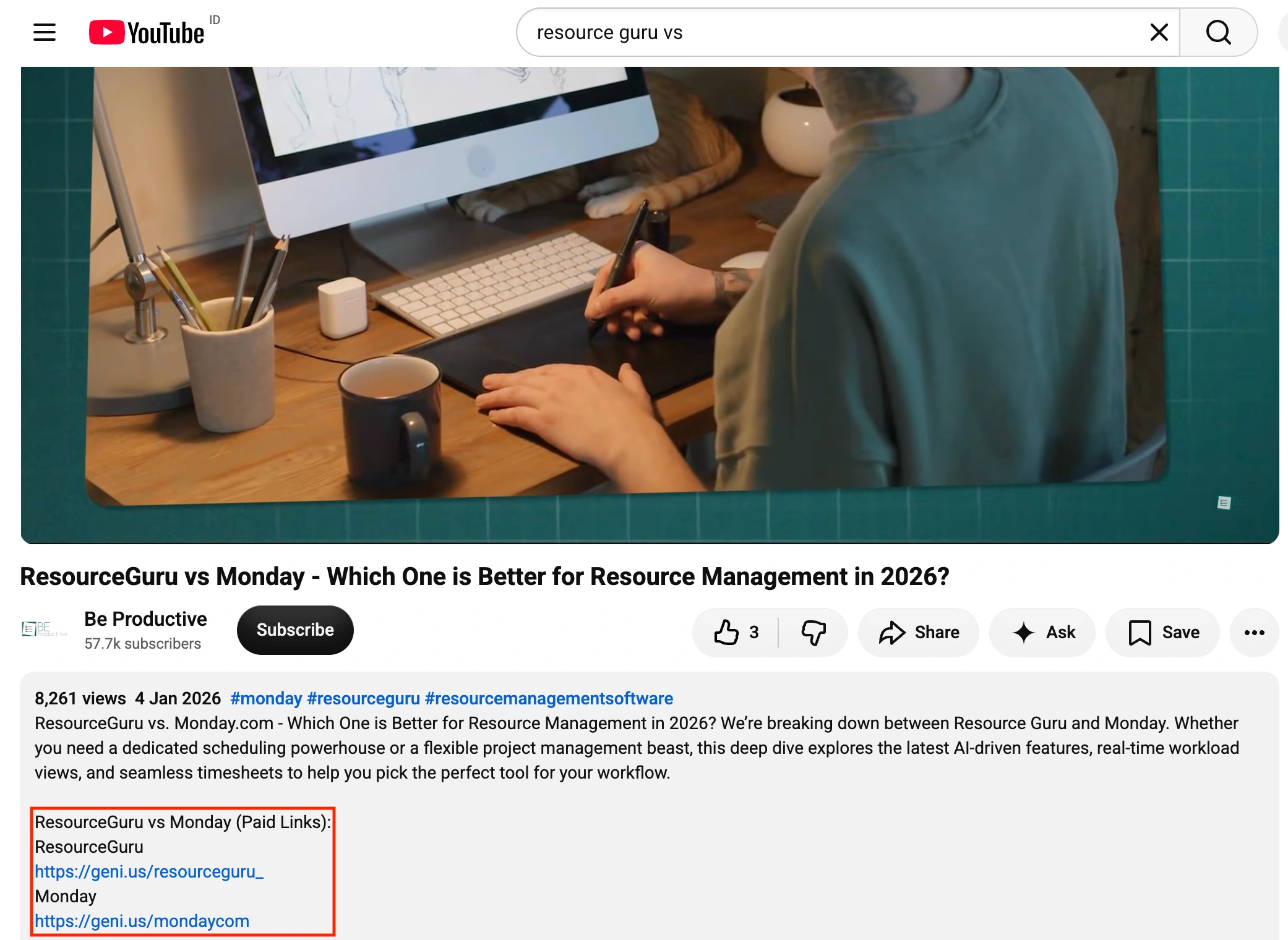
For a SaaS startup, a single review from a respected creator can generate traffic, trial sign-ups, and a high-quality backlink in one placement.
How to do it
- Find creators who regularly review tools in your category. YouTube tutorials, niche comparison blogs, and marketing newsletters are the most link-productive formats.
- Reach out with a short personalised pitch. Offer a free plan or an extended trial in exchange for an honest review.
- Don’t dictate the content. Balanced, honest reviews perform better in search and are more likely to be cited by AI and shared by readers.
- When the review goes live, share it across your own channels. Engagement signals increase its visibility and compound the referral traffic over time.
7. Do listicle outreach
“Best X” and “top X alternatives” lists dominate both Google rankings and AI citations for commercial queries, according to an AI SEO study by Wix.
So if you can secure placements in these listicles, you’re going to increase your chances of being recommended in AI answers.
How to do it
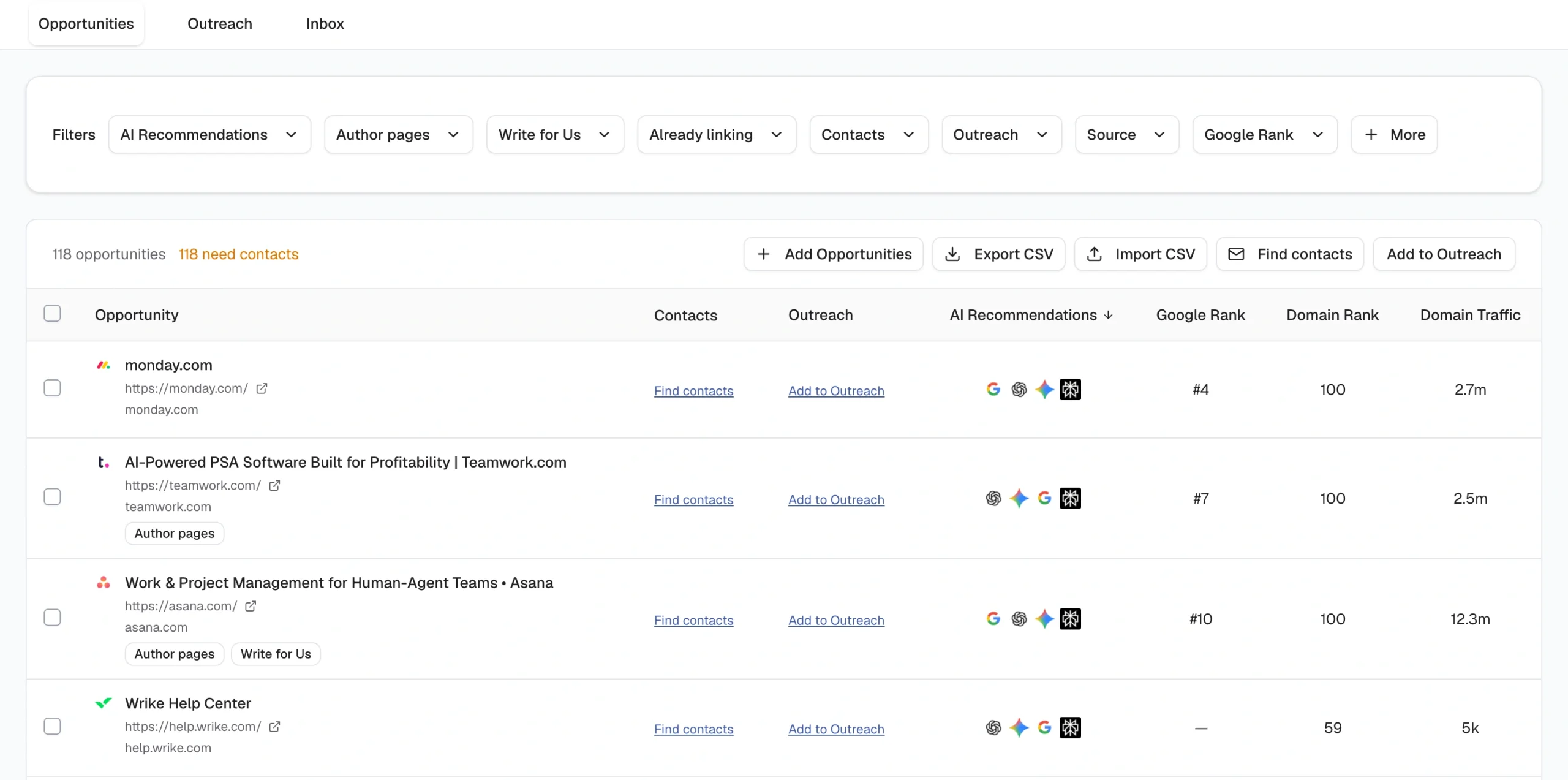
Our proprietary listicle outreach tool ListBrew helps you:
- Find relevant listicles that are already being cited by ChatGPT, Google AI, and Perplexity for your target keyword.
- Find the author or editor’s contact details for each opportunity.
- Draft a personalized pitch, send follow-ups, and track replies.
One tip to boost your reply rate: reference the specific article, explain why your tool fits the list, and include a paste-ready 40 to 60-word product blurb they can use without editing.
Make it easy for them to say yes.
Read our listicle outreach guide for the full process, from prospecting to outreach (plus pitch templates you can use).
Let the Experts Do it For You
These seven tactics work. But they take time, and time is the one thing most early-stage startup founders don’t have in abundance.
If you’re a busy startup founder, consider working with a proven link building agency like Position Digital.
We’ve helped startups across B2B and SaaS earn backlinks that matter. Our impressive results include building 50 links in 3 months for Resource Guru and securing 21 media placements in 4 months for Decentriq.
And we used the same playbook to grow ListBrew from zero to DR 28 and 179 backlinks in seven months.
Focus on building your product while we build your backlink profile. Let’s get in touch to discuss what’s right for your stage of growth.