
Despite all the changes and uncertainties surrounding SEO, it’s still one of the most effective growth channels for software companies according to recent SaaS marketing studies.
In this article, we’ll take a look at some SEO success stories from our own clients + external SaaS brands we’ve gathered from the web.
Key Takeaways
- SEO still works for software companies, but there is no single formula. The eight brands here grew through different strategies, and what mattered was finding the one that fits the business and executing it consistently.
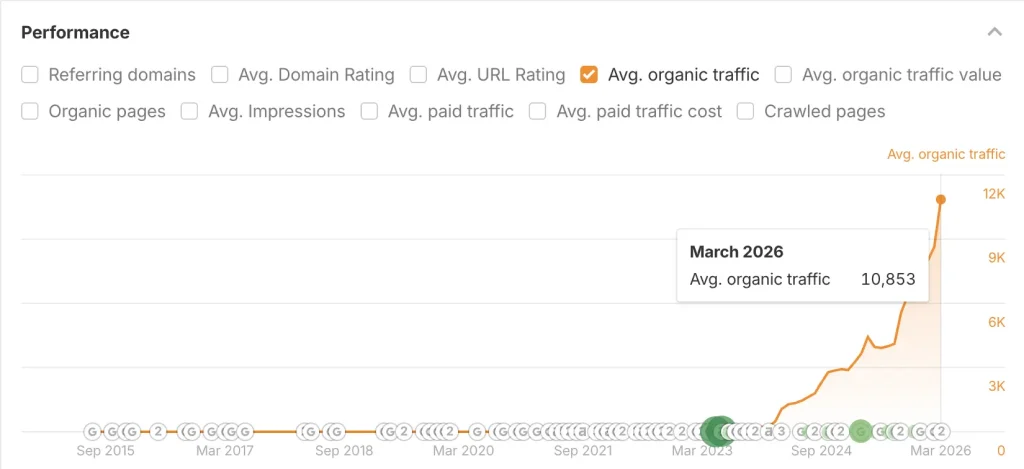
- Results were substantial across very different starting points. Decentriq grew monthly organic traffic from 1,385 to 2,855 (+106%) in under a year, Outbuild grew from 3,653 to 10,853 in a year, and Panto AI grew organic MQLs by 3.5x in 12 months.
- Conversions can matter more than traffic. Phonexa’s organic traffic fell 13% yet demo conversions rose 34% after the team cut as much as 70% of some pages, and HR Datahub’s free trial bookings rose 80.4% year on year.
- Write for the problem and the language your buyers use. Outbuild built content around construction planning terms, Ketch around education-first privacy searches, and emma around the operational problems engineers search for when stuck, which generated roughly 40% of its inbound demo requests in about 9 months.
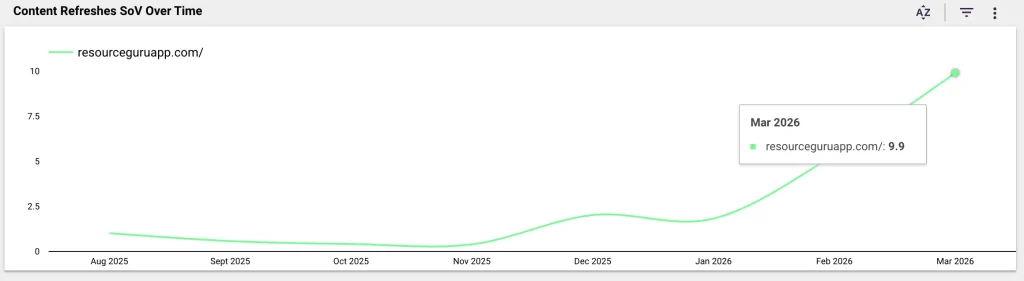
- Foundations and freshness beat volume. Technical SEO determines whether search and AI engines can crawl, index and rank your content, and Resource Guru’s refreshed content lifted share of voice from 1.82% to 9.84% in three months without publishing more.
Decentriq: 106% organic growth in less than a year
Client background
Decentriq is an enterprise SaaS platform that provides data clean rooms and audience data management tools for organizations in highly regulated sectors.
This allows teams to collaborate on sensitive data securely, without needing to share or expose it.
Challenge
As a startup with a lean marketing team, Decentriq had limited time and resources to dedicate to SEO.
So, they needed someone to handle the day-to-day SEO tasks like technical site maintenance, content creation and optimization, as well as link building and digital PR.
That’s where we come in.
As a solo marketer, my attention is scattered everywhere. But thanks to Position Digital, I don't feel like I have to babysit the day-to-day stuff for SEO. Rather, they have my back and will flag anything that needs my attention.
 Erin Lutenski, Head of Marketing, Decentriq
 What we did
We started by strengthening the site’s technical foundations, before moving to on-page optimization and off-page campaigns.
Technical SEO
- Removed redirect chains and cleaned up incorrect redirect mappings
- Fixed broken internal and external links
- Improved site speed with caching, minification, and image optimization
- Built an XML sitemap and strengthened internal linking to improve crawlability
- Enhanced existing schema and added missing structured data to eligible pages
On-page optimization
- Refreshed high-value pages with strong performance and commercial potential
- Optimized metadata to better align with search intent
- Ran a content gap analysis and defined new topic opportunities
- Published competitor comparison content and listicles
- Created new pages based on traffic potential and business priority
Off-site SEO
- Launched digital PR to earn high-authority mentions and backlinks
- Submitted Decentriq to relevant industry and business directories
Results
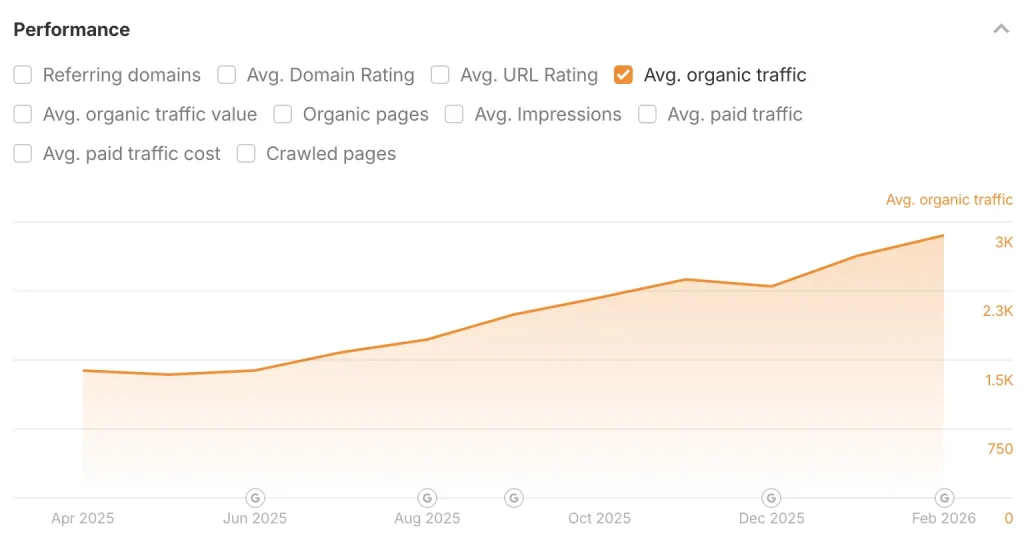
In less than a year (April 2025 to February 2026), Decentriq saw massive improvements in their organic performance:
- Monthly organic traffic grew from 1,385 to 2,855 (+106%)
- AI citations jumped from 14 to 75 (+435%)
- Top ranking keywords increased from 30 to 105
- Referring domains grew from 391 to 694 (+77.5%)
Key takeaway
Technical SEO is the backbone of your website success. It determines whether search engines and AI engines can comfortably crawl, index, and rank your content in the first place.
Want a comprehensive audit of your site? Check out our SEO audit services to get started.
HR Datahub: 80% increase YoY in free trial bookings
Client background
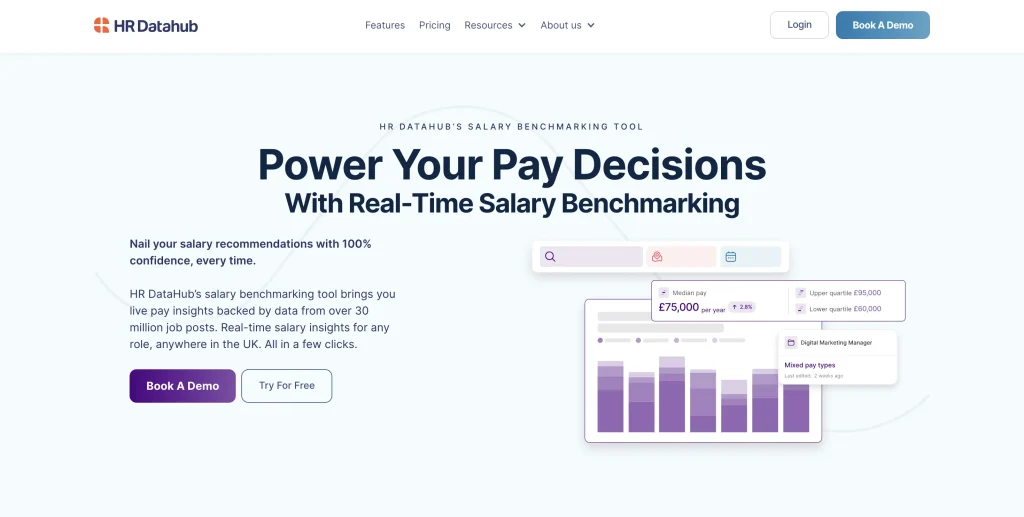
HR Datahub is an intelligence SaaS platform that provides real-time salary insights for any job role in the UK.
Challenge
When HR Datahub first came to us in June 2024, they had very low domain rating (23) and search visibility (around 200 monthly visitors).
To make matters worse, salary benchmarking is a very competitive niche. HR Datahub wasn’t just competing with popular HR software tools like HiBob, but also large job portals like Indeed as well as leading recruitment agencies in the UK.
Needless to say, they needed a solid SEO strategy to build a solid online presence and drive more signups.
What we did
As a salary benchmarking tool, data is HR Datahub’s main selling point.
So, our content strategy revolved around publishing fresh, original, and unique information that HR leaders are looking for:
- We published salary benchmark reports from HR Datahub’s own surveys
- We updated key pages with the latest labor market forecasts from reputable and official sources
- We included quotes from relevant experts to boost trust and E-E-A-T signals
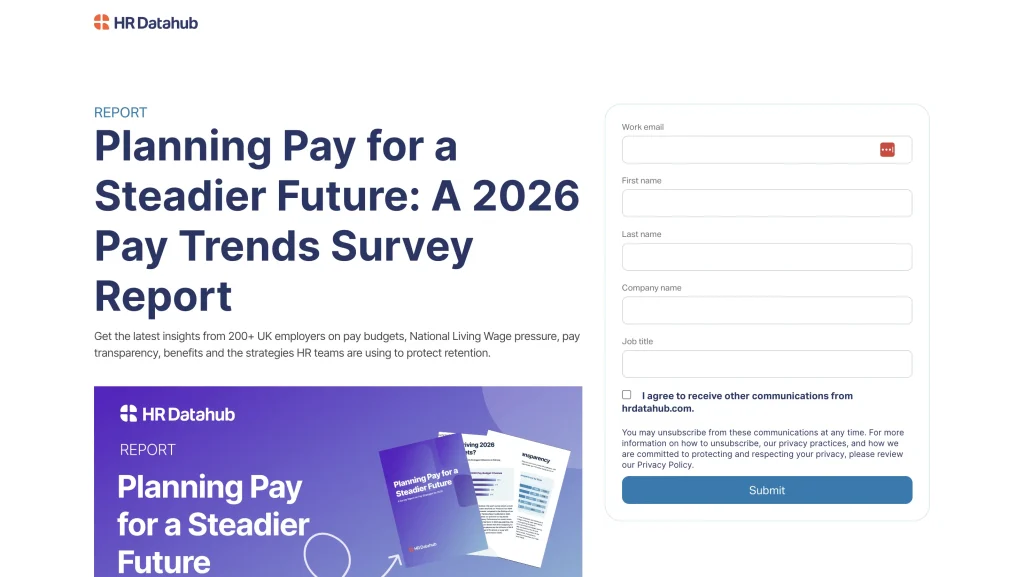
We also focused on bottom funnel content like comparison articles and listicles to increase AI visibility and conversions.
Results
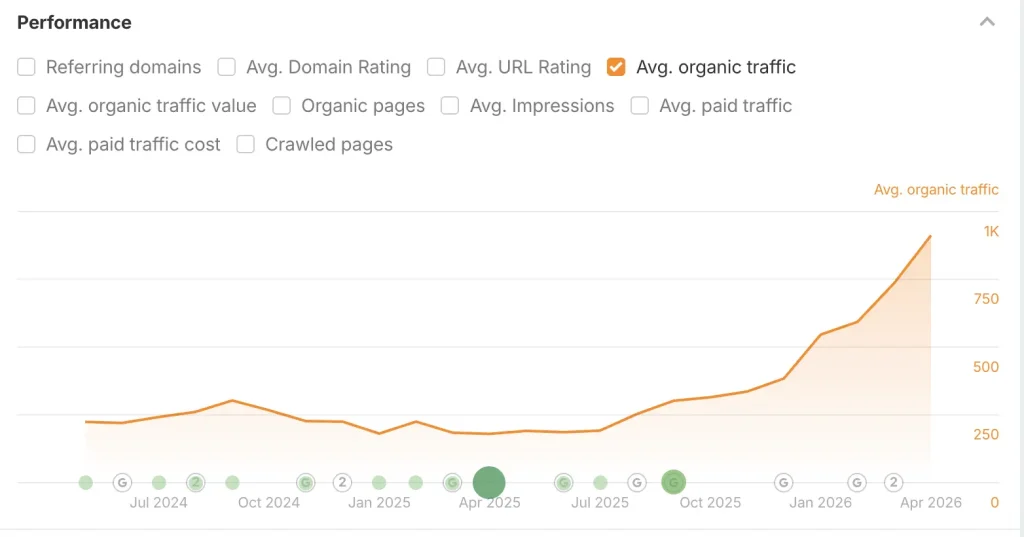
Between June 2024 and April 2026, our SEO efforts are slowly but surely paying off:
- Monthly organic traffic grew from 220 to 912 (+315%)
- Top 5 ranking keywords grew from 8 to 89 (+1,012%)
- AI citations went from 0 to 37
- Domain rating increased from 23 to 33
Most importantly, HR Datahub generated more leads in 2025 than the year before:
- Webinar bookings increased by 1,519%
- Free trial bookings increased by 80.4%
- Call bookings increased by 180%
- Message bookings increased by 1,150%
I love our collaboration with Position Digital. They have really helped us raise the bar and it’s so exciting seeing the numbers going in the right direction!
 Rebecca Yates, Growth Marketing Lead, HR Datahub
 Key takeaway
AI feeds on existing information and content. If you want to win in the GEO era, you need to provide something new, original, and unique.
To dive deeper into the topic, check out our B2B SaaS content marketing guide for 2026.
Resource Guru: 441% increase in SoV for refreshed content
Client background
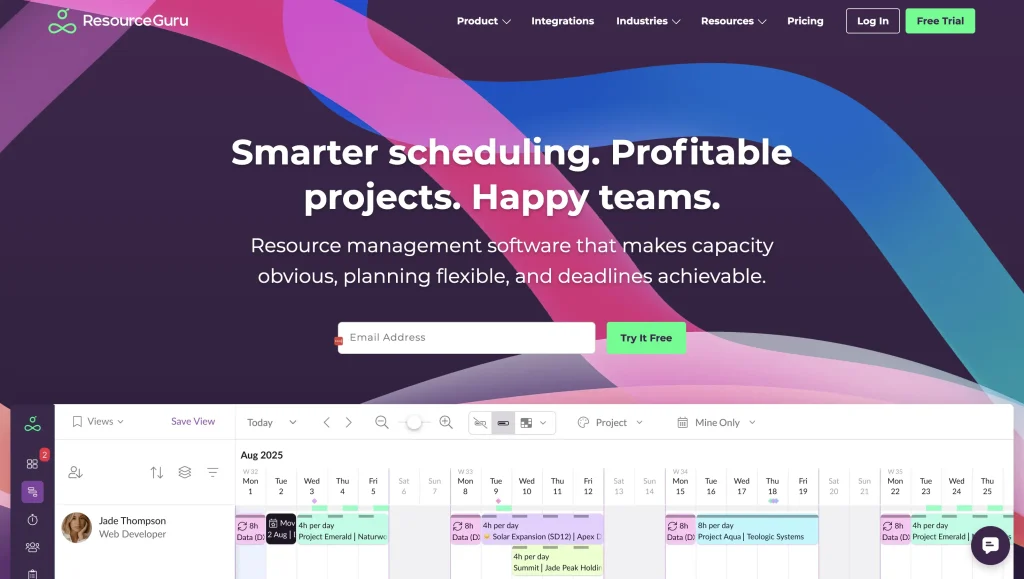
Resource Guru is a scheduling platform designed to help organizations manage the workload and capacity of each team member.
Challenge
Unlike the first two clients, Resource Guru already had a well-established SEO and content process in place.
They were also performing strongly in organic search, with 20,000+ monthly visits.
However, as the blog expanded, keeping key articles updated and fully optimized became more demanding.
To maintain and improve performance, they needed extra support to continuously refresh their most important content.
What we did
For Q1 2026, we launched a content refresh initiative that focuses on the following informational topics:
- Project time tracking (14 keywords)
- Agency software (12 keywords)
- Resource capacity planning (18 keywords)
We identified important blog posts targeting those keywords that were either over a year old or beginning to lose traffic.
From there, we updated the copy, UX, and angle of those pages to better satisfy search intent. We also enriched the content with expert insights (both internal and external) to boost E-E-A-T.
Lastly, we optimized the content for AI Overviews by implementing entity markup, FAQ blocks, and schema.
Results
The share of voice (SoV) for the content refresh keywords went up from 1.82% in January to 9.84% in March (a whopping 440.66% increase). Moreover, 10 of those keywords were cited by AI Overviews.
During that period, we also saw an increase in:
- Overall organic traffic (from 17,614 to 22,546)
- Overall impressions (from 196,522 to 250,853)
Key takeaway
You don’t always need to publish more and more content. Sometimes, refreshing what you already have can bring greater results while requiring lower effort.
Check out our step-by-step content refresh guide to learn more.
Phonexa: 34% increase in conversions despite 13% traffic drop
Company background
Phonexa is a US-based SaaS company founded in 2016. It offers an all-in-one marketing automation and performance tracking platform for lead generators, advertisers, and affiliate networks.
Key result
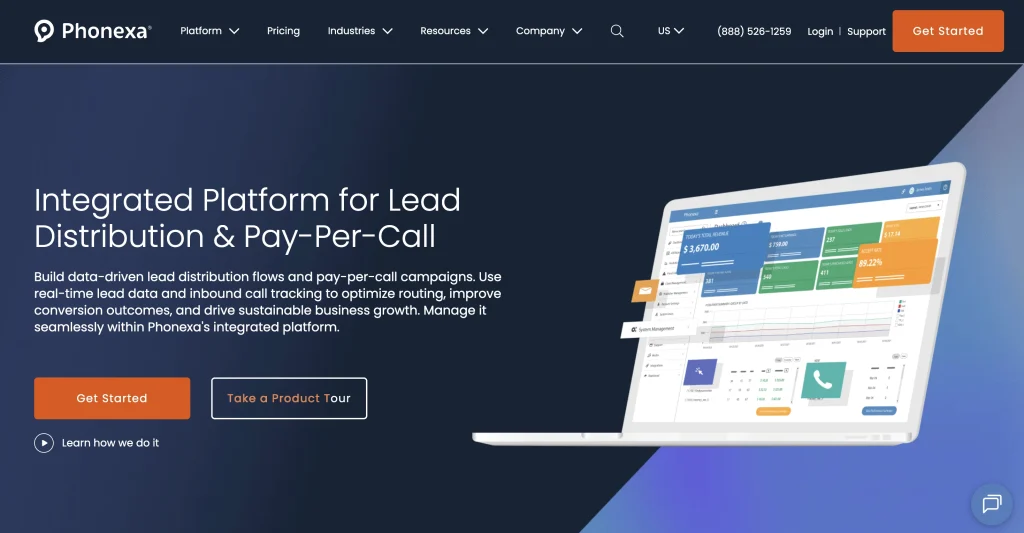
Phonexa saw a 13% decline in organic traffic, partly due to the impact of AI Overviews. Despite that, its demo conversions increased by 34%.
So, how did they do that?
Their strategy
When I spoke with Sergey Galanin, SEO Director at Phonexa, he explained that informational blog posts were driving a large share of traffic, but they were not contributing meaningful pipeline.
After looking more closely at user behavior, he found that many pages included too much information. Rather than helping users make a decision, the extra detail was creating friction and making the content harder to act on.
To address this, Sergey and his team significantly simplified the content. In some cases, they cut as much as 70% of the page and refocused it on the information buyers actually needed to evaluate the product and take the next step.
The result was a site that attracted less traffic overall, but converted more of the right visitors.
Key takeaway
Creating in-depth content doesn’t always lead to better results. Sometimes, too much information can overwhelm readers, dilute key messaging, and reduce conversion intent.
Panto AI: Grew organic MQLs by 3.5x in 12 months
Company background
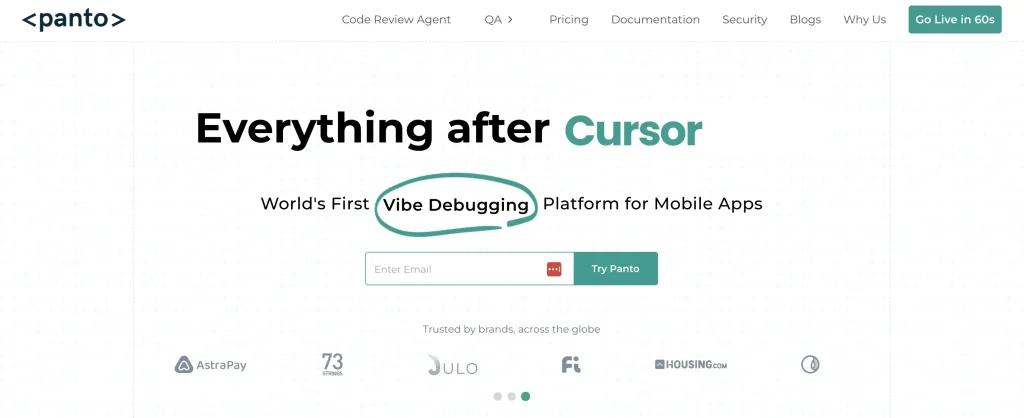
Panto AI is a B2B developer productivity SaaS selling to engineering teams via freemium and enterprise motions.
Key result
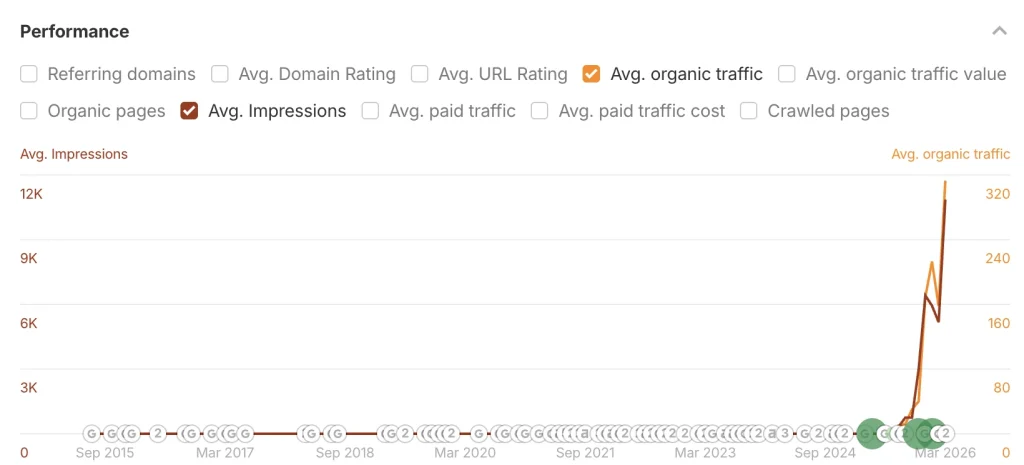
In 12 months, Panto AI grew organic MQLs (marketing qualified leads) by 3.5x and organic sessions by 2.8x.
These organic conversions also helped reduce customer acquisition costs by around 30% and shortened the time to first revenue for those customers.
Their strategy
Pavankumar Kamat, Co-Founder and CEO at Panto AI Inc, shared their SEO strategy with us:
- Product-led SEO: They treated docs, tutorials, and step-by-step examples as key landing pages. This helped them attract users looking for practical solutions while also showing the product’s value.
- Intent mapping + topic clusters: They mapped content to different stages of the journey, from discovery to evaluation to pilot, then built hub pages that guided users to more specific guides and demo paths.
- Technical execution: They focused on making the site easy for search engines to crawl and understand, using clear canonical tags, structured data for docs, and fast-loading pages.
- Conversion experiments: They tested CTAs within docs, gated templates for high-intent searches, and tracked how quickly organic leads moved through the funnel.
- Backlink & trust play: They earned relevant backlinks through integrations, community repositories, and technical guest posts.
Key takeaway
Panto AI shows that SEO works best when content is genuinely useful and closely connected to the product.
Outbuild: From 3k to 10k traffic in one year
Company background
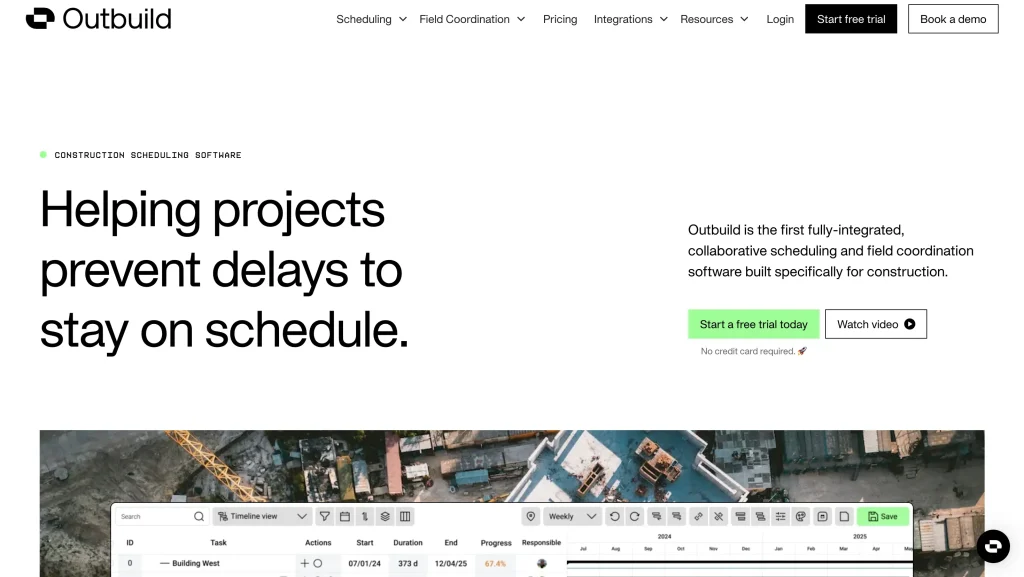
Outbuild is a construction scheduling and planning platform.
It’s built specifically for general contractors that manage complex projects and need a better way to coordinate schedules, track milestones, and keep everyone aligned on the jobsite.
Key result
Within about a year, organic search became one of Outbuild’s most reliable acquisition channels.
Traffic grew by roughly 3x, from 3,653 in March 2025 to 10,853 in March 2026.
But the bigger impact was that many of their demo requests started coming from very specific construction workflow searches, meaning the leads were highly qualified.
Their strategy
According to Lee Evans, Head of Marketing at Outbuild, their SEO strategy worked because they leaned heavily into industry language and real jobsite workflows.
Construction professionals don’t search the same way typical SaaS users do. Instead of searching for “project management software,” they search for things like lookahead planning, pull planning, CPM schedules, or Last Planner System processes.
So we built content around how construction teams actually plan projects, not just around software categories.
 Lee Evans, Head of Marketing, Outbuild
 Another tactic that worked well was creating visual-first content.
Schedules, planning boards, and process diagrams are much easier to understand visually, so many of their SEO pages included real planning examples, templates, and walkthroughs that mirrored what happens on a jobsite.
Outbuild also focused on educational resources that teams could use immediately, like downloadable planning templates and scheduling frameworks.
These pieces generated backlinks from construction blogs and industry communities, which helped strengthen our domain authority.
Key takeaway
Using your audience’s language is a great way to form deeper connections.
When your content reflects the real workflows and terminology people use every day, it becomes much easier to earn their trust.
Learn more powerful SaaS copywriting tips here.
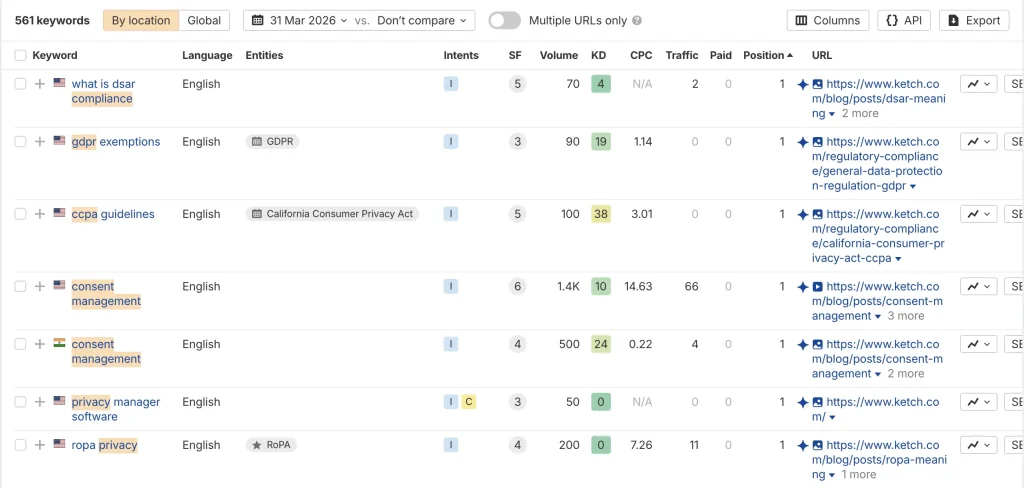
Ketch: 191 informational keywords ranking #1 in Google
Company background
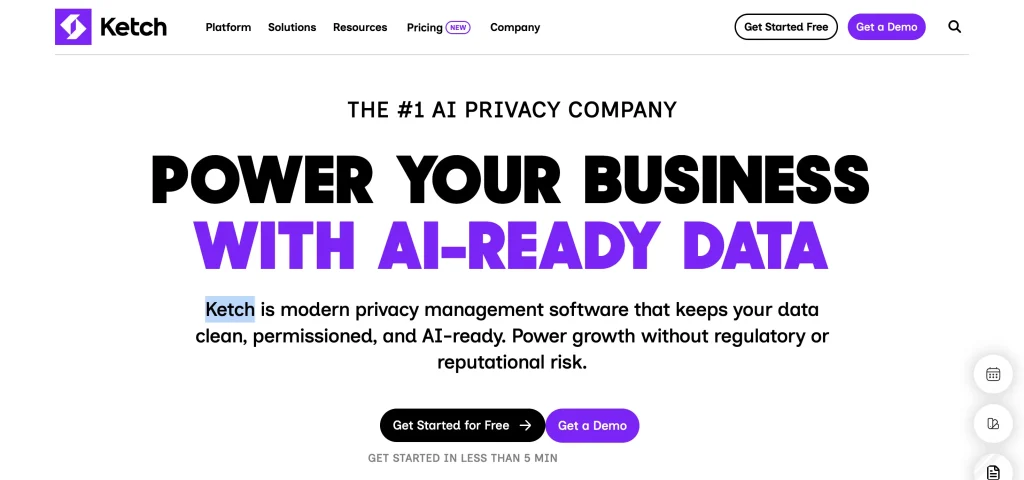
Ketch is a data privacy and consent management platform that helps companies manage data rights, consent, and compliance across regulations like GDPR and CCPA.
Their audience is mostly enterprise companies, legal teams, and privacy professionals, which makes search intent very niche and education-heavy.
Key result
Within about 12 months, Ketch managed to grow organic traffic by over 300% and turned SEO into one of their top pipeline channels.
Several of their educational pages around privacy laws and consent management started ranking first in Google.
Their strategy
Here’s what Colleen Barry, Chief Marketing Officer at Ketch, said when asked about their SEO strategy:
Our SEO strategy was built around becoming the most helpful educational resource in the privacy space. Instead of just targeting product keywords, we focused heavily on regulatory and problem-based searches like “what is CCPA”, “data subject access request”, and “consent management platform”.
 Colleen Barry, Chief Marketing Officer, Ketch
 They built topic clusters around regulation and privacy workflow, then created deep, well-structured guides for each topic. They also internally linked everything back to the product pages.
Another big focus was collaborating with the legal and privacy experts internally. This allowed Ketch to publish genuinely authoritative content that search engines and readers trust.
Key takeaway
For SaaS companies in complex industries, the best SEO strategy is often education first, product second.
If you consistently publish the most helpful content around your customer’s problems, traffic and pipeline will follow.
Not sure where to start? Start learning from the best SaaS blogs.
emma: Generated 40% of inbound demo requests from SEO
Company background
emma is a platform that simplifies cloud management across hybrid and multi-cloud environments.
It helps DevOps teams, cloud architects, and engineering leaders manage AWS, Azure, and other infrastructure from a single interface without the usual operational complexity.
Key result
In about 9 months, SEO generated roughly 40% of emma’s inbound demo requests.
They also ranked on page one for several mid-funnel cloud management and cost optimization queries that directly drove qualified leads.
Their strategy
Instead of chasing broad “cloud computing” keywords, emma focused on high-intent operational problems that engineers actually search for when they’re stuck.
For example, searches around things like multi-cloud cost control, cloud environment visibility, or managing AWS and Azure together. These are not always the highest volume keywords, but the intent is incredibly strong.
We built content around real workflows engineers deal with, guides like comparing multi-cloud strategies, managing environments across providers, and troubleshooting common infrastructure issues.
 Dirk Alshuth, Chief Marketing Officer, emma
 Another tactic that worked well was publishing comparison and decision content.
Engineers often evaluate multiple tools, so pages comparing approaches or explaining when a unified cloud platform makes sense helped capture users who were already in evaluation mode.
Finally, emma also embedded product visuals and short demos directly into SEO pages. This helped bridge the gap between education and product discovery without feeling like a sales pitch.
Key takeaway
In technical SaaS, SEO works best when you target the moment of frustration.
If your content solves the exact operational problem someone is Googling, they’re far more likely to convert into a product evaluation.
Achieve SEO Success With Position Digital
These examples show that there is no single formula for SaaS SEO success. What matters is finding the strategy that fits your business, then executing it consistently.
At Position Digital, we help SaaS brands do exactly that.
From SEO strategy to content planning, production, and distribution, our end-to-end SaaS SEO services are designed to help you grow organic visibility, attract the right audience, and turn search into a meaningful growth channel.
If you want a clearer SEO strategy and a partner to help you execute it, get in touch with us today!