
2024 was the breakthrough year for AI search. Google launched AI Overviews, and OpenAI introduced ChatGPT search.
2025 and 2026 were the boom years. New AI platforms, LLM visibility trackers, and GEO agencies flooded the market, while established products rushed to integrate AI features.
In 2027, AI search is set to become an even bigger part of everyday life.
Half of US adults already use AI chatbots, and with AI increasingly built into phones, browsers, and search engines, accessing AI-powered answers is becoming second nature.
So, what does this mean for marketers?
Here are 10+ AI search trends to watch in 2027, why they matter, and what you can do to stay ahead.
Key Takeaways
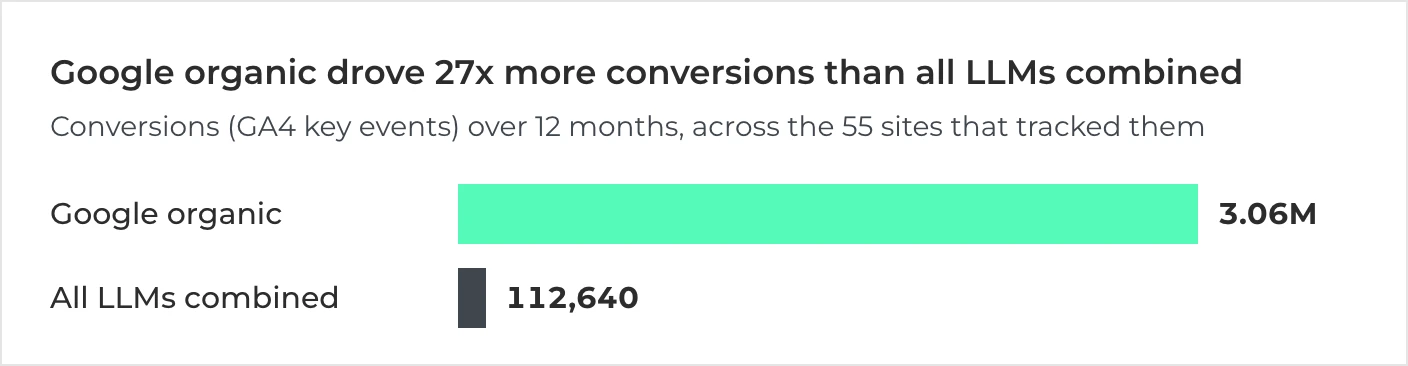
- SEO is still very much alive and growing. Google search grew at its fastest pace in five years, and Google organic drove 27x more conversions than all LLMs combined across 100 sites.
- Search engines and LLMs are becoming one product. Google is merging AI Overviews, AI Mode, and classic search, and 48% of ChatGPT messages are now searches or how-to questions.
- Google is winning the AI race on distribution. Gemini has 1 billion users, AI Mode passed 1 billion, Siri now runs on Gemini models, and Google has launched more than 50 Connected Apps.
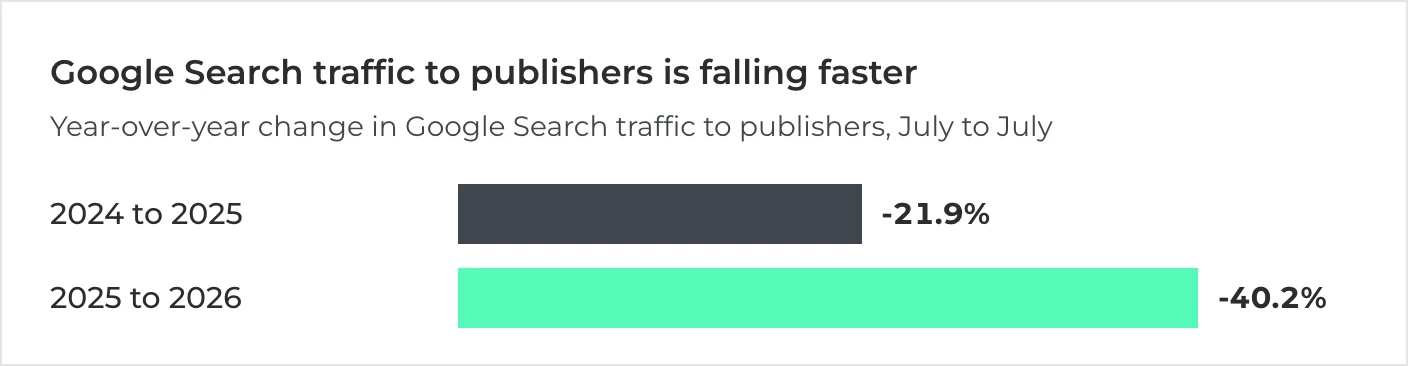
- Websites are forced to adapt their content marketing. Google Search traffic to publishers fell 40.2% in a year, and big brands are starting to publish pages written mainly for AI.
- Agentic search is changing how people buy. Agents compare merchants directly, which weakens comparison sites, coupons, and brand advertising, and B2B procurement is likely to move first.
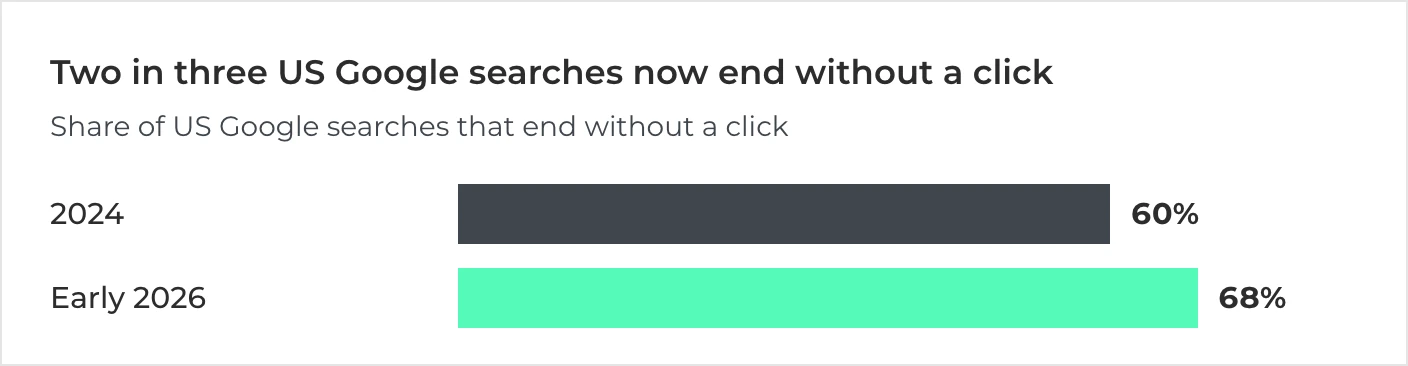
- Traffic is no longer a reliable success metric. 68% of US Google searches end without a click, and no AI platform shares click data with site owners.
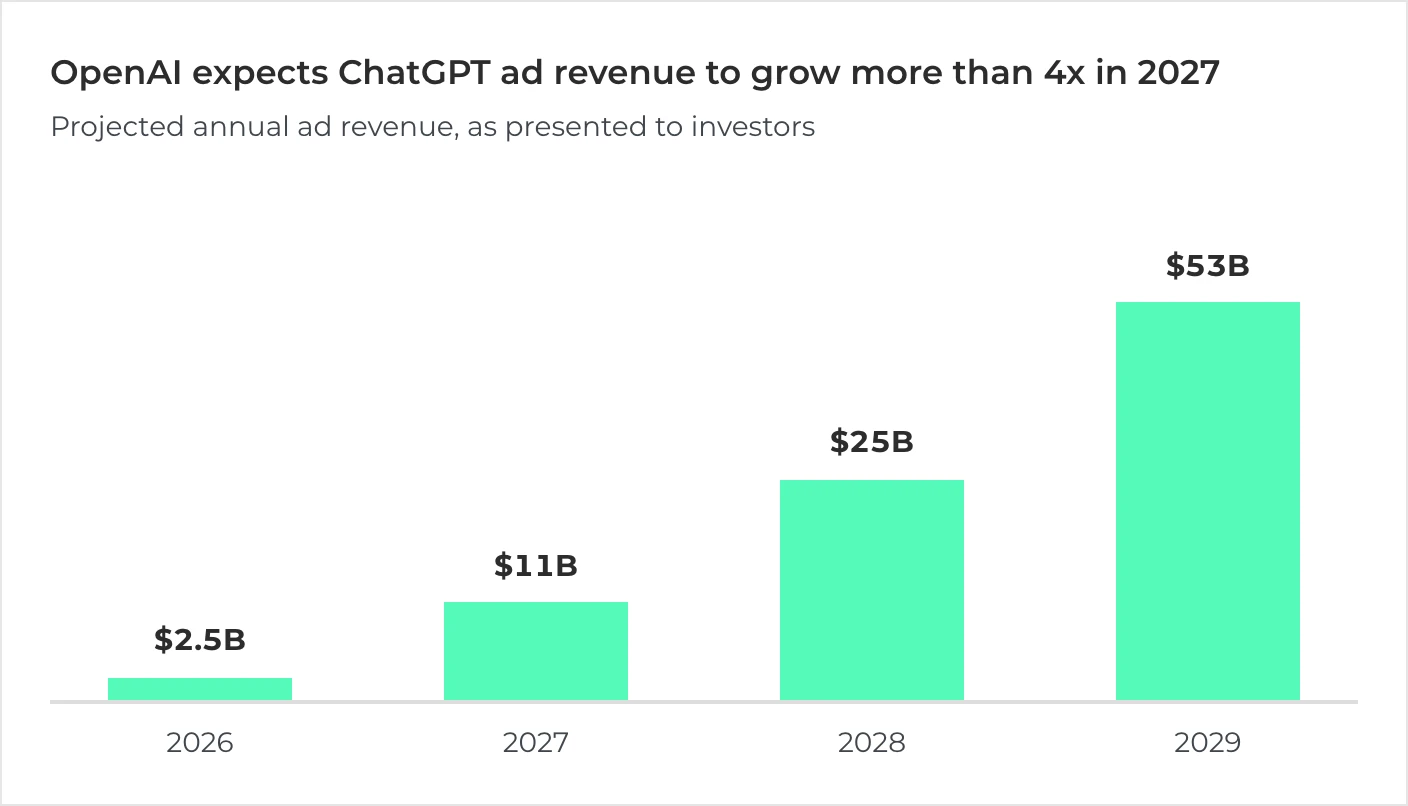
- AI answers get ads. OpenAI expects ad revenue to grow from $2.5 billion in 2026 to $11 billion in 2027.
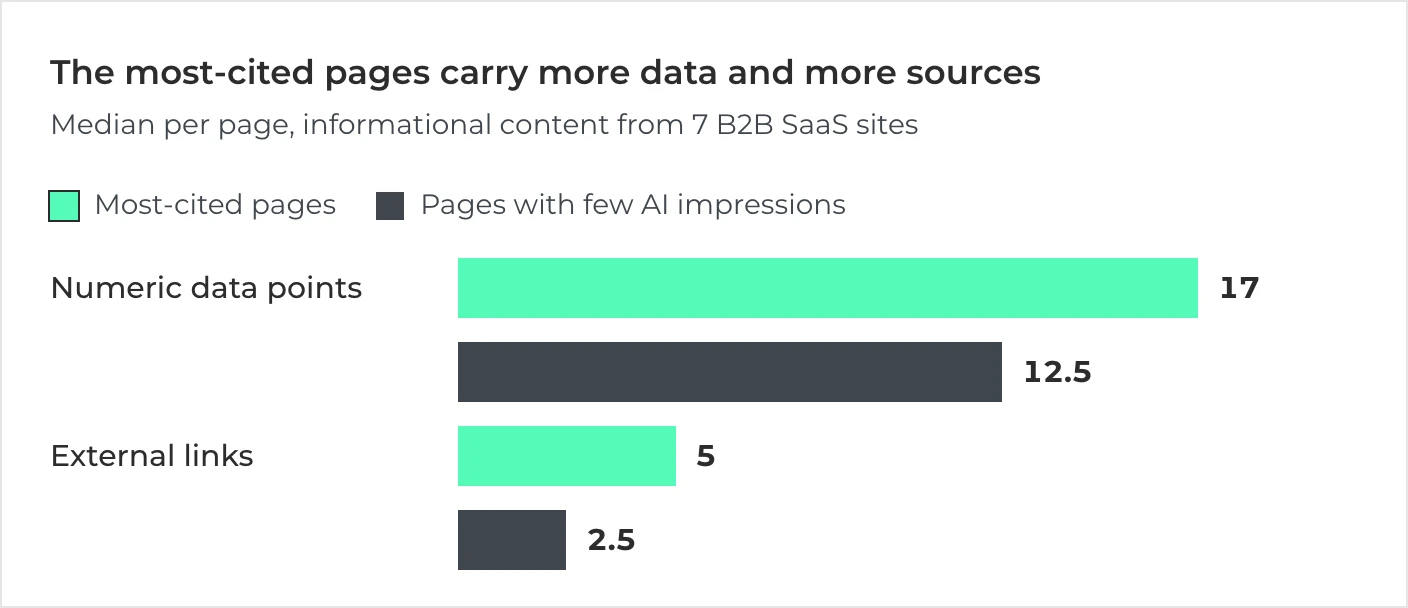
- Content gets judged on effort. Google now defines effort in its guidance, and the most-cited pages in our study carried 36% more data points.
- Reddit is fighting back. It catches about 25,000 spam posts and comments a day, and it now uses LLMs to spot coordinated fake behavior.
- Most of your traffic is bots. On our own site, only 1 in 22 page views came from a person.
- Brand monitoring becomes more crucial. AI Overviews now appear on 83% of branded searches, and one bad review can keep getting cited.
- Search goes multimodal. One in five AI Mode searches now use voice, images, or documents, so invest in images, infographics, charts, and video.
- Websites get more control over how AI uses their content. Google plans one robots.txt switch for AI training, and Cloudflare now offers new sites with ads a preset that blocks AI training, plus a way to get paid when AI uses their content.
1. SEO is Still Very Much Alive and Growing
For the past two years, “SEO is dead” has been one of marketing’s favorite headlines. ChatGPT would replace Google. AI Overviews would end the click. Nobody would need a website anymore.
In February 2024, Gartner made one of the most quoted predictions of them all. Search engine volume, it said, would drop 25% by 2026 as people moved to AI chatbots.
It’s now the end of 2026, and here we are. In October, Google reported its highest year-over-year search volume growth in the last five years.
Google is still the biggest search channel by a wide margin, and SEO is still how most buyers find businesses online.
AI didn’t kill SEO. It expanded search.
What the data shows
Google remains the biggest traffic and conversion referral. Marie Haynes analyzed 12 months of GA4 data across 100 websites and 145 million sessions.
ChatGPT sent traffic equal to just 0.62% of Google organic’s volume. Add every other LLM, and it rose to only 0.73%. The conversion gap was just as wide:
SEO Works found the same pattern across 95 websites: organic search sent 39x more traffic than AI assistants.
And people aren’t leaving Google for ChatGPT. They’re using both: 95% of ChatGPT users also use Google, according to Similarweb.
Our prediction for 2027
SEO will still be the biggest search channel in 2027. Google will drive most search traffic and conversions, and AI assistants will stay a small share of referrals for most businesses.
Three things make this a safe call:
- The gap is too big to close in a year. Google sends about 190x more traffic to websites than ChatGPT, according to Ahrefs. Even if AI referrals doubled every year and Google stood still, AI would need more than seven years to catch up.
- AI is adding to search. Google’s query growth hit a five-year high in the same year ChatGPT passed a billion weekly users. People are using both.
- ChatGPT’s growth is slowing. Its web visits have been roughly flat for a year, according to Similarweb, while the AI market grew around it.
For most businesses in 2027, a small gain in Google will be worth more than a big gain in AI referrals.
By SEO Works’ math, a 5% improvement in organic search would have produced more extra conversions than doubling AI referral traffic.
2. Search Engines and LLMs Are Becoming Unified Products
A few years ago, you went to Google to search and to ChatGPT to chat. In 2027, that line will become blurry.
Google is turning search into a conversation:
We are building one seamless experience across AI Overviews, AI Mode, and traditional Search.
 Sundar Pichai, CEO, Google
And every major LLM now searches the web: ChatGPT, Claude, Gemini, Perplexity, and Copilot can all look things up before they answer.
What the data shows
Users are already asking longer questions in Google. Queries in AI Mode are on average three times longer than traditional searches, according to Pichai.
And with AI Mode integrated more into the search results, more people will search the way they talk: describing their situation and asking follow-ups instead of typing a few keywords.
Another interesting trend: people are now using ChatGPT more like a search engine.
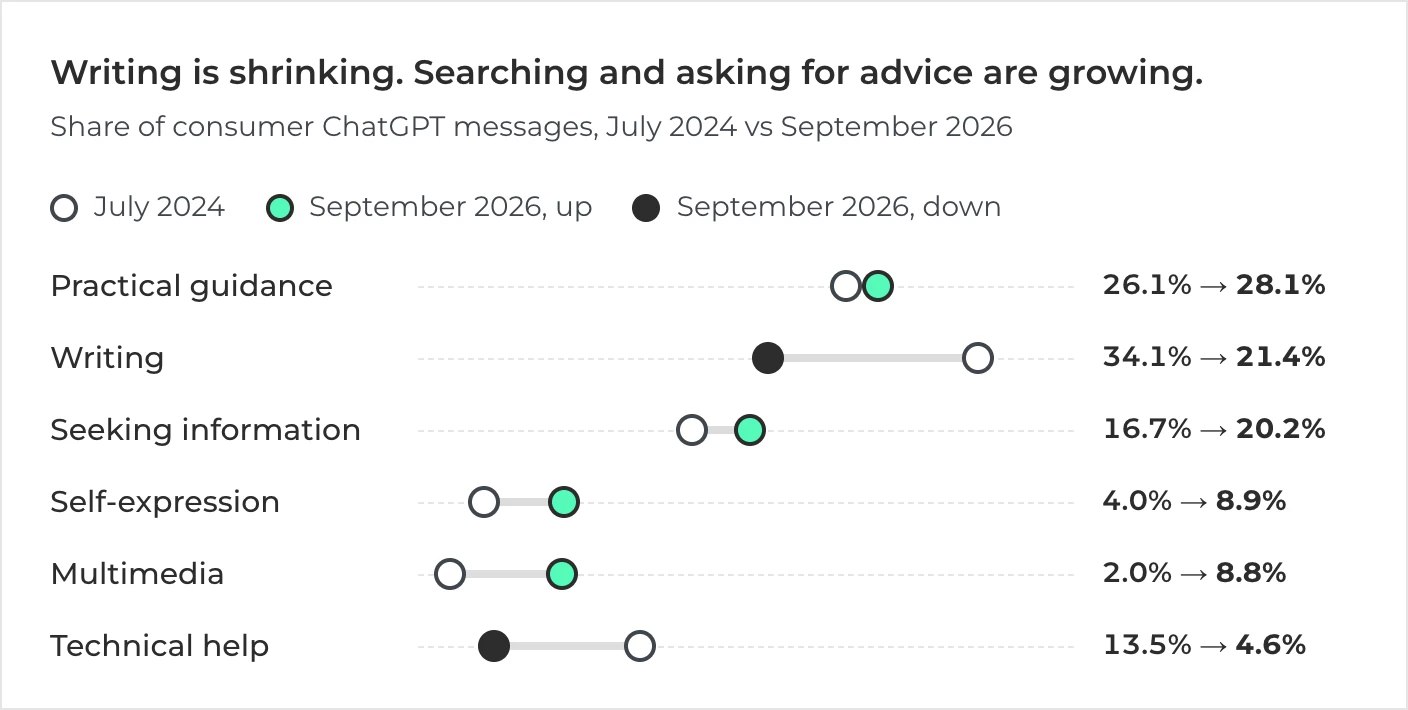
In September 2026, 48% of consumer ChatGPT messages were searches for information (20%) or practical how-to questions (28%).
That’s up from 43% in July 2024, according to OpenAI, while writing tasks are shrinking:
Our prediction for 2027
In 2027, search engines and AI chatbots will work like one product. People won’t choose between searching and asking. They’ll do both in the same box.
Google will answer more searches with AI, chatbots will search the web for more of their answers, and people will search with longer questions and follow-ups.
- Google will keep merging. More searches will start with an AI answer and carry on as a conversation, with the classic results further down the page.
- Searching will pass half of ChatGPT use. Searches and how-to questions grew from 43% to 48% of ChatGPT messages since 2024. At that pace, they’ll pass 50% in 2027.
- Search queries will get more specific. Buyers will add their budget, team size, and tools to the question, and expect an answer that fits, regardless of the engine they use.
For marketers, that means writing for questions, not just keywords.
Answer the specific questions your buyers ask, near the top of the page, and keep ranking in Google, since its AI answers draw on its own index.
3. Google is Winning the AI Race
In January 2026, Apple made a decision that said more about the AI race than any benchmark. To rebuild Siri, it went to Google. Siri now runs on models built on Gemini.
That’s how Google is winning: not with the cleverest chatbot, but by putting AI in front of people who are already there, and then giving them more to do with it.
What the data shows
Google already has the biggest AI audience:
- AI Overviews have over 2.5 billion monthly active users, according to Sundar Pichai in May 2026.
- AI Mode passed 1 billion monthly users within a year of launch.
- The Gemini app is now at 1 billion users and is “the fastest-growing product in Google’s history,” according to Sundar Pichai.
At the same time, ChatGPT is losing ground. In the year to May 2026, it lost almost a quarter of the AI market:
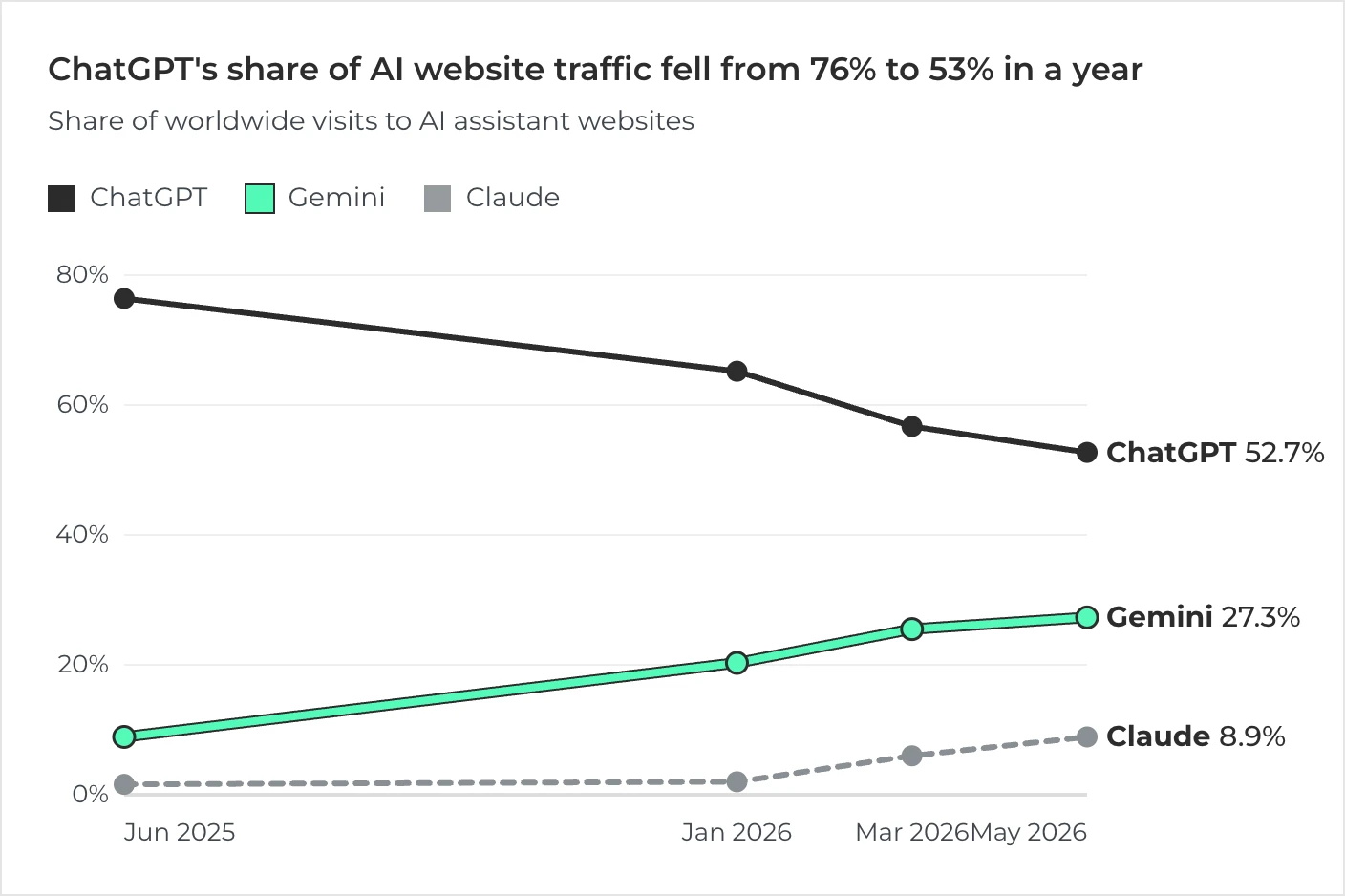
Gemini took most of that share, tripling its slice of AI website traffic, and that’s before counting AI Overviews and AI Mode.
ChatGPT has since recovered slightly, to 56.4% in September, according to Similarweb.
Google is turning Gemini into an assistant for everything.
Our ultimate vision is to transform the Gemini app into a universal AI assistant that will perform everyday tasks for us.
 Demis Hassabis, CEO, Google DeepMind
That assistant is taking shape. In October 2026, Google opened its Connected Apps platform to developers, according to TechCrunch.
Connected apps let people use other apps inside Gemini and AI Mode: design a flyer in Canva or build a playlist in YouTube Music without leaving the conversation.
Google has launched more than 50 Connected Apps across Search and Gemini, including Adobe, Peloton, and its own Photos and Google Home.
Google announced the platform on the same day as its Q3 earnings call, where Pichai talked up agents:
I’m excited about agents, and I would view it as a new frontier, which brings in a new set of use cases to Search.
Sundar Pichai, CEO, Google Our prediction for 2027
By the end of 2027, more people will use Google’s AI than ChatGPT. eMarketer expects Gemini and AI Mode users together to overtake ChatGPT’s in the US during the year.
- Google’s AI is built into products people use every day. It’s in Search, Gmail, Chrome, Android, and now Siri. ChatGPT has to win every user one download at a time.
- The gap is already closing. ChatGPT lost almost a quarter of the AI market in a year, while Gemini’s share tripled.
- Gemini becomes the place where things get done. With connected apps, people won’t just ask Gemini and AI Mode for answers. They’ll book, order, and create inside them, and every app that plugs in gives people one less reason to leave Google.
For SEO, this is good news. Google’s AI answers draw on Google’s own index, and pages ranking in positions 1 to 3 were cited 58.6% of the time in our AI Overview study.
Rank well in Google, and you’re in the pool that AI Overviews, AI Mode, and Gemini choose from.
And if people use your product, not just read about it, watch Connected Apps: Google is opening it in phases, starting with US developers.
4. Websites Are Forced to Adapt Their Content Marketing Strategy
For two decades, content marketing ran on a simple deal: publish useful pages, rank in Google, and earn visits you could turn into customers or ad revenue.
AI is breaking that deal. It answers the question on the results page or in the chat, often using your content, and the visit never comes.
What the data shows
Publishers are losing readers. If your business is about sharing information and earning money from ads or subscriptions, bad news: AI can summarize the information without sending readers to you.
Google Search traffic to publishers fell 40.2% in the year to July 2026, nearly double the drop the year before:
Marie Haynes put it this way after Google’s Q3 earnings call:
I think new opportunities are arising, but also much of the way we have traditionally been able to make money from Search is disappearing.
 Marie Haynes, Consultant
In her view, Search is moving from a place to find websites with information to a place where people use tools.
Our prediction for 2027
In 2027, more brands will optimize their content for AI citations instead of human readers.
That means concise answers with no fluff and no personality: specific facts, clear structure, and frequent updates.
Ryan Law of Ahrefs calls it “headless content marketing”: “pages designed solely as vessels of information for influencing AI answers.”
These pages are short, packed with specifics, and updated often. He says he sees them “cropping up on big brands with huge, established blogs.”
Google already decapitated your search content. Headless content just stops pretending otherwise.
 Ryan Law, Director of Content Marketing, Ahrefs
Publishers will also have to find other ways to monetize their content:
- Getting paid for AI use. Google is paying about 100 publishers through a pilot, according to The Information (via TNW), and Cloudflare’s Pay Per Use pays when content shapes an AI answer (see trend 13). These programs are small so far, so few publishers can rely on them yet.
- Building a direct audience. Newsletters, apps, and communities don’t depend on a search click.
- Offering what AI can’t summarize. AI can summarize an article, but a calculator, a live database, or a tool has to be used.
5. Agentic Search is Changing the Digital Economy
AI search has moved part of the buying journey from websites into chat windows.
AI agents will take the next step: they’ll not only help people make decisions but also act on those decisions and complete purchases for them.
Imagine asking an agent to renew your team’s software, find the best price, apply any available discounts, and cancel seats nobody uses.
It does all of that without visiting a comparison site, clicking a sponsored result, or forgetting a renewal date.
That’s a fundamental shift in how businesses attract and win customers.
What the data shows
AI agents are already browsing for people. Traffic from AI agents and agentic browsers grew 7,851% year over year in 2025, from a very low base, according to HUMAN Security.
AI traffic to US retail sites also grew 71% year over year in September 2026, and those visits converted 90% better than non-AI traffic, according to Adobe.
The infrastructure for agent-led purchases is taking shape. Google’s Universal Commerce Protocol supports checkout with select merchants and is expanding to the UK, Canada, and Australia.
Our prediction for 2027
AI agents will do the research, build the vendor shortlist, and make purchases and renewals on behalf of users.
Malte Landwehr, an enterprise SEO and AI search expert, published 34 hypotheses on where this leads in October 2026.
His core argument: agents threaten every business that profits from customers being uninformed, forgetful, or unwilling to compare options. Here are the websites we expect to be hit hardest, and why:
- Comparison sites, aggregators, and affiliates. Agents can check merchants directly, reducing the importance of price comparison sites, affiliate links, and paid placements. Marketplaces that also handle payments, shipping, and returns are better positioned to survive.
- Brands that rely on pricing tricks. Agents will find available coupons, claim price-match guarantees, cancel unused subscriptions, and switch providers to take advantage of new-customer offers. Brands will have less room to rely on customers overlooking better deals.
- Brands that sell on reputation alone. Agents can compare reviews, specifications, prices, availability, delivery times, and return policies. Brands relying on reputation and advertising without delivering real product value will find it harder to win recommendations.
- Websites agents can’t read. Product pages need accurate specifications, current prices, stock levels, delivery times, and clear return and cancellation policies in a machine-readable format. If an agent can’t understand or verify your offering, it may not recommend it, and merchants that block agents risk losing sales altogether.
The changes reach well beyond ecommerce:
Where AI agents could change the most
| Industry | Predicted impact |
|---|---|
| Procurement | B2B buying goes agentic first, with buyer and seller agents negotiating standard purchases directly |
| Banking | Agents move money to accounts with better interest rates |
| Insurance | Agents cancel unnecessary policies and find better deals |
| Customer service | Call centers shift toward agent-to-agent conversations |
| Travel | Agents handle research, comparison, and booking |
| Retail | Generic sales roles decline; experience-led selling keeps its value |
Source: Malte Landwehr, The Impact of AI Agents on the Digital Economy: 34 Hypotheses, October 2026. These are predictions, not measurements.
Landwehr also expects new jobs to appear: Agent Experience (AX), designing for AI agents the way UX designs for people, and Agent Relations, the PR of the agent era.
We’re moving from an era where brands compete to get their websites discovered to one where brands compete to get selected by AI agents.
That changes what GEO has to cover.
Mentions and citations still matter, but AI systems also need to understand your product, verify its quality, compare it fairly with competitors, and recommend it with confidence.
The goal is to be the brand AI agents choose to buy from, as well as the brand AI talks about.
6. Traffic is No Longer a Reliable Success Metric
Ask Google a question today, and the answer is often waiting at the top of the page. Ask ChatGPT, and there’s no results page at all.
In both cases, people can get what they need without visiting your website.
That’s a problem if you still measure marketing success by clicks and organic traffic. Because fewer clicks don’t necessarily mean fewer buying decisions are happening.
What the data shows
Most searches now end without a click. 68% of US Google searches ended without a click in early 2026, compared with 60% in 2024:
AI answers are the main culprit. When an AI Overview appears, the top-ranking page gets 58% fewer clicks on average, according to Ahrefs.
AI Mode keeps people on the page, too. In a usability study of 37 people by Kevin Indig, 77.6% of AI Mode sessions had zero external visits.
And only about 6.8% of US ChatGPT prompts produced a citation in May 2026, according to Similarweb, up from 1.6% a year earlier.
No tool reliably measures what AI answers are worth.
- The platforms don’t share clicks. Search Console shows impressions in AI Overviews and AI Mode, and Bing shows Copilot citations, but neither shows clicks. ChatGPT, Claude, and Gemini offer site owners no reporting at all.
- Visibility trackers only sample answers that keep changing. According to Ahrefs, 64% to 76% of the pages ChatGPT and AI Mode cite change from one day to the next. And when SparkToro ran the same brand recommendation prompts hundreds of times, there was less than a 1 in 100 chance of getting the same list of brands twice.
- Trackers can’t see what buyers actually ask. In a 2025 Semrush study, ChatGPT prompts without web search averaged 23 words, compared to just 4 words for traditional search. Users are asking longer questions, and those conversations are private, so there’s no way to actually track what people really ask.
- The indirect signals don’t add up. Kevin Indig ran 632 tests looking for a link between AI visibility and later branded or direct traffic, and couldn’t find one that held up.
So when traffic falls, you can’t tell whether you lost buyers or just lost clicks that were never going to buy.
Our prediction for 2027
Zero-click searches will keep rising in 2027, and more teams will judge SEO and AI search by signups, pipeline, and revenue instead of traffic and visibility scores.
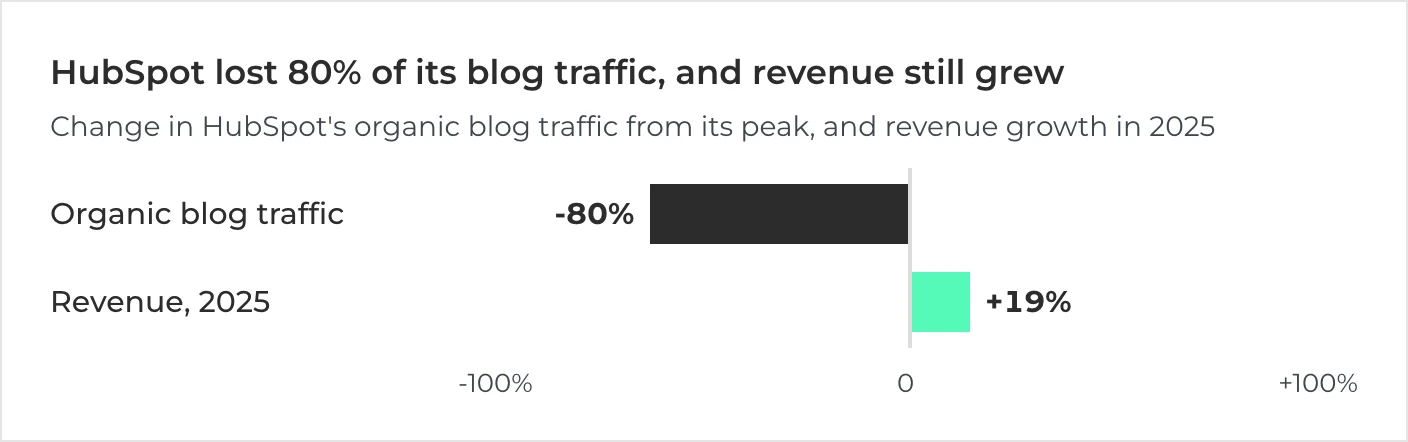
HubSpot has already made that switch. It lost about 80% of its blog traffic as AI answers spread, and yet its revenue still grew:
We had tracked traffic as the scoreboard for 15 years, and it said we were failing.
 Kipp Bodnar, CMO, HubSpot
HubSpot now tracks revenue per visit, AI share of voice, and content-influenced pipeline.
Visibility tracking still has a job: it shows whether AI platforms mention you and what they say about you. But it can’t show what that’s worth.
So track signups and pipeline from AI referrals where you can see them, and ask new leads how they found you, with ChatGPT and AI search as options.
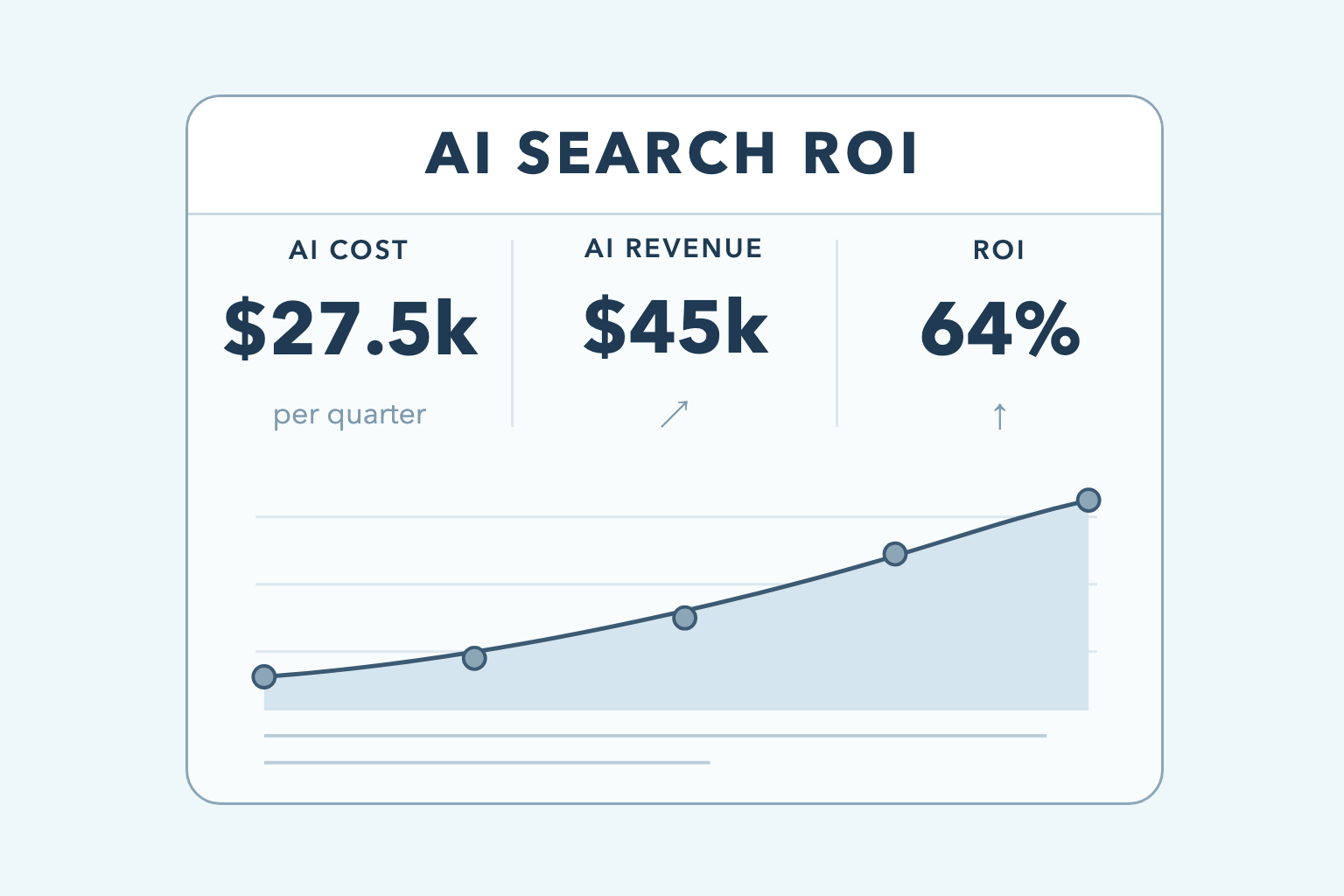
For the full method, see our guide on how to measure the ROI of AI search.
7. The AI Monetization Era Begins
Search has been here before. First come the users, then come the ads. Google went through it in the 2000s. AI assistants are going through it now.
What the data shows
In February 2026, OpenAI started testing ads under ChatGPT answers for US Free and Go users, and it has since opened a self-serve ads manager in beta.
By June, 26% of US desktop ChatGPT chats showed an ad, up from 14% a month earlier, according to Similarweb. OpenAI’s plans for the next few years are much bigger:
Google is under pressure from the other side.
Its Search revenue growth slowed from 19% in the first quarter of 2026 to 12% in the third.
On its earnings call, Google said strong AI Mode query growth weighed on revenue because of “the lower monetization we were seeing in AI Mode,” though it named currency as the biggest factor.
Its answer is more ads: Google is scaling ads in AI Overviews and AI Mode, including ads that follow a multi-turn conversation.
Our prediction for 2027
By the end of 2027, ads will be a normal part of commercial AI answers in both ChatGPT and Google’s AI Mode.
- Both companies need the revenue. OpenAI’s plan depends on ad revenue growing more than fourfold in 2027. Google’s Search revenue growth slowed from 19% to 12% across 2026.
- Ads are spreading fast. The share of US desktop ChatGPT chats showing an ad nearly doubled in a single month, from 14% to 26%.
- Users aren’t leaving. 65% of sessions continued after an ad appeared, according to Similarweb, so there is little to slow the rollout.
- Search has done this before. In Google’s classic results, ad blocks have doubled in size and the average organic result now sits below the desktop fold, according to Stat data cited by Kevin Indig. AI answers are on the same path.
For B2B marketers, ChatGPT ads will start out as more of a consumer channel. About three-quarters of messages on its free plan aren’t work-related, and ads only run on the Free and Go plans.
Ads in Google’s AI Mode, which sit next to real search intent, are the bigger B2B opportunity.
8. Content Gets Judged on Effort
Creating content is now the easy part. Anyone can publish 50 AI-written articles a week.
That’s exactly why volume stopped being an advantage, and why Google started looking for something that’s hard to fake: effort.
What the data shows
Google’s guidance now defines effort as “the extent to which human work went into creating the content or the systems powering it.”
In early October 2026, Google added a “Main content” section to its “Creating helpful content” documentation, listing what quality raters assess: effort, originality, talent or skill, and accuracy.
And it’s enforcing it: Google ran four spam updates in 2026.
Early reports on the September update pointed to sites with highly templated, programmatic pages.
We saw the same thing in AI search. When we compared the informational pages AI Overviews and AI Mode cited most with the ones they barely noticed, the difference was effort you could count:
Our prediction for 2027
Google will target scaled, low-effort content again in 2027, and pages built on original data will gain ground in both Google and AI answers.
- Google keeps raising the bar. It ran four spam updates in 2026, and the September update took nearly 14 days, longer than any of the three before it.
- AI content is getting easier to spot. Anthropic now adds an invisible watermark to content Claude generates, according to its support documentation.
- Volume no longer sets you apart. When anyone can publish 50 articles a week, the only things competitors can’t copy are your data, your tests, and your experience.
- AI search already rewards it. The most-cited pages in our study carried 36% more data points and twice as many external sources.
So how do you put more effort into content? Add something nobody else has:
- Run experiments and publish what happened
- Survey your customers or your industry
- Analyze your own data, such as product usage, sales calls, or support tickets
- Test products first-hand and show your screenshots and results
- Quote real experts, with their names and roles
- Collect scattered information into one organized resource
9. Reddit Fights Back Against Marketers
For two years, the GEO playbook had one easy step: get your brand mentioned on Reddit. AI assistants quoted Reddit constantly, so marketers flooded it with “honest recommendations.” Reddit noticed.
What the data shows
- Reddit catches about 25,000 new spam posts and comments a day, according to figures it shared with TechCrunch in July 2026.
- It says it uses LLMs to catch “the highly subtle, coordinated patterns of fake behavior and artificial hype that older systems once missed,” according to Social Media Today.
- At Mod World in October, CEO Steve Huffman said the time to take down spam had fallen from 45 minutes to two minutes. He also said AutoMod automatically bans 30% of posts from new users, though most of those posts are fine.
Our prediction for 2027
Reddit will get harder to game in 2027.
- Reddit has every reason to keep cleaning up. Its value to users and to the AI companies that use its content depends on posts being real, and it already uses LLMs to catch coordinated fake behavior.
- Google leans on other sources. In our AI Overview study, YouTube was cited five times as often as Reddit.
Reddit still matters. Reddit presence was one of the top factors behind brand recommendations in our ChatGPT study.
But in 2027, the only way in is the slow one: a clearly labeled brand account, and people who answer questions in the communities your customers already use.
10. Most of Your Traffic Will Be Bots
In June 2026, the web passed a milestone few people noticed.
Cloudflare Radar showed bots making 57.4% of requests for HTML pages over the seven days to June 5. Cloudflare’s CEO called it the first time bots had passed humans.
Most of those bots aren’t the search crawlers SEOs grew up with.
They’re AI crawlers collecting training data, AI assistants fetching pages to answer a user’s question, scrapers, and bots pretending to be people.
For anyone who reads their analytics, that changes what a “visit” means.
What the data shows
When we pulled 30 days of our own traffic data in October, we expected to find bots. We didn’t expect this:

Half of all our page views came from bots pretending to be Chrome, Safari, or Firefox.
AI assistants like ChatGPT, Claude, and Meta AI fetched 8,780 of our pages for their users, 0.9 for every page a person loaded.
We’re not unusual. Every major study of web traffic in 2026 found the same thing:
- Bots are now the majority. In 2025, automated traffic made up more than 53% of all web traffic, and 40% of all traffic came from malicious bots, according to the 2026 Bad Bot Report from Thales.
- The share keeps climbing. Across Cloudflare’s network, bots made 65.1% of HTML page requests over the same 30 days as our study, up from 57.4% in June.
- AI bots are catching up with people. On the publisher sites TollBit tracks, there was one AI bot visit for every 50 human visits in the second quarter of 2025. By the fourth quarter, it was one for every 31, and human visits fell 5% from the third quarter. 30% of AI bot scrapes in the fourth quarter bypassed explicit robots.txt permissions, according to Digiday‘s coverage of the report.
- AI traffic is growing far faster than human traffic. HUMAN Security tracked traffic across its customers’ sites through 2025:
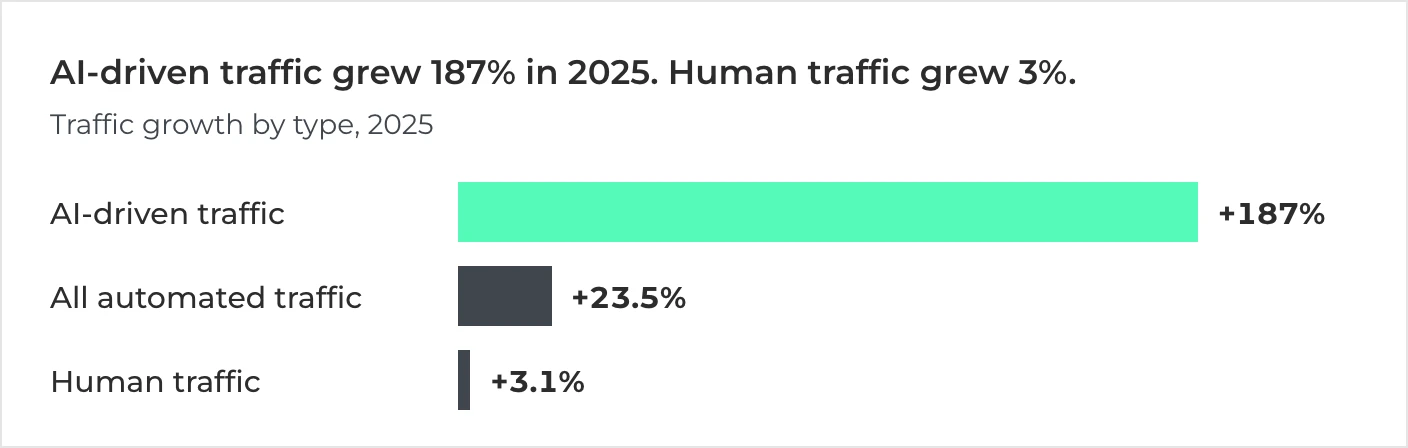
Within that, traffic from AI agents and agentic browsers grew 7,851% year over year, from a very low base, and AI scraper traffic grew 597% from January to December, according to the same report.
They started from a small base, but they’re the bots that act on a user’s behalf.
Our prediction for 2027
Bots will make up an even bigger share of web traffic in 2027, and AI agents acting for users will be the fastest-growing part.
- The trend is steep. Across Cloudflare’s network, bots went from 51.6% of HTML page requests in November 2025 to 62.1% in September 2026, about one percentage point a month. If that continues, bots will make up around three-quarters of page requests by the end of 2027.
- Every study points the same way. Imperva, Cloudflare, TollBit, and HUMAN Security measure traffic differently, but all four found bots growing faster than people.
- Agents are arriving in the tools people already use. OpenAI’s Dots agents keep working in the background between conversations, Chrome can now browse on a user’s behalf, and Google’s Lighthouse audits how easily agents can find a site’s tools.
More of your “visitors” will be machines reading on someone’s behalf, and more of your analytics will need cleaning before you can trust them. Trend 5 covers what agents will do once they arrive.
11. Off-Site Brand Monitoring Becomes More Crucial
Try this: search your company’s name in Google. There’s a good chance the first thing you see is an AI Overview describing you, built from what other websites say.
What the data shows
AI Overviews now show up on most branded searches. They appeared on 83% of branded queries by late September 2026, up from 61% in July, according to Ahrefs:
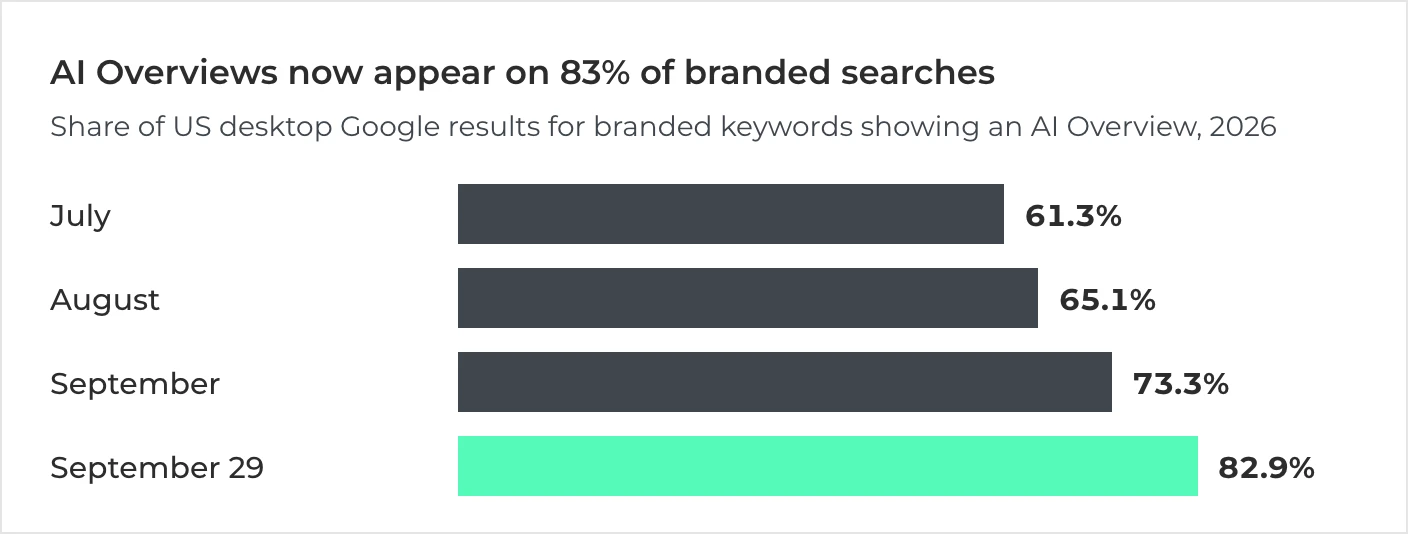
The rise is fast for big brands, too. On a panel of 100 global brand names, AI Overviews went from 5 brands on July 1 to 63 by September 30, and 76% of those sat in the top position.
Chris Long found something similar: AI Overviews on branded searches for 93% of the brands he tested, including Reddit, Salesforce, Amazon, and Adobe.
Our prediction for 2027
Monitoring and fixing brand mentions in AI answers will become a daily routine across marketing teams.
One bad review or one page saying the wrong thing about your brand can damage your reputation, and with AI, there’s no place to hide.
Seer Interactive found this out firsthand. AI tools kept saying the agency had “high account manager turnover,” based on a single client review from 2018, the only bad review in its 24 years.
The same review was posted on several directory sites, and those directories showed up in 38% of Seer’s branded AI answers.
12. Search Goes Multimodal
Picture a buyer who screenshots a competitor’s dashboard and asks AI Mode what tool it is.
Or one who points their phone at a product on a shelf, or asks a question out loud while driving. None of them typed a keyword. That’s already normal search behavior.
Search no longer starts and ends with text. People search with images, voice, and documents, and AI answers reply with images, charts, and video.
If your content is only text, you’re missing part of the search.
What the data shows
- One in five AI Mode searches globally now use voice, images, or documents, according to Sundar Pichai.
- Visual search keeps growing. Google Lens handled nearly 20 billion visual searches a month in October 2024, according to Google, and Google now reports over 50 billion a month.
- Google now reports on it. In September 2026, Search Console added a multimodal filter covering Lens, Circle to Search, image uploads, and Chrome’s “Search this image.” It shows impressions, but no clicks or queries.
ChatGPT users are moving the same way. Requests for images and other media have grown more than fourfold as a share of all messages:
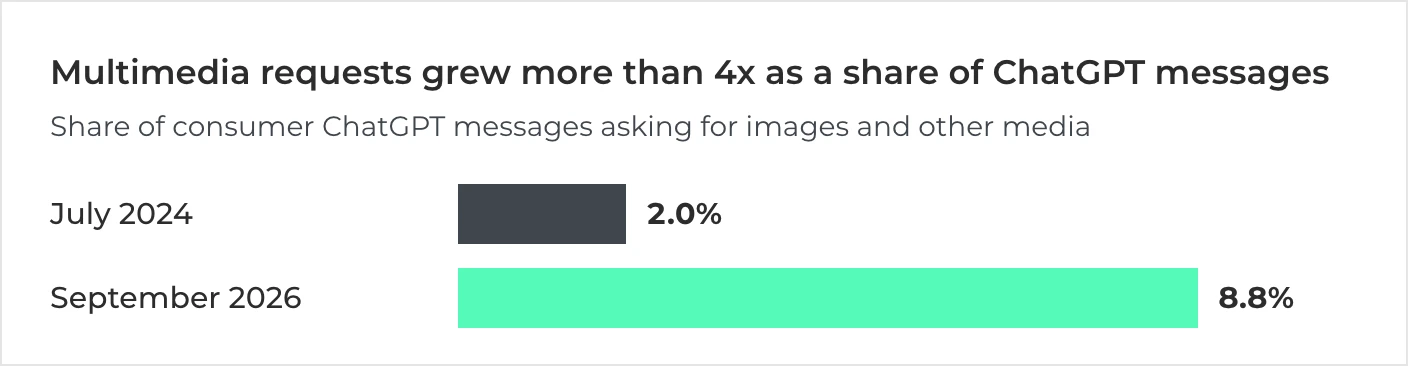
The answers are going visual, too. AI Overviews and AI Mode now show images, product cards, and videos alongside the text, and since October, AI Mode’s video results link to the creator’s profile.
In our AI Overview study, YouTube videos made up 14.5% of all citations, more than any other single website.
Our prediction for 2027
More searches will start with a camera, a screenshot, or a voice in 2027, and AI answers will include more images, charts, and video. Brands that only publish text will show up in fewer of those answers.
That means investing in visual content as part of SEO, not as an extra:
- Original images and product photos, so visual searches can match your product
- Infographics and charts of your own data, which other sites can embed and cite
- Annotated screenshots that show how your product works
- Videos that answer your buyers’ key questions, with titles and descriptions that match how people search
- Descriptive file names, alt text, and captions, so search engines and AI can understand what each visual shows
13. Websites Get More Control on How AI Uses Their Content
Until recently, website owners had two options with AI crawlers: let them take everything, or block them one by one in robots.txt and hope they listened.
Most sites did nothing, and AI companies trained on, quoted, and summarized their content for free.
In 2026, that started to change. Google, Cloudflare, and regulators all introduced new ways for websites to decide how AI uses their content, and whether they get paid for it.
What the data shows
Google: one switch for AI training. On October 30, 2026, Google announced that it plans to support a shared AI training control in robots.txt in 2027.
Websites will be able to set one training preference with a single “policy token,” and every participating AI provider can read it. The signal is based on a draft from the IETF’s AIPREF working group.
- Google will treat it as a Google-Extended opt-out. If a site uses the token to opt out of training, Google will act as if Google-Extended were blocked.
- Training and answers can overlap. Google notes that sites allowing Google-Extended can appear in Gemini app responses and get clicks through grounding, so a blanket opt-out may cost you visibility in Gemini.
- It isn’t final. The standard is still a draft, and commenters on Search Engine Roundtable point out that significant disputes remain at the IETF.
Cloudflare: blocking by default, and getting paid.
Cloudflare sits in front of a large share of the web, so its defaults decide what AI crawlers can reach on millions of sites. In July 2026, it announced three changes:
- Sites with ads get a stricter preset. Since September 15, 2026, new domains that say they run ads get a recommended preset: AI search allowed, AI training disallowed, and agents blocked on pages with ads, according to Cloudflare. Existing customers’ settings carry over.
- Pay Per Crawl became Pay Per Use. Instead of charging AI companies to fetch a page, Pay Per Use pays publishers when their content shapes an AI answer. Ceramic.ai and You.com are early partners, according to TNW.
- A new dashboard shows the trade. Site owners can see which bots use their content and how little traffic those bots send back.
Cloudflare also created Content Signals, a way to state separate preferences for search, AI answers, and AI training in one line.
Regulators: opting out without a penalty. In June 2026, the UK’s Competition and Markets Authority ordered Google to let publishers opt out of AI Overviews and AI Mode without losing rankings.
The order takes effect in December 2026.
The new controls over how AI uses your content
| Control | What it covers | Status |
|---|---|---|
| Shared AI training token (robots.txt) | One training preference for all participating AI providers | Google plans support in 2027; IETF draft |
| Google-Extended | Use of your content for Gemini training and grounding | Live |
| Cloudflare preset for sites with ads | AI training everywhere, and agents on pages with ads | Recommended for new domains since September 15, 2026 |
| Cloudflare Pay Per Use | Payment when your content shapes an AI answer | Announced July 2026, with early partners |
| Content Signals (Cloudflare) | Separate preferences for search, AI answers, and AI training | Live; we use it on position.digital |
| UK opt-out from AI Overviews and AI Mode | Opting out of Google’s AI answers without a ranking penalty | Ordered by the UK CMA in June 2026; takes effect December 2026 |
Sources: Google Search Central, October 2026; Cloudflare, via TechCrunch and TNW, July 2026; UK CMA notice, June 2026.
On our own site, we already separate the three.
Our Content-Signal header reads ai-train=no, search=yes, ai-input=yes: no training on our content, but full access for search engines and for AI assistants answering questions.
Our prediction for 2027
In 2027, controlling how AI uses your content will become a standard part of technical SEO. Most sites will treat “train on my content” and “use my content to answer” as two separate decisions.
Publishers and brands will use these controls differently. Publishers live on traffic and ads, so expect them to block training and charge for access. B2B brands want to be in the answer.
For most B2B brands, the right setup is the one we use: opt out of training if you want to, but never block search engines or AI assistants that answer questions.
Block those, and you remove yourself from AI answers. If your site runs on Cloudflare, check its AI crawler settings so you aren’t blocking AI assistants by accident.
What to Do in 2027
Based on these predictions, here’s where to focus your SEO and GEO effort in 2027:
- Keep SEO as your foundation. Google still drives most search traffic and conversions, and its AI answers draw on its own index. Fix your technical SEO, build topical depth, and earn links before anything AI-specific.
- Get mentioned on other sites. Pitch your product to relevant “best of” lists, run digital PR around your data, and build your profiles on review sites like G2 and Capterra.
- Publish original data. Plan at least one study, survey, or data-led piece a quarter. Original data is what other sites link to and what AI answers quote.
- Separate pages for people from pages for AI. Test short, frequently updated reference pages on specs, pricing, and FAQs, and keep your main content written for people.
- Refresh your key pages on a schedule. In our AI traffic study, AI assistants mostly read the pages we update most often. Add dated figures to the pages you want cited, and review them every quarter.
- Invest in visual content. Create original images, infographics, charts, screenshots, and videos for your key topics, and give each one a descriptive file name, alt text, and caption.
- Report on revenue, not traffic. Filter bots out of your traffic numbers, and stop treating sessions as the goal. Then track three layers together each month:
- Exposure: how often you appear and are cited across a fixed set of prompts, checked repeatedly
- Behavior: branded search, direct visits, and a “How did you hear about us?” field on your forms
- Outcomes: leads, pipeline, and revenue
- Check what AI says about your brand every month. Search your brand name in Google, ChatGPT, and Gemini. Note which sources they cite and whether the description is accurate, then update the pages and profiles they rely on.
- Join Reddit honestly or not at all. Use a clearly labeled brand account, answer real questions, and follow each community’s rules.
- Test AI ads with a small budget and a deadline. Try ChatGPT and AI Mode ads alongside your search campaigns, set a review date, and stop if they don’t pay off.
- Make your site easy for AI and agents to read. Serve key content in plain HTML, publish exact pricing, specs, and cancellation terms, and don’t block AI assistants like ChatGPT-User. If you use Cloudflare, check its AI crawler settings.
Need help adapting your SEO and GEO strategy for 2027? We can help.
At Position Digital, our AI search optimization service helps brands get found in both Google and AI answers.
We can start with a GEO audit to show how AI platforms see your site and what to fix first, then earn the mentions AI relies on through AI citation outreach.