
AI Overviews now reduce clicks to the top ranking page by 58%. (Source: Ahrefs)
One year ago, that number was 34.5%.
The trend is clear: ranking #1 in Google isn’t the prize anymore. Getting cited inside the AI Overview is.
In this article, I’ll break down the steps to optimize your content for Google’s AI Overviews.
Key Takeaways
- Make sure Googlebot can access your content: don’t block crawling with robots.txt, noindex or login walls, and return a 200 status. If Google can’t index the page, it can’t cite it.
- Structure content for readability: use clear headings, short paragraphs, lists, tables and schema; skip content chunking and entity stuffing. That earned Don’t Panic London citations for 96 keywords.
- Optimize for fan-out queries: Google splits a search into sub-queries, so gather real user questions and answer every follow-up. A refreshed Oriel Partners post was cited for 17 keywords in 6 months.
- Add unique information: share original research or client results; repeating what’s out there gives Google no reason to cite you. Fresh survey data took an HR Datahub post from page 4 to the top in 4 weeks.
- Refresh content regularly: 85% of AI Overview citations were published in the last two years, so keep money pages, top posts and page-2 pages current.
- Build topical authority: pick 2–4 core areas, publish content clusters around them and tighten internal links, because Google is pushing content from real experts.
- Invest in third-party mentions: earn mentions on authoritative, relevant domains through guest posts. Branded web mentions are among the factors most strongly correlated with AI Overview visibility.
AI Overview Optimization Checklist
- Ensure crawlability: Don’t block Googlebot. Make sure your page returns a 200 HTTP code and has indexable content.
- Structure content for readability: Avoid spammy tactics like excessive chunking. Focus on providing a good user experience: clear headings, bulleted lists, images, tables, etc.
- Optimize for fan-out queries: Gather real user questions and create content that answers each of them.
- Add unique information: Share your novel perspectives and publish first-party data from your own experiments and client results.
- Refresh content regularly: Update your most important pages with fresh information and data.
- Build topical authority: Decide on your core business focuses and create content clusters for those topics.
- Invest in third-party mentions: Build positive mentions from authoritative, relevant domains in your niche.
Expert-Driven Content is Key to AI Overview Visibility
Google’s leadership, Liz Reid, explained in the WSJ Podcast how Google actually decides which content to rank in AI Overviews.
And her message is clear: E-E-A-T (Experience, Expertise, Authoritativeness, Trustworthiness) signals will continue to play an important role in Google’s battle against spam content:
We’ve worked for years on this question about how do you get rid of spam? And we really want to make an effort to not surface low-value content—content that doesn’t add very much, kinda tells you what everybody else knows—and actually try to upweight more content specifically from someone who really went in and brought their perspective or expertise—put real time and craft into the work.
 Elizabeth Reid, VP Engineering, Google Search
 She emphasizes that in a world of AI-generated content, unique human perspectives are what users really want:
What we see is that people want content from that human perspective. They want that sense of like “What’s the unique thing you bring to it?” And actually what we see on what people click on AI Overviews is content that is richer and deeper. That surface-level AI-generated content? People don’t want that, because if they click on that, they don’t actually learn much.
Elizabeth Reid, VP Engineering, Google Search How to Optimize Content to Rank in AI Overviews
E-E-A-T sets the bar for who Google trusts. But trust alone isn’t enough.
According to various AI SEO studies, Google also considers other factors to determine which content to cite, such as:
- How accurate and fresh the information is?
- Does it answer every question users are asking?
- Can Googlebot access and extract the content easily?
Below, I’ll break down each of these factors and show how we apply them in practice when optimizing content for AI Overviews:
1. Make sure Googlebot can access your content
This is an important first step. If Googlebot can’t crawl and index your content, then no matter what you do, it won’t be eligible to rank in both organic search results and AI Overviews.

According to Google’s official documentation, here are the minimum technical requirements to be indexed by Google Search:
- Googlebot isn’t blocked: Make sure you’re not blocking crawling via robots.txt rules, noindex tags, or login walls. Use the “URL Inspection tool” in Google Search Console to test your pages’ indexability.
- Your page returns an HTTP 200 status code: If the URL returns an error (4xx/5xx) or resolves through messy redirect chains, it can delay crawling or prevent indexing altogether. Check your pages’ HTTP status code using the same URL Inspection tool.
- Your page has indexable content: Text, image, or video content in a format that Google supports—you can find the full list here. It’s also important to avoid breaking Google’s spam policies.
Check your website’s AI readiness with our GEO audit services.
Case study
Don’t underestimate the power of GEO audits.
Decentriq, one of our SaaS clients, managed to increase AI citations by 221% in 6 months after a thorough audit process.
2. Structure content for readability
Flesch Score or readability is one of the most important factors for AI inclusion, according to a study by Kevin Indig.
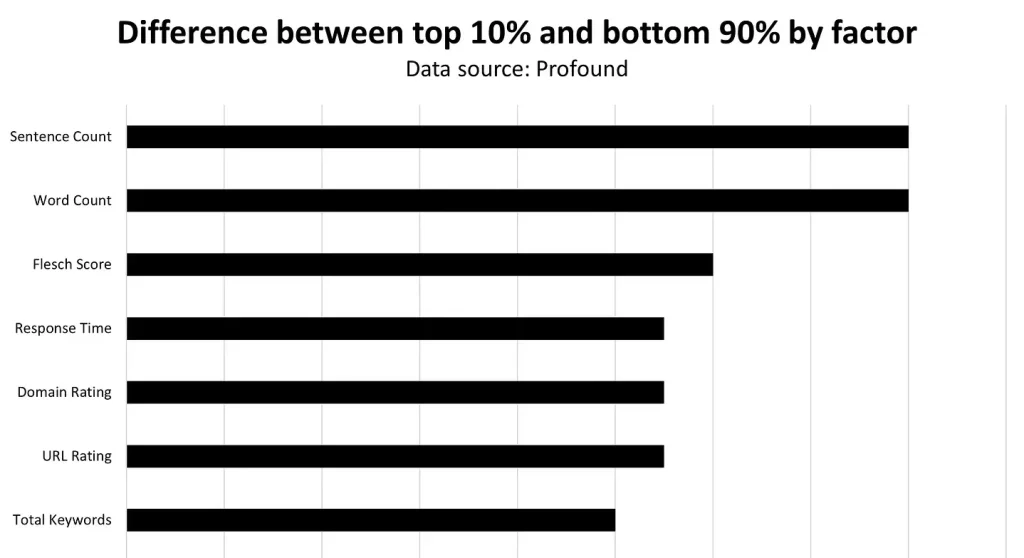
And it makes perfect sense: well-structured content is easier and faster for AI to retrieve than messy documents.
But don’t resort to spammy tactics like content chunking, entity stuffing, markdown formatting, and what not. Even if they work and your content gets cited, it won’t be pleasant to read for users.
Ryan Law, Director of Content Marketing at Ahrefs, shared an interesting point on the Ahrefs Podcast:
Is it even valuable being cited for all these queries if somebody then clicks that link to your website and sees spammy, awful markdown content nobody cares about. Are they gonna think positively about you? Are they gonna buy something from you?
 Ryan Law, Director of Content Marketing, Ahrefs
 We’ve never done any of that. We simply organize content in a way that humans and machines can easily understand:
- Clear headings, so users know what to expect in each section
- Short paragraphs, bullet points, and tables for easy skimming
- Imagery (like pictures and videos) to break up long walls of text
- Schema markup to give Google more context about the page
Zain Zameer, Senior SEO Specialist at The frank Agency, also suggests optimizing for featured snippets:
To rank your content in Google AI Overviews, what works best for us is using a zero-click strategy and optimizing for featured snippets. This means adding short definitions, tables, and bullet points, and giving a clear short answer near the top of the section. Google AI Overviews often pulls content from these quick and easy-to-read formats.
 Zain Zameer, Senior SEO Specialist, The frank Agency
 Case study
Using this exact content optimization strategy, we managed to help Don’t Panic London secure AI Overview citations for 96 keywords.
As a direct result, their AI referral traffic went up 809% and organic conversion increased by 169%.
3. Cover every follow-up question
Search behavior is shifting. Users no longer type short keywords—they’re comfortable asking longer, more specific questions, and then refining with follow-ups until they get a complete answer.
Google’s AI systems reflect that behavior through something called query fan-out: when AI triggers, Google breaks a single search into multiple related sub-queries to explore different facets of the topic, then pulls passages from pages that answer those angles.
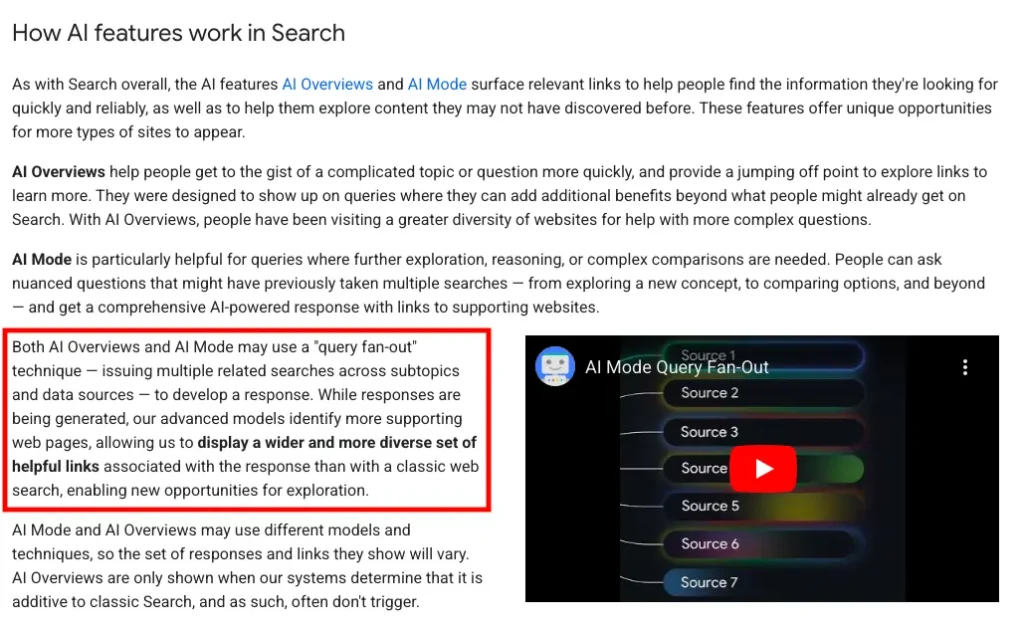
This means you can’t optimize for just a single intent or keyword anymore. Your content needs to address every relevant question, angle, and follow-up a user might reasonably ask as they explore the topic.
Here’s how:
- Gather real user questions from your sales calls and support tickets, as well as forums like Reddit and Quora.
- Use our Query Fan-Out Extractor to find out what background searches Gemini runs when answering questions (Gemini powers both AI Mode and AI Overviews).
- Once you have the data, group related questions and queries into groups.
- When you create new content or update existing pages, make sure to address all the follow-up questions for the main topic.
A good practice is to use question-based headings, as Zain points out:
Use question-based headings in your articles because many people search using questions, and AI Overviews often pulls answers from these sections.
Zain Zameer, Senior SEO Specialist, The frank Agency Case study
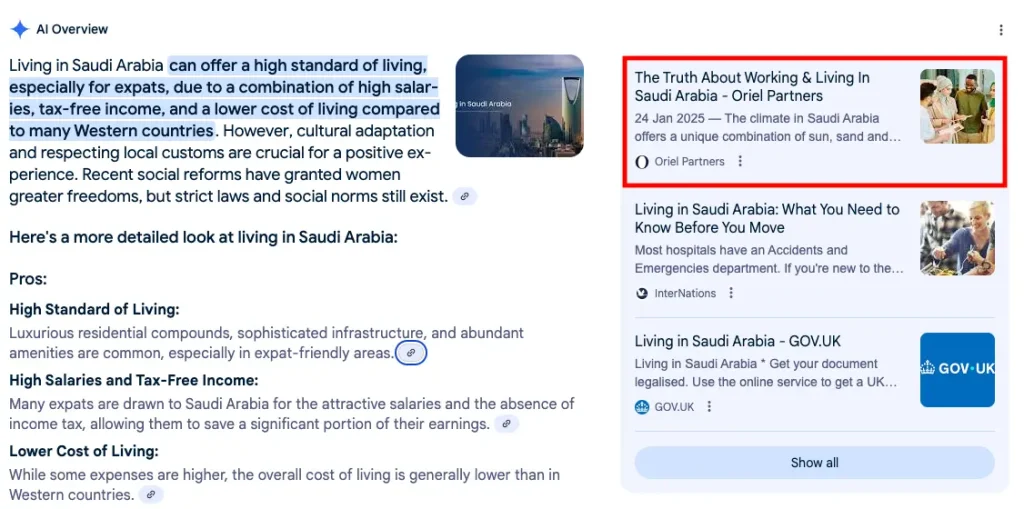
Here’s what we did when refreshing a blog post for Oriel Partners:
- We pulled additional LSI terms and queries from People Also Ask, Reddit threads, and expat forums.
- Based on the research, we then added more relevant sections to cover the topic more thoroughly.
- We also added a FAQ section to make sure every user question is answered.
In just 6 months after the update, the article was cited in AI Overviews for 17 different keywords.
4. Add unique information
When answering a question, AI Overviews scan the web and pull information from different sources.
If your content simply regurgitates information that’s already out there, Google has no reason to cite it—especially when competing pages have stronger domain authority and brand signals.
To increase your chances of being cited, you have to add something new to the conversation.
You can either:
- Provide a unique take or novel perspective on a popular topic
- Publish original research, experiments, and surveys (AI Overviews love facts)
- Share your client results or success stories
Case study
This is something we’ve successfully done with our client HR Datahub, a salary benchmarking platform.
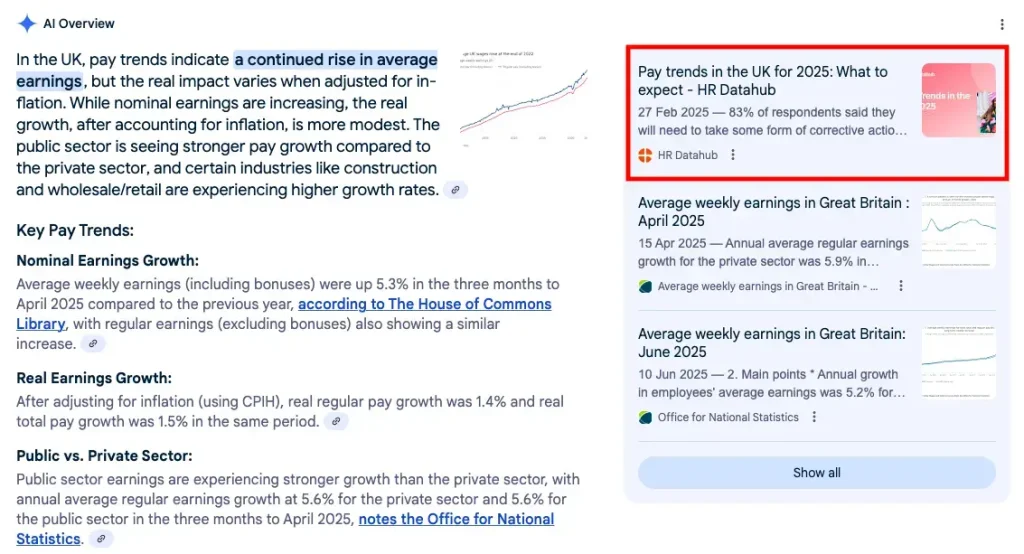
One of their blog posts was targeting a very important keyword “pay trends in the uk.” But it wasn’t performing well. In fact, it was stuck on page 4 of Google search results.
We then updated the content with fresh, original data from HR Datahub’s own survey. In just 4 weeks, the article jumped to the top of search results and earned AI Overview citations for the target keyword.
5. Refresh content regularly
A study by Seer Interactive found that AI tends to cite fresher content: 85% of AI Overview citations were published in the last two years, with 44% of them from 2025 alone.
Now, I’m not saying you should update every page on your website, because that would be a waste of time and effort.
Instead, focus on your most important pages:
- Money pages: Keep your product or service pages updated with the latest features, pricing, unique selling points, positioning statements, etc.
- High-performing blog posts: If an article already ranks in the top 10 and brings a lot of traffic, regularly update it with fresh information to maintain (or even improve) performance.
- Pages sitting on page 2 of Google: Pages ranking just outside the top 10 are already considered relevant by Google. With some tweaks, these pages can easily break into the first page or even appear in AI Overviews.
Check out our content refresh guide for the complete steps.
Case study
Here are two examples of successful content refreshes we’ve done for clients:
- Oriel Partners: Secured 17 AI Overview citations and increased monthly visitors from 200+ to 900+ after the refresh.
- HR Datahub: Ranking jumped from 35 to 1 for the target keyword in just 4 weeks. The article also secured 9 AI Overview citations.
FURTHER READING
➔ How to Rank in Google’s AI Mode (+ Examples)
➔ How to Rank in ChatGPT? Follow Our Process
How to Get Your Brand Mentioned in AI Overview Answers
Being cited as a source in AI Overview means you get to influence its response and form the narrative.
But the truth is, it brings very little business value. According to Pew Research, only 1% of users click links in AI Overviews.
Even if your content gets cited in tons of AI Overviews, it doesn’t guarantee more AI referral traffic.
The real impact happens when your brand is directly mentioned in the AI-generated answer.
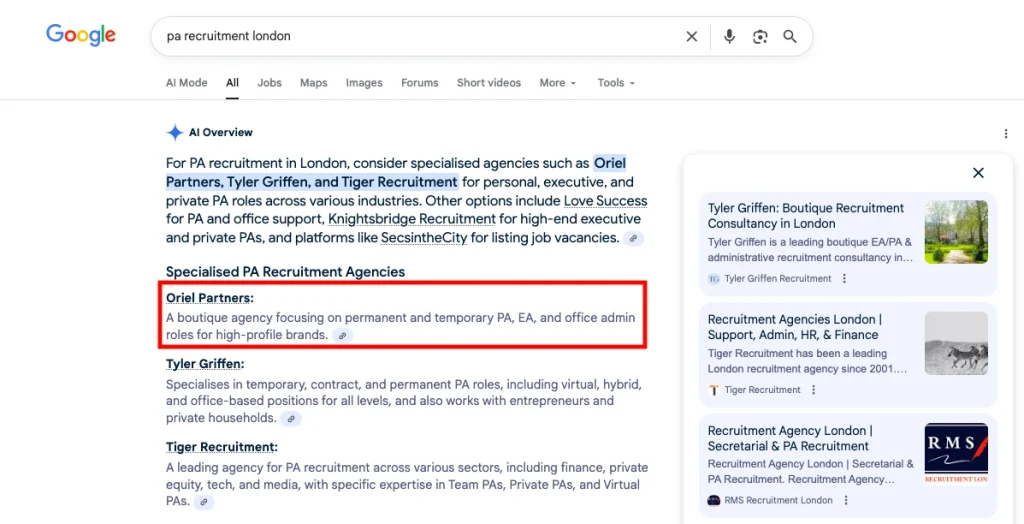
We helped Oriel Partners, one of our clients, get recommended by AI Overview as a leading PA recruitment agency and leads started coming in.
Here’s how we do it.
1. Build strong topical authority
Remember what I said earlier about E-E-A-T? Google is pushing content from actual experts—people and brands who know exactly what they’re talking about.
If users are looking for health information, Google will recommend real doctors. For financial planning, Google prefers certified advisors, and so on.
Here’s how to establish your expertise:
Decide on your business focuses
Start by identifying the 2–4 core areas you want your brand to be known for. These should align with:
- Your primary services or products
- Your most profitable industries or customer segments
- The topics where you have real expertise and proof
For Oriel Partners, it was easier for us because they already have clear positioning: a leading PA recruitment agency in London.
Create content clusters
Once defined, double down on those core business focuses.
Publish consistently on the same themes. Create in-depth guides, comparisons, case studies, FAQs, and opinion pieces that reinforce your expertise from multiple angles.
Here’s what we did with Oriel Partners:
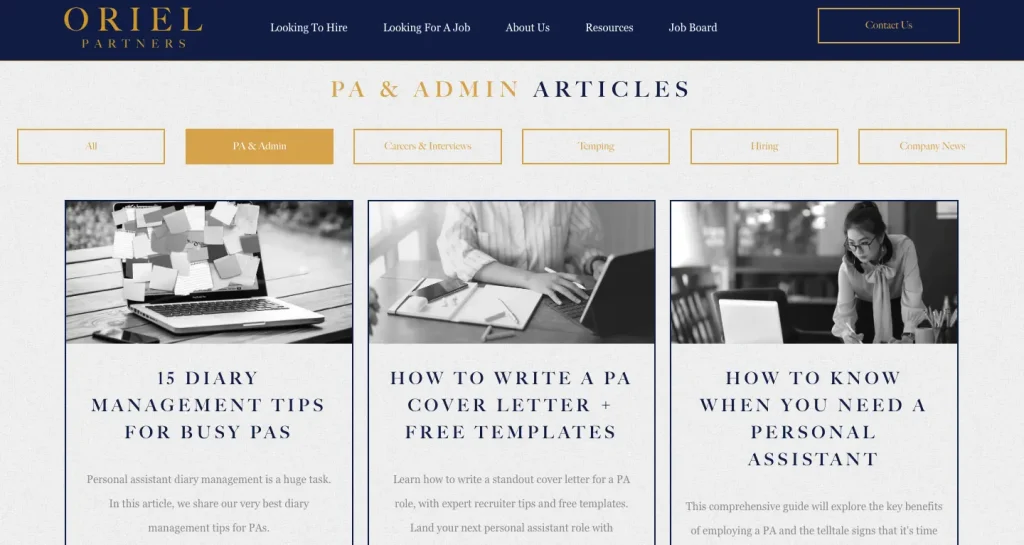
- Content refresh: We updated and optimized their homepage, PA recruitment service page, and PA job boards to align closely with user intent.
- Content creation: We also published new PA-related blog posts targeting informational keywords (which AI Overviews mostly appear on).
Strengthen internal linking
We improved Oriel Partners’ site architecture by tightening internal links across PA-related service pages, blog posts, and supporting content.
This helped pass more authority to the core PA recruitment pages while making the site easier for both users and Googlebot to navigate.
2. Invest in third-party mentions
Ahrefs found that branded web mentions are among the factors most strongly correlated with AI Overview visibility.
The more people recommend your brand online, the more likely AI Overviews will recommend your brand. As simple as that.
In the case of Oriel Partners, here’s what we did:
Wrote guest posts on PA recruitment
We reached out to hundreds of websites in the HR and recruitment space, and pitched a guest post collaboration.
This allows us to demonstrate Oriel Partners’ expertise on PA recruiting, while also earning high-quality backlinks and brand mentions from high-authority domains.
Optimized for entities
In each guest post, we reinforced Oriel Partners’ core entity: PA recruitment agency in London.
We used consistent language, clearly defined their niche, and ensured the brand was contextually linked to that specific expertise—not mentioned generically.
Used relevant anchor text
We also linked back to Oriel Partners’ homepage and PA-related pages using descriptive, topic-aligned anchor text to reinforce the exact entity we wanted Oriel Partners to be associated with.
The Next Step: Monitor Your AI Overview Visibility
After implementing these tactics, you need to constantly monitor your brand visibility in AI Overviews to see if they’re working.
You can either do this manually or use dedicated AI tracking tools like Peec AI and Otterly.
Whatever method you prefer, you should track these metrics:
- How often AI Overviews appear for your target keywords (they’re not triggered on every query)
- Whether your brand is cited or mentioned in the answers
- How your AI visibility compares to competitors
More importantly, use Google Analytics 4 to see whether your AI visibility translates into AI referral traffic.
If you’re still not getting any mentions or citations from AI Overviews, experiment with different tactics. Or consider hiring an AI search agency.
Partner With a Reliable AI Overview Optimization Agency
AI Overview visibility only matters if it leads to real business outcomes. If users click through and land on spammy LLM-optimized content, trust erodes—and conversions disappear.
The brands that will win long term are the ones investing in strong SEO foundations and expert-led content that serves both machines and humans.
Want to increase AI Overview citations and turn that visibility into qualified leads? We can help. Our AI SEO services are designed for sustainable growth that compounds over time, not short-term wins.
Get in touch to discuss an AI Overview optimization plan tailored to your site and growth goals!