SEO is one of the best acquisition channels for SaaS startups.
Think about it. The moment you stop paying for ads, the traffic stops. The moment you stop sending cold emails, the replies stop.
SEO is different. Once you’ve built the foundation, it will continue bringing in highly qualified traffic and leads month after month, year after year.
I’m not saying that you should abandon paid ads and cold outreach. They still work great for generating immediate demand and landing your first clients.
But for your long-term success, investing in SEO is one of the highest-ROI decisions you can make.
Why SaaS Startups Need to Invest in SEO
There are three major reasons:
Buyers start their research with search engines & LLMs
When people are searching for a tool or product to solve their problem, they don’t open their Instagram or email app.
They open Google or ChatGPT, and ask things like “what’s the best outreach software?” or “how do I automate my work?”
This is especially true for B2B software buyers. According to recent SaaS marketing studies:
- 57% of B2B decision makers start their research with search engines. (Reddit & SurveyMonkey)
- 61% of B2B software buyers use AI engines alongside Google in their research process. (G2)
SEO traffic is free and compounding
Most startups have a limited budget to work with.
The good news is that SEO traffic is totally free. Unlike paid ads, you don’t have to pay for every visitor that comes to your website.
Once a page starts ranking, it can continue driving qualified traffic for months or even years.
Of course you still need to update and refresh your content regularly, but you don’t have to start from scratch every month.
SEO generates a high return on investment (ROI)
SEO is a marketing channel with one of the highest returns in B2B SaaS. Over a three-year average, B2B SaaS companies saw a 702% ROI from SEO campaigns.
There are two major reasons for this:
- SEO costs stay relatively flat. Unlike paid acquisition, where every additional click increases your costs, SEO is front-loaded. Once you’ve earned rankings, your content can continue generating traffic and leads without a proportional increase in spend.
- SEO gives you a higher lead quality. People searching for solutions are already aware of their problem and actively evaluating options, making them much more likely to convert than audiences reached through interruption-based marketing.
6-Month SEO Plan for Startups
I’ve helped numerous B2B SaaS startups build strong visibility in Google and AI search, and drive more leads and signups:
- 106% growth in organic traffic and 221% increase in AI citations for Decentriq, an enterprise data collaboration platform.
- 80% increase in free trial signups for HR Datahub, a salary benchmarking tool.
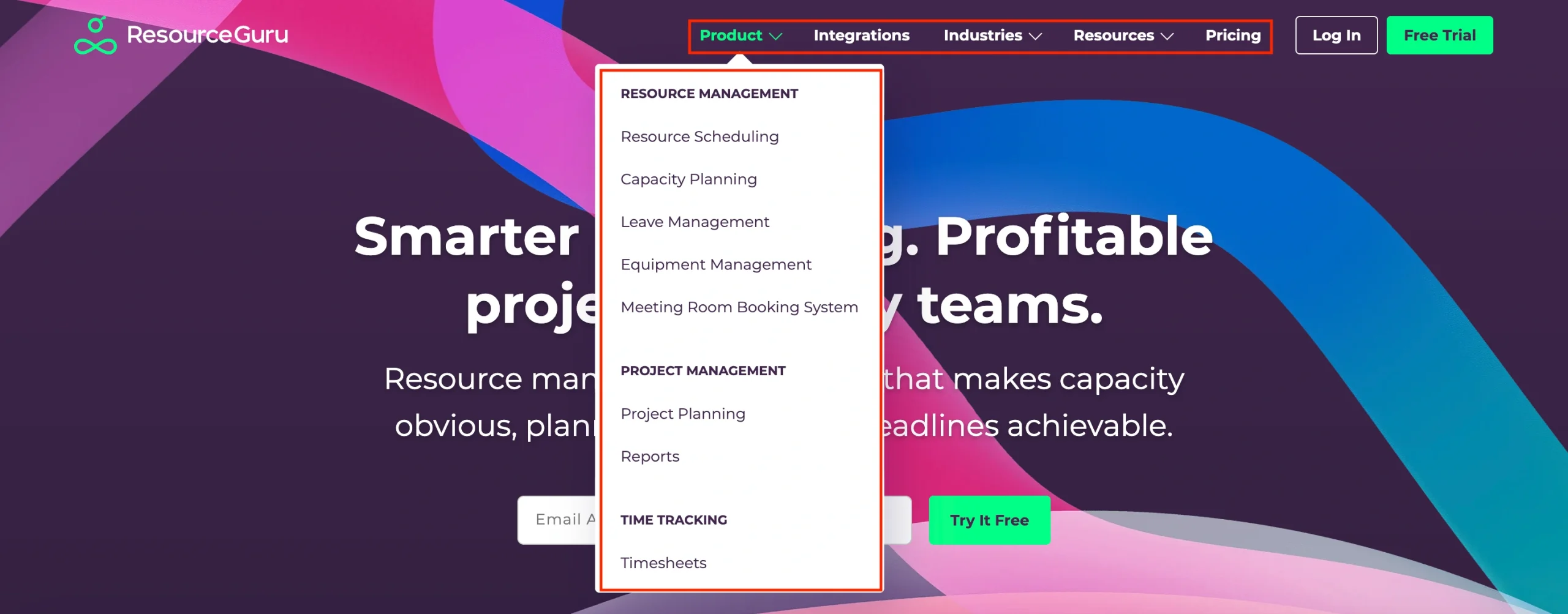
- 50+ backlinks secured in 3 months for Resource Guru, a resource management software platform.
Here’s what I usually do in the first 6 months of our partnerships:
| Phase | Timeframe | Focus |
| Strategy development | Month 1 | Audits, research, and planning |
| Foundation setup | Month 1 - 2 | Quick wins and technical fixes |
| Ongoing execution | Month 2 - 6 | Publishing content, building links, AI search optimization |
| Reporting & analytics | Month 3 - 6 | Tracking performance, identifying areas to improve |
Prerequisite: One note before we begin
Before you start doing SEO, make sure you already have a product-market fit.
Why? Because SEO amplifies whatever you already have.
If your product hasn’t found its footing and your messaging is still shifting week to week, SEO will just amplify the confusion — and you’ll spend six months ranking for terms that no longer describe what you sell.
The best time to invest in SEO is once you’ve validated that customers want your product and you have a clear understanding of who you serve, the problems you solve, and how you position yourself.
If that sounds like you, let’s get into the steps.
Phase 1: Strategy Development
Every successful project starts with a winning strategy. SEO is no different.
A clear SEO strategy is the guiding principle that determines your positioning, target audience, content topics, keyword targets, and outreach opportunities.
Without it, you’ll end up creating content that no one is searching for, targeting keywords that don’t convert, and wasting time on tactics that don’t move the needle.
So, spend the first two weeks understanding your market, identifying your biggest opportunities, and building a roadmap for the next five months of execution.
Step 1: Define your objectives & target audiences
Ask yourself:
- What are you trying to achieve with SEO? Is it brand awareness, AI visibility, traffic, signups, call bookings, or sales
- Who are you targeting? Define your ideal customer profile, including their industry, company size, job title, pain points, and buying intent.
- What problems are they trying to solve? Define their pain points and how your product can be the solution.
- Which category does your product belong to? This will guide your main topics and content pillars.
Step 2: Perform keyword & prompt research
Once you know who you’re targeting, the next step is to understand how they search.
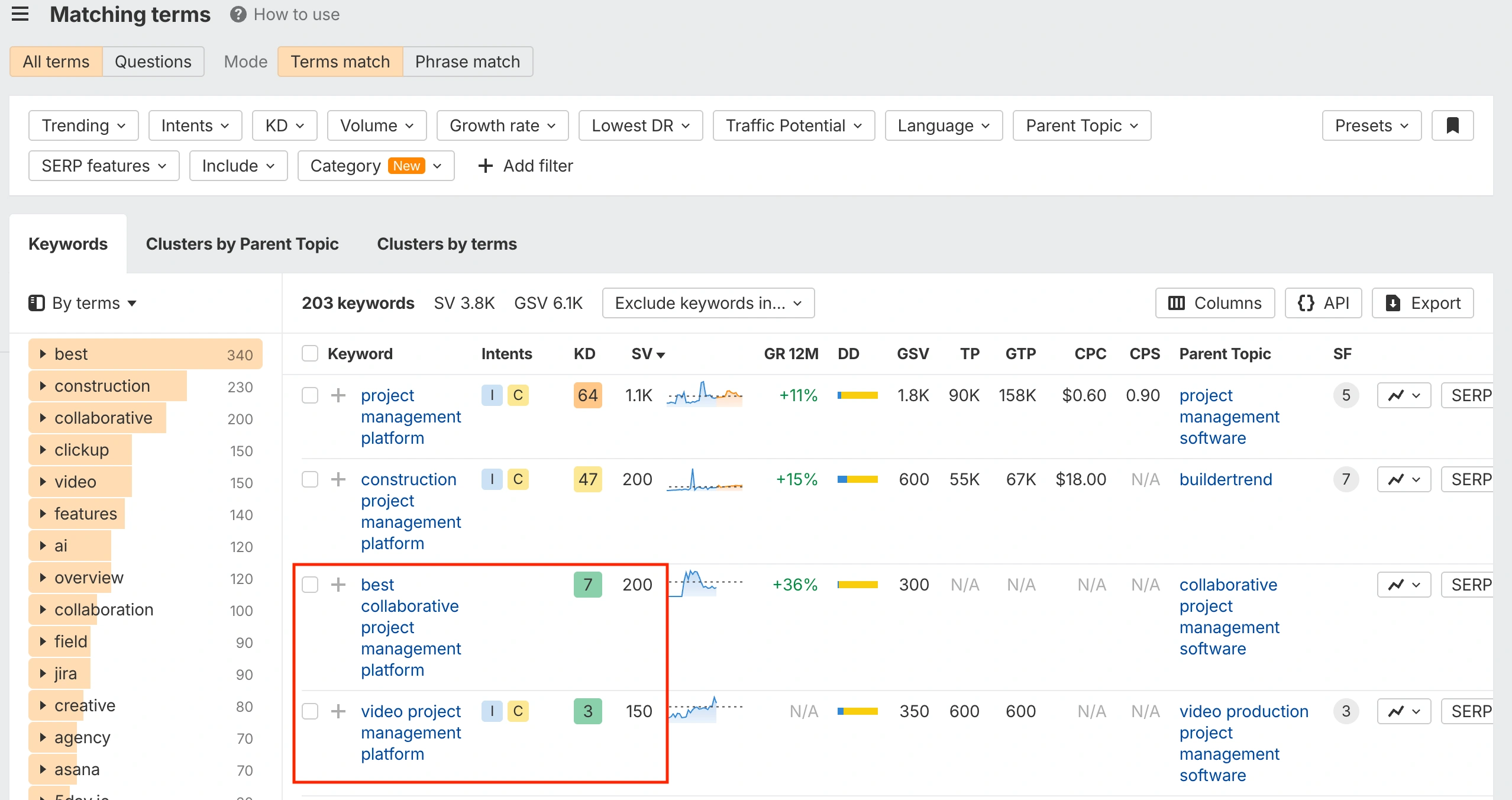
Use keyword research tools like Ahrefs, Semrush, and Google Keyword Planner to research the keywords your audience uses on traditional search engines like Google and Bing.
Type in your main category and find long-tail keywords with a decent search volume but low competition.
Then expand your research to AI search by identifying the prompts they would ask tools like ChatGPT, Gemini, and Perplexity.
There are three ways to get prompt data:
- Using AI tracking tools. Ahrefs Brand Radar and Semrush AI Visibility Toolkit show you potential prompts based on their massive search database. But they’re not cheap.
- Asking your target audience. Talk to customers, review sales calls and support tickets, and ask prospects how they would phrase a question in ChatGPT or another AI assistant. This often uncovers prompts that keyword tools miss.
- Turning keywords into prompts. Enter your SEO keywords and ask ChatGPT to turn them into questions, with multiple angles and variations.
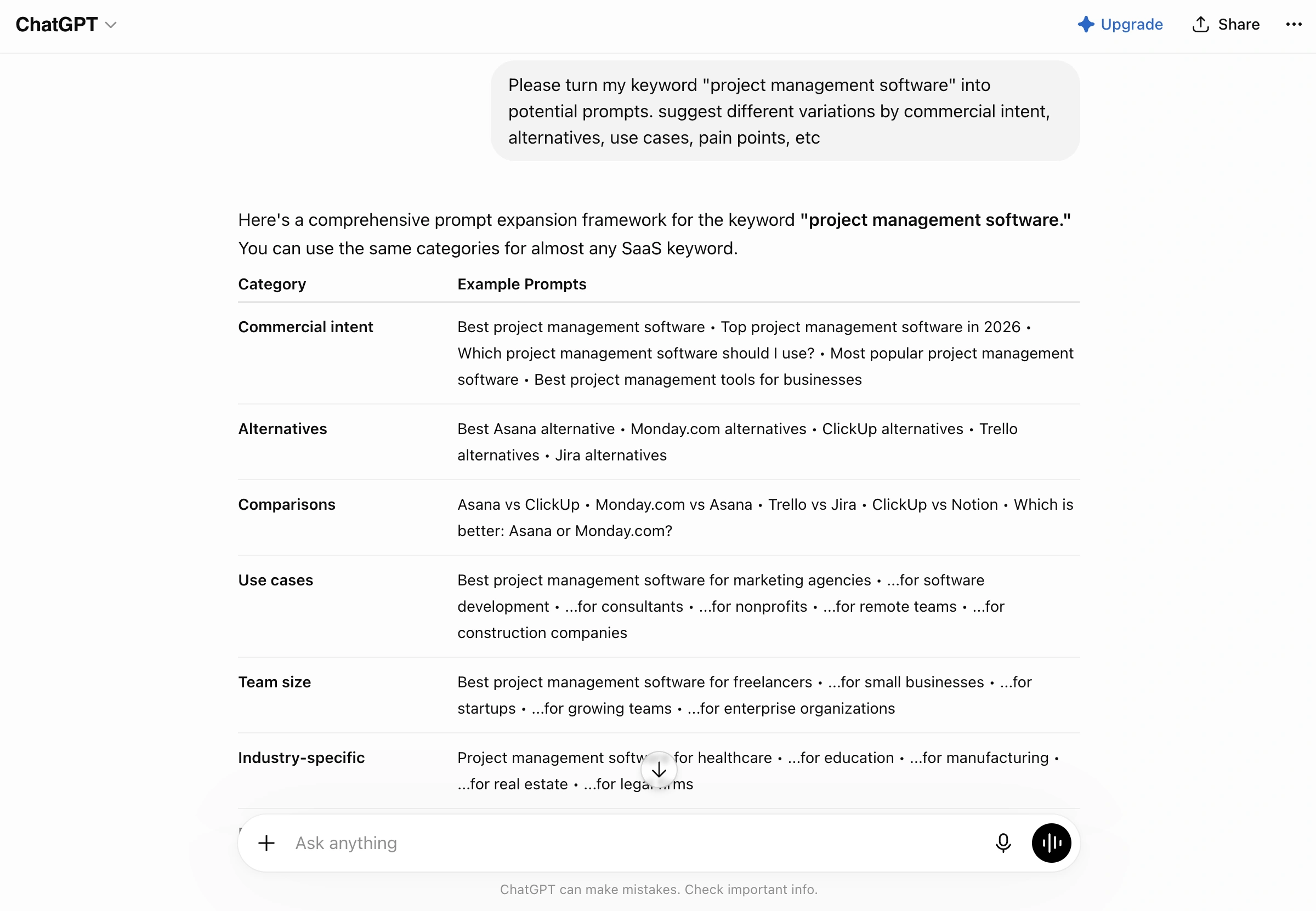
Compile all your potential keywords and prompts into a spreadsheet, and classify them by intent:
- Informational. Users want to learn about a topic (e.g. how to manage my projects better?).
- Commercial. Users are comparing solutions before making a decision (e.g. what’s the best project management tool for small business? or asana vs clickup which one should I choose?).
Step 3: Conduct competitor analysis
You have two types of competitors:
- Business competitors. Companies that offer similar products or services and compete for the same customers.
- SEO competitors. Websites competing for the same keywords, even if they don’t sell a competing product. These can include SaaS blogs, software review sites, tech publications, and affiliate websites.
Analyzing both groups is equally important:
- For your business competitors: Analyze how they position their brand, communicate their value proposition, and differentiate their product. Look for opportunities to stand out rather than blend in.
- For your SEO competitors: Perform a content gap analysis to identify the topics and keywords they rank for that you don’t. Review their top-performing pages, content formats, and backlink profiles to uncover opportunities you can capitalize on.
For a complete step-by-step walkthrough, including the tools we recommend, check out our competitor analysis checklist.
Step 4: Create a content plan
Now it’s time to turn your research into a publishing plan.
Start by mapping your keywords and prompts to specific page types. Prioritize content that drives revenue before expanding into broader educational topics.
Your content plan should include:
- Money pages: Product, feature, sector, solution, industry, and landing pages.
- Commercial pages: Comparison and alternatives pages, “best X” listicles, and case studies.
- Educational content: How-to guides, tutorials, help center articles, and blog posts.
Phase 2: Foundation Setup
With your strategy in place, it’s time to build the foundation that supports long-term growth.
Step 1: Set up your analytics
Create an account and set up your analytics on these tools:
- Google Search Console to monitor page indexing, organic clicks, and which queries are bringing you traffic.
- Google Analytics 4 to track user behaviour, AI referral traffic, conversions, and which pages actually drive signups.
- Bing Webmaster Tools to monitor your search and AI visibility on Bing.
These tools allow you to monitor search performance, technical issues, and user behavior from day one.
If you have the budget, I’d also recommend investing in:
- Full-suite SEO tools. Using tools like Ahrefs and Semrush, you can perform keyword research, SEO audit, competitor analysis, content gap analysis, and more.
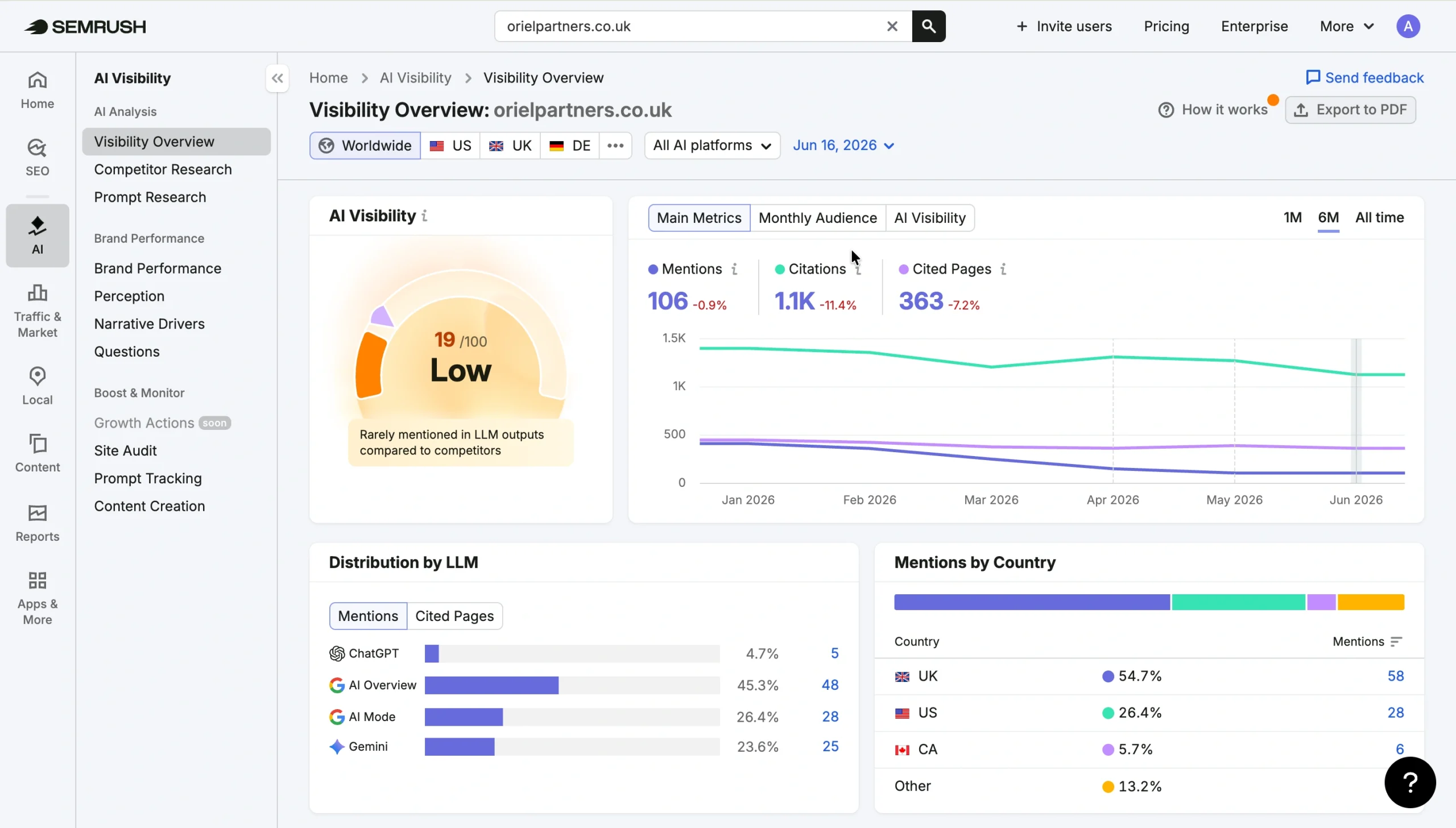
- AI visibility tracking tools. These tools help you track brand mentions and AI citations in Google’s AI Overviews and AI Mode, ChatGPT, Copilot, Claude, Perplexity, and other LLMs.
Step 2: Add your SaaS to relevant online directories
Create listings on the platforms your potential buyers use to research vendors and compare options:
- G2
- Capterra
- Software Advice
- Trustpilot
- Product Hunt
- Reddit threads
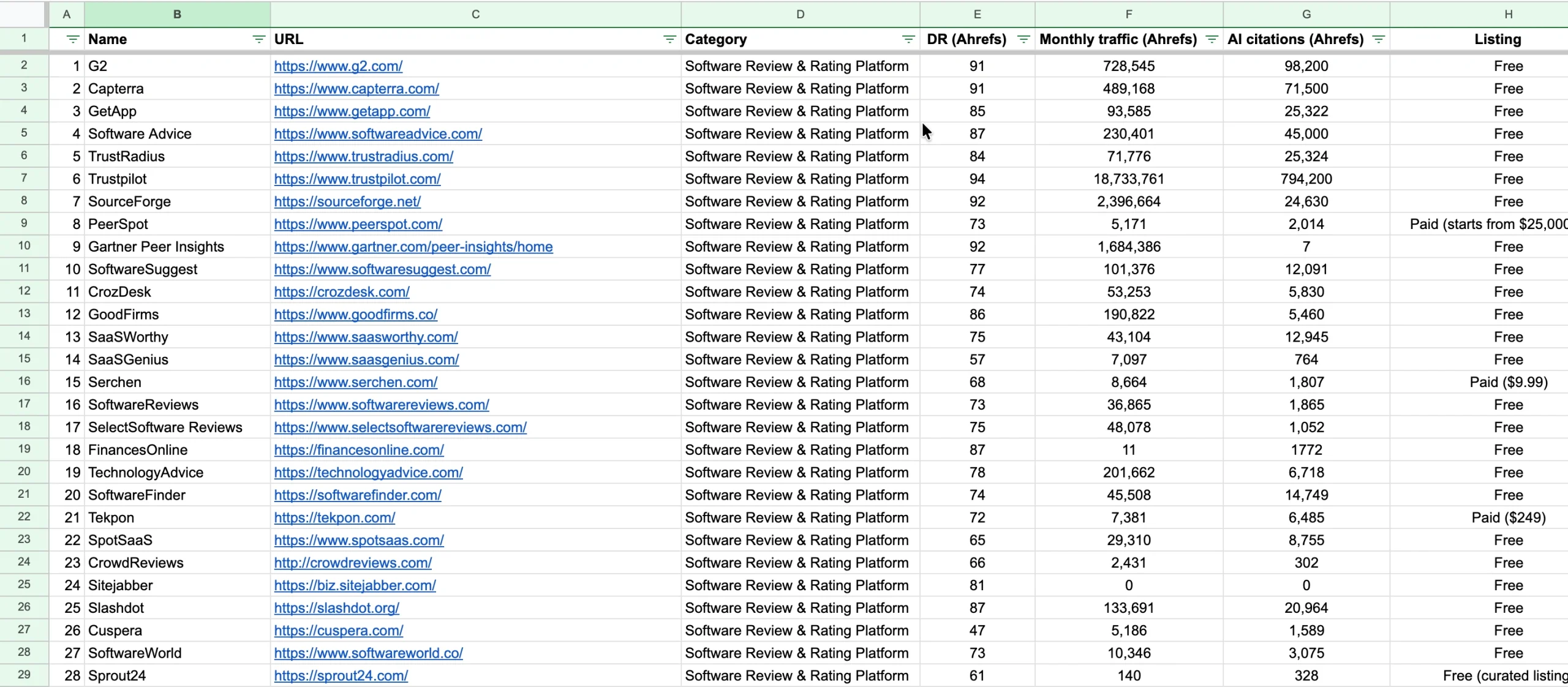
I’ve curated a list of 260+ directories, software review platforms, and communities to submit your product.
You can see the domain rating, organic traffic, and number of AI citations for each platform, so you can prioritize the ones that actually matter.
Find the complete list of SaaS directories here.
Step 3: Run technical SEO & GEO audits
Make sure search engines can crawl, index, and understand your website properly.
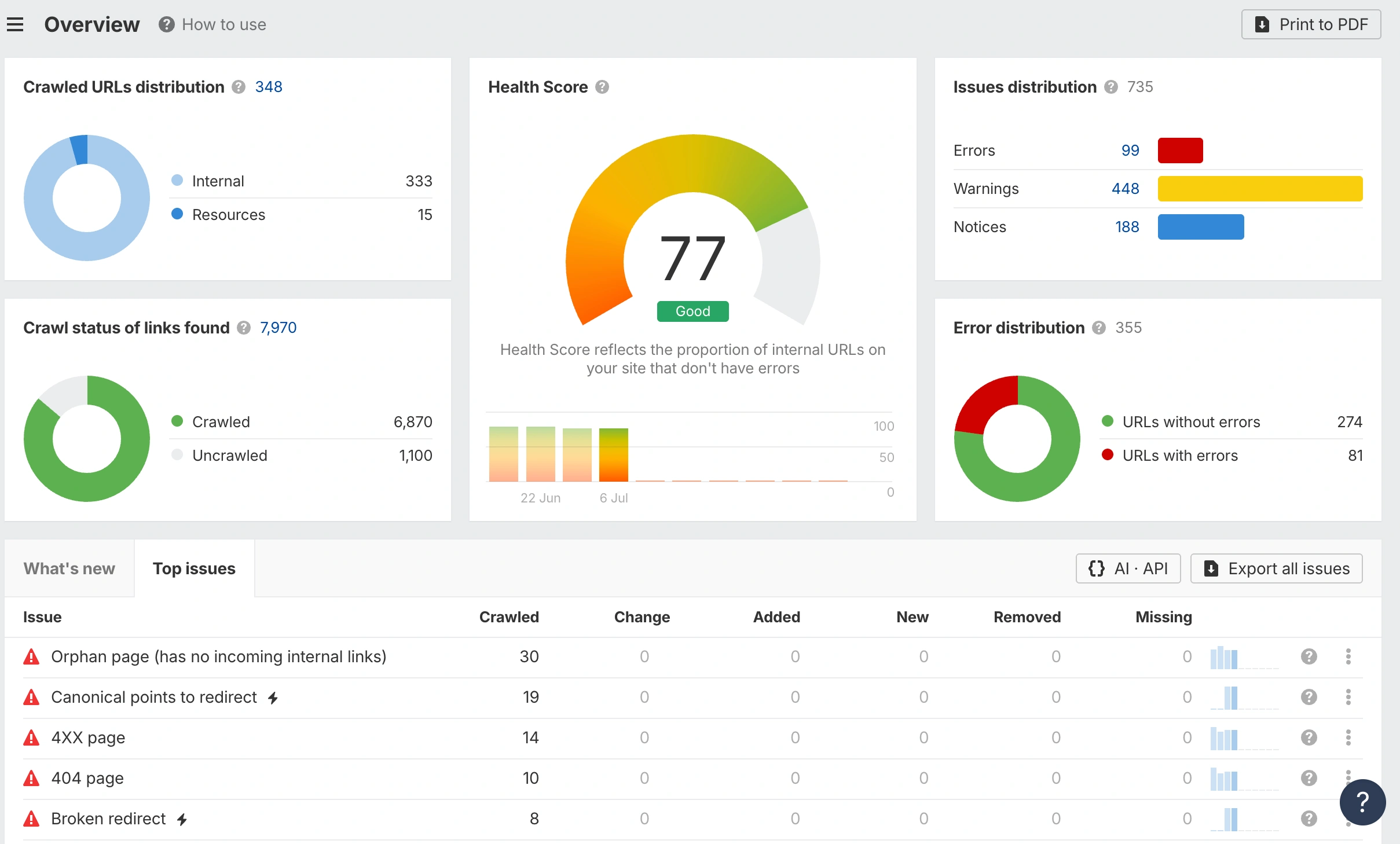
Crawl your website using tools like Screaming Frog, Sitebulb, or Ahrefs to identify technical issues, such as:
- Broken links and redirect chains
- Missing or duplicate title tags and meta descriptions
- Orphan pages
- Incorrect canonical tags
- Pages blocked by robots.txt or noindex
- Missing XML sitemaps
With the rise of AI search, it’s also important to assess your AI readiness—how well your site is optimized for LLMs like ChatGPT, Gemini, AI Mode, Claude, and more.
Check out the complete steps in my GEO audit guide.
Step 4: Implement fixes and quick wins
Start by fixing the highest-impact technical issues, then move on to simple on-page optimizations that can improve rankings without creating new content.
Focus on:
- Fixing crawl and indexing issues
- Optimizing title tags and meta descriptions
- Improving internal linking
- Adding missing image alt text
- Refreshing outdated content
- Implementing relevant schema markup
- Improving page speed and Core Web Vitals
These foundational improvements ensure your website is technically sound before you scale content production and link building in the next phase.
Don’t overlook the power of technical SEO audits.
After fixing technical issues for Decentriq’s site, the company managed to get 221% higher AI citations and 61.2% more traffic in 6 months.
Phase 3: Ongoing Execution
This is where you’ll spend the majority of your time over the next four months.
Your focus should be on publishing high-quality content, earning authoritative backlinks, and continuously improving your visibility in both traditional and AI search.
Step 1: Publish high-intent content
Prioritize content that directly drives signups, demos, and revenue. Start with bottom-of-funnel (BOFU) pages, such as:
- Product and feature pages
- Service and solution pages
- Industry or sector pages
- Pricing and plans page
- Integrations pages
- Comparison pages (e.g. Competitor A vs. Your Product)
- Alternative pages
- Case studies
- “Best X” listicles where your product is a strong fit
Once your commercial pages are in place, expand into top-of-funnel (TOFU) content to attract a wider audience.
Examples include:
- How-to guides & tutorials
- Help center articles
- Templates and checklists
- Industry research and original data
- Free tools
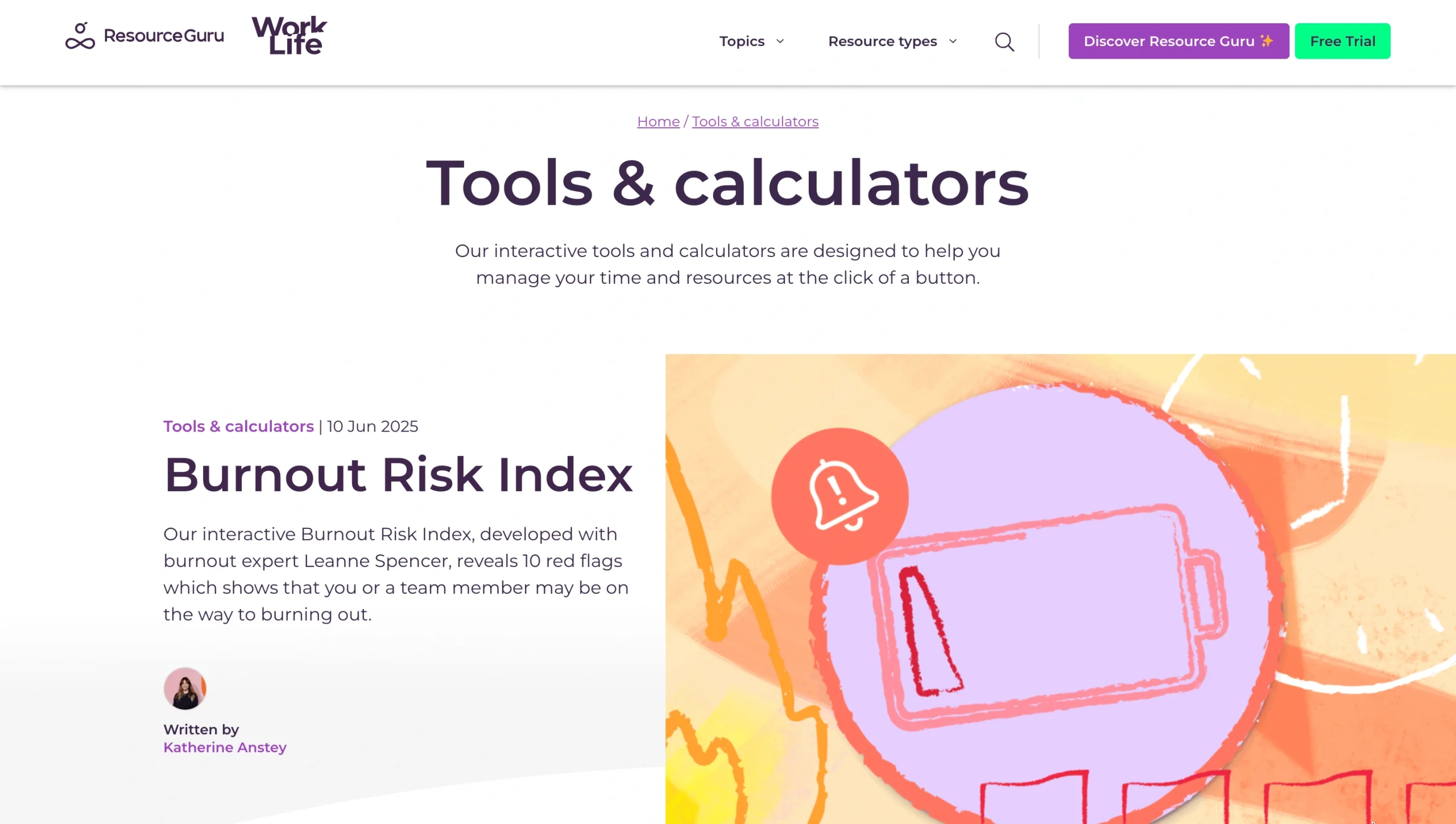
Aim to build content clusters around your core topics so every supporting article strengthens your commercial pages.
Also, make sure to optimize your content for AI search engines:
Step 2: Launch link building & digital PR campaigns
Content alone rarely ranks for competitive keywords—you also need authority.
Focus on earning high-quality backlinks and brand mentions from relevant, authoritative publications through:
- Guest posting
- Digital PR campaigns
- Listicle outreach
- HARO and journalist requests
- Linkable assets (original research, free tools, statistics, templates)
- Partnerships and industry collaborations
Strong offsite presence not only improves rankings but also increases your chances of being cited by AI search engines.
Read our guides on link building and digital PR:
Phase 4: Reporting & Analytics
SEO isn’t a one-time project. Every month, review your performance and look for opportunities to improve.
Track metrics such as:
- Organic traffic
- Keyword rankings
- AI visibility and citations
- Backlinks earned
- Conversions and revenue from organic search
Use these insights to refresh existing content, expand successful topic clusters, and adjust your strategy based on what’s working and what’s not.
Ready to Grow Your SaaS With SEO?
SEO is a powerful channel to bring in qualified traffic every single day, and keep doing it while you sleep.
But it takes a lot of work, time, and expertise to pull off.
If you don’t have the resources, there’s an easier option: working with a specialist SaaS SEO agency like Position Digital.
If you’d like a clear, accountable SEO plan tailored to your startup — and a team that treats your growth like its own — get in touch and let’s map out your first six months.
Frequently asked questions
Find answers to most common questions about SaaS startup SEO.
How long does SEO take to work for a startup?
Expect early signals (rising impressions, long-tail rankings) within about three months, and meaningful, converting traffic by around six months.
Significant returns typically build from 6–12 months onward as your content and authority compound.
How much should a startup spend on SEO?
Position Digital’s SaaS SEO services start at just $2,000/month. The key isn’t spending more — it’s doing the right things in the right order.
Many startups start with a modest content and technical budget and scale investment once early results prove the channel.
Is SEO still worth it with ChatGPT and AI search?
Yes — arguably more than ever. Search demand has grown, not shrunk; it’s just split across Google and AI tools.
Those AI tools draw their answers largely from content that already ranks well, so strong SEO now earns you visibility in both places at once.
Should a startup do SEO in-house or hire an agency?
Either can work. An in-house team gives you control and deep product knowledge; a good SEO agency gives you experience, capacity, and speed.
The real risk is working with someone who chases vanity rankings instead of traffic and leads. So, whoever does your SEO, insist on transparency and accountability to business outcomes.
What's the first thing a startup should do for SEO?
Set up Google Search Console and Google Analytics, then run a technical audit to make sure your site can actually be crawled and indexed. There’s no point creating content if search engines and AI systems can’t read your site.